Trump repeatedly criticized the justices during the briefing, reserving particular frustration for Neil Gorsuch and Amy Coney Barrett, both of whom he nominated. “I’m ashamed of certain members of the court,” he said while branding the decision “deeply disappointing.” The president added that he still views tariffs as integral to reviving U.S. manufacturing and claimed consumers are willing to bear the cost for the sake of industrial growth.
Existing Tariffs to Remain in Force
Despite the judicial setback, Trump affirmed that duties imposed under Section 232 of the Trade Expansion Act of 1962 and Section 301 of the Trade Act of 1974 will remain “in full force and effect.” Section 232 authorizes tariffs on grounds of national security, a provision used by the administration to set levies on imported steel and aluminum. Section 301 has served as the legal basis for a series of penalties on goods from China and other countries accused of unfair trade practices.
Trump also disclosed that the Office of the United States Trade Representative is preparing additional Section 301 investigations that could lead to more targeted duties. He did not specify which countries or products are being reviewed, but he hinted that digital services taxes and other non-tariff barriers will receive scrutiny.
The simultaneous maintenance of earlier duties and introduction of a new flat surcharge represents an expansion of the administration’s tariff framework. In effect, importers will pay the existing applicable rate plus an additional 10 percent on arrival at U.S. ports. While the president contends that foreign exporters will absorb most of the cost, several industry groups have previously argued that higher prices are typically passed through to American companies and consumers.
Reaction From Capitol Hill and Legal Constraints
Lawmakers on both sides of the aisle responded quickly to the president’s remarks. Some Senate Republicans expressed concern about the potential economic impact and the limited statutory duration of Section 122 authority. Democratic leaders called the move an attempt to sidestep Congress after the Supreme Court’s rebuke. Under Section 122, the executive branch can impose duties only for 150 days without legislative approval. Extending the surcharge would require an affirmative vote from both chambers, setting the stage for a possible confrontation this fall if economic conditions intensify the debate.
Legal scholars noted that the court’s decision earlier in the day hinges on a separation-of-powers argument. The majority opinion emphasized that Congress, not the president, holds primary authority over customs duties under Article I of the Constitution. By invalidating the reciprocal tariff framework, the court signaled tighter boundaries on unilateral trade actions not expressly sanctioned by existing statutes. “This ruling underscores the constitutional limits of executive power in trade policy,” said one trade law expert in commentary published by the Supreme Court of the United States.
Nonetheless, Trump insisted that Section 122 is adequate legal footing for the new charge and suggested he might explore other provisions if courts intervene again. He acknowledged the temporary nature of the authority but argued that the administration can rotate measures or invoke fresh rationales to keep pressure on trade partners.
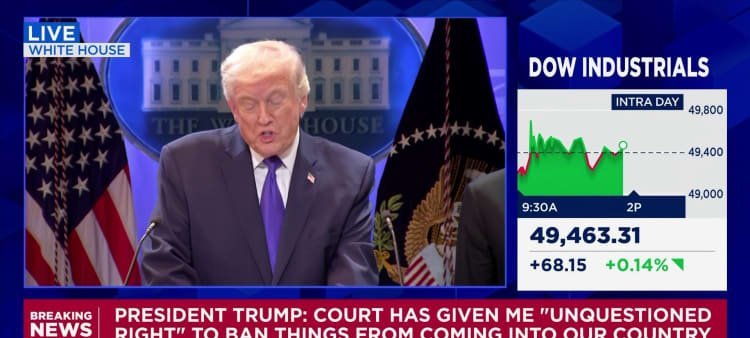
Imagem: Internet
Economic Stakes and Industry Concerns
The prospective scope of the 10 percent tariff covers a wide range of goods, from consumer electronics and apparel to industrial inputs such as machinery parts. Trade economists estimate that the levy could raise tens of billions of dollars annually, depending on how imports adjust to the higher costs. Supporters believe the surcharge could improve the trade balance in the short term, while critics warn it risks declining investment, higher consumer prices and retaliatory measures overseas.
Manufacturing associations offered mixed responses. Groups representing domestic steel producers welcomed additional protection, asserting that the measure will shield jobs and encourage capital spending. By contrast, organizations representing retailers and technology firms cautioned that a blanket tariff would disrupt supply chains and raise costs during a period of already-elevated inflation.
Financial markets reflected the uncertainty. Equity indexes dipped modestly following the court ruling and the subsequent White House briefing, while bond yields flattened as investors assessed the potential drag on growth. Trade-sensitive sectors, including automotive and consumer electronics, led the declines, amid speculation about cost pass-throughs and foreign retaliation.
Implementation Timeline
Trump indicated that he will sign the executive order later in the day, with the tariff scheduled to take effect within two weeks. Customs and Border Protection is expected to issue procedural guidance to importers before the new rate is activated. The administration has not yet published an exclusion process or product-specific exemptions, leaving companies uncertain about whether relief will be available for critical inputs unavailable domestically.
The president declined to detail how the additional revenue will be used, beyond stating that funds collected at the border “belong to the American people.” In past announcements, the administration has floated the idea of redirecting tariff proceeds toward agricultural support programs or infrastructure, but Friday’s briefing provided no specifics.
As the 150-day clock starts once the executive order is signed, the White House must decide by mid-November whether to request an extension from Congress or allow the surcharge to lapse. Given the political calendar and the administration’s stated commitment to a “tariff-first” strategy, legislative deliberations on any extension are likely to feature prominently in the final months of the year.
Crédito da imagem: White House Press Office