White House Press Secretary Karoline Leavitt told reporters the president “is always keeping all of his options on the table,” adding that air strikes remain among those options, although she said diplomacy continues to be the preferred approach.
Beijing Criticizes Tariff Decision
China, a key trading partner of Tehran, responded to the new tariff through Foreign Ministry spokesperson Mao Ning, who argued that “there are no winners in a tariff war.” Mao said Beijing “will firmly safeguard its legitimate rights and interests,” and reiterated opposition to external interference and threats of force in other nations’ internal affairs. She also stated that China “supports Iran in maintaining national stability.”
U.S. Issues Security Alert for Citizens in Iran
Citing both “escalating” protests and increased security measures by Iranian forces, the U.S. State Department urged American citizens to depart Iran if conditions allow. A notice on the department’s “virtual embassy” website advised travelers to expect ongoing internet outages, prepare alternate communication methods and consider leaving by land routes into Armenia or Türkiye.
Internet Disruptions and U.N. Concern
Monitoring group NetBlocks reported that a nationwide internet shutdown has persisted for 108 hours. Volker Turk, the U.N. High Commissioner for Human Rights, said in a statement he was “horrified by the mounting violence against protesters” and called on Iranian authorities to end the repression and restore full connectivity. The statement, released through the United Nations Office of the High Commissioner for Human Rights, noted that hundreds have been killed and thousands detained.
Origins and Scope of the Unrest
The first demonstrations erupted in late December in central Tehran over rising inflation and a rapidly depreciating national currency, the rial. As gatherings spread, some protests adopted overtly anti-government slogans. Security forces responded with tear gas and, according to multiple reports, live ammunition.
Supreme Leader Ayatollah Ali Khamenei and other senior officials have acknowledged economic grievances but have repeatedly labeled the broader movement a violent campaign led by “rioters” and “terrorists” backed by the United States and Israel. On Monday, Foreign Minister Abbas Araghchi told foreign diplomats in Tehran that the unrest amounted to a “terrorist war.”
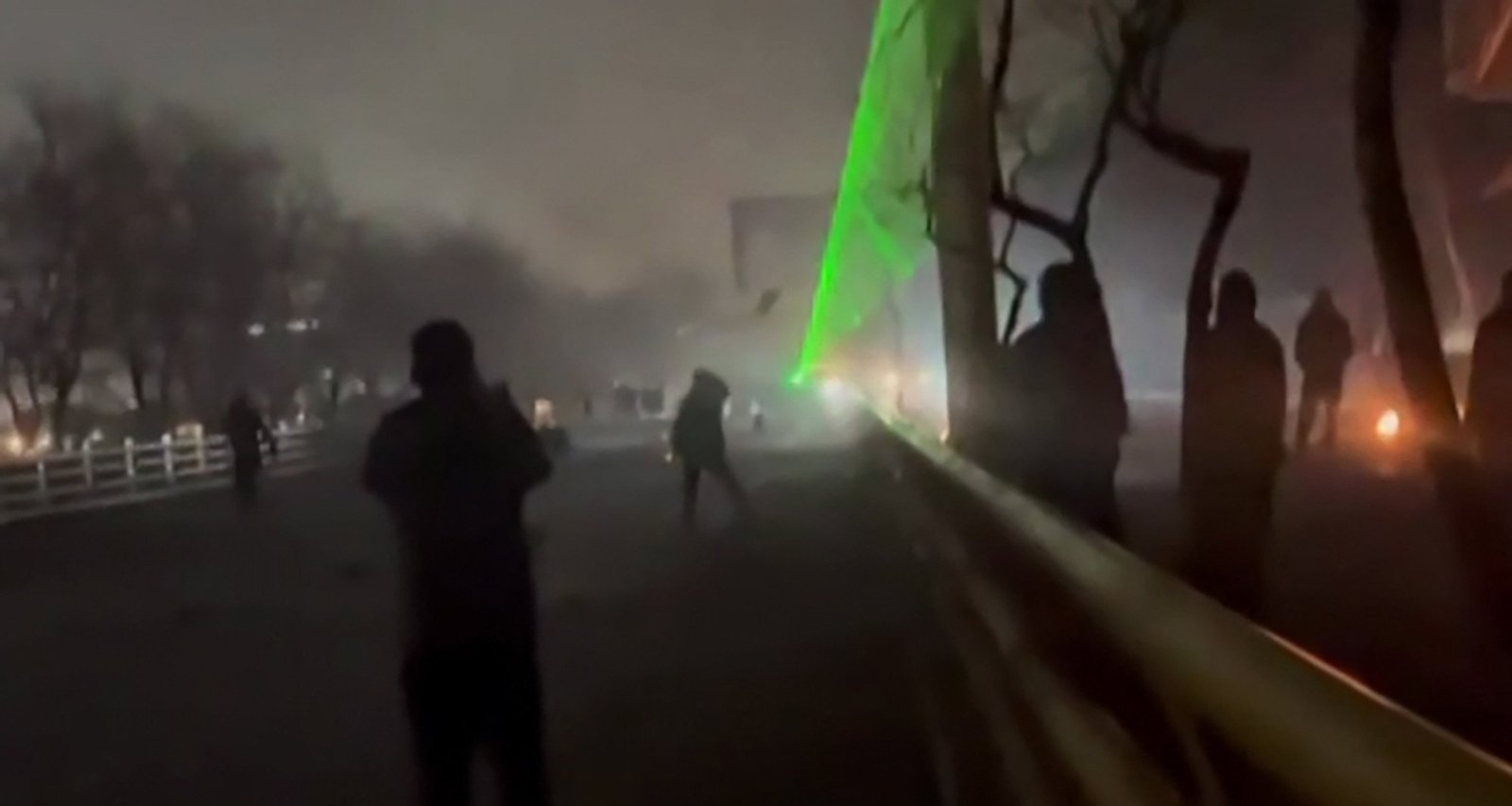
Imagem: Internet
Government Rallies and Opposition Appeals
State television on Monday aired images of pro-government rallies in several major cities, including footage of crowds waving Iranian flags in Tehran’s Revolution Square. Broadcasters described the gatherings as an “Iranian uprising against American-Zionist terrorism.”
From abroad, dissident figures have urged continued street demonstrations. Exiled Crown Prince Reza Pahlavi, speaking from the United States, called on Iranians to “overwhelm the security forces with sheer numbers” and asked President Trump to stand ready to assist protesters.
An extended nationwide curfew has not been declared, but local reports indicate heightened police and Revolutionary Guard presence in key urban centers. Roadblocks and random ID checks have become common near government buildings and public squares.
Possible Future Measures
U.S. officials have not detailed a timeline for any additional actions. Proposals under discussion reportedly include new sanctions targeting Iran’s energy or banking sectors and asset freezes against specific regime figures. Should the White House opt for military action, air strikes on Revolutionary Guard facilities or command centers have been mentioned as potential scenarios, although no decision has been announced.
While Washington weighs its response, multiple European governments have called for restraint by all parties and expressed concern that wider regional instability could result if violence escalates further.
As protests continue, activists inside Iran report night-time demonstrations in several provincial capitals, with participants chanting slogans against both economic hardship and political repression. HRANA warned that casualty figures are likely to rise if current patterns of confrontation persist.
Crédito da imagem: AFP via Getty Images


