Rival mega-projects across the heartland
OpenAI’s effort is only one piece of a national buildout:
- Meta is erecting “Hyperion,” a four-million-square-foot facility in northeast Louisiana. When finished, the site is expected to draw more electricity than the city of New Orleans and to cover an area comparable to lower Manhattan.
- Alphabet has started work on a multibillion-dollar campus on 1,100 acres in West Memphis, Arkansas, described by state officials as the largest private investment in Arkansas history.
- In South Memphis, Tennessee, Elon Musk has converted a shuttered Electrolux factory into the “Colossus” supercomputer in just 122 days and is now building “Colossus 2,” targeting one million GPUs. A dormant Duke Energy power plant in nearby Southaven, Mississippi, was purchased to supply electricity.
- Microsoft is spending more than $7 billion on what CEO Satya Nadella has called “the world’s most powerful AI data center” in southeast Wisconsin. The site is slated to house hundreds of thousands of Nvidia chips when it opens in early 2026.
- Amazon has transformed 1,200 acres of Indiana farmland into “Project Rainier,” an $11 billion center using custom silicon for the startup Anthropic.
Capital spending and a surge in borrowing
The five largest U.S. hyperscalers—Amazon, Microsoft, Alphabet, Meta and Oracle—are on pace to spend about $443 billion on capital projects this year. Research firm CreditSights expects that figure to reach $602 billion in 2026, with roughly three-quarters devoted to AI infrastructure.
To fund the expansion, tech companies have issued $121 billion in new debt this year—more than four times the average of the previous five years—according to Bank of America. Meta raised $30 billion, Alphabet $25 billion and Oracle $18 billion. Forecasts from Morgan Stanley and JPMorgan project up to $1.5 trillion in additional tech borrowing in the coming years, while UBS anticipates as much as $900 billion of new issuance in 2026 alone.
Heightened leverage is reflected in credit markets: credit-default swaps tied to Oracle have widened to multi-year highs, and a tradable CDS market linked to Meta opened in late October. Analysts note similarities to the dot-com era, when debt-funded fiber projects outpaced near-term demand.
Interlocking supply deals
OpenAI sits at the center of a complex network of supply agreements. In September the company announced a $100 billion equity-and-supply pact with Nvidia for 10 gigawatts of next-generation systems. October brought a partnership with AMD that could give OpenAI a 10 percent stake in the chipmaker, followed by a deal with Broadcom for 10 gigawatts of custom processors. In November, OpenAI signed its first cloud contract with Amazon Web Services, loosening Microsoft’s previous exclusivity.
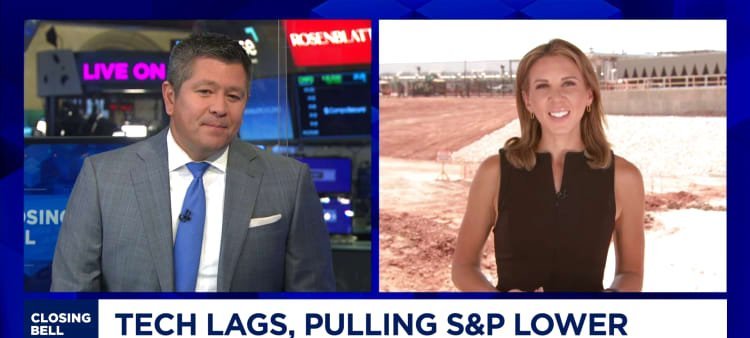
Imagem: Internet
Critics describe the arrangement as a “circular economy” in which capital, capacity and revenue circulate among a small group of players, but the parties involved say demand is already committed. Oracle co-CEO Clay Magouyrk has called the appetite for compute “near-infinite.”
The power constraint
While financing remains available, electricity is becoming the primary bottleneck. Friar said OpenAI has examined more than 800 potential North American sites, evaluating land, substations and transmission corridors. The company is considering renewable sources, natural gas and even nuclear generation in pursuit of around-the-clock supply. The U.S. Energy Information Administration notes that large data centers can require as much power as small cities, underscoring the strain on regional grids.
SoftBank founder Masayoshi Son recently agreed to pay $4 billion for DigitalBridge, a specialist in data-center investments, and has pledged $40 billion to OpenAI. To finance those commitments, SoftBank sold its entire stake in Nvidia.
Regulatory backdrop and continued construction
OpenAI has lobbied for an expansion of CHIPS Act tax incentives to include AI data centers. Discussion of a possible federal loan backstop drew swift criticism, prompting company leaders to clarify that they are not seeking government guarantees.
Despite regulatory uncertainty and rising debt, construction across the country has not slowed. Earthmovers continue to clear farmland, concrete pads are poured for transformer yards, and high-voltage lines are extended toward newly fenced compounds. Industry executives argue that each additional tranche of compute brings more capable models, justifying the rapid scale-up even as skeptics warn of a potential bubble.
Crédito da imagem: Kyle Grillot / Bloomberg / Getty Images


