
The rapid expansion of artificial intelligence infrastructure is reshaping global energy needs and directing fresh attention toward next-generation nuclear solutions. Two U.S. developers of small modular reactors, Oklo and NuScale Power, have emerged as prominent contenders to supply electricity for data centers that industry observers expect to multiply over the coming decade.
The conversation around future power requirements accelerated after SpaceX submitted an application earlier this year to launch as many as one million data centers into low-Earth orbit. While the feasibility of such an undertaking remains uncertain, the filing underscored a clear trend on the ground: AI systems demand vast, reliable and increasingly clean sources of energy. Analysts at Bank of America estimate that a global “nuclear renaissance” driven in part by AI could represent a market opportunity approaching $10 trillion.
Why Small Modular Reactors Are Gaining Ground
Traditional nuclear facilities deliver large, steady baseload power, yet they are costly and slow to build. Small modular reactors (SMRs) aim to overcome those challenges through factory fabrication, standardized designs and enhanced safety features. Unlike conventional plants, SMRs can be deployed in increments, scaled to match regional demand and, in theory, brought online more quickly. These characteristics have made SMRs particularly attractive for energy-intensive technology hubs where rapid capacity additions are essential.
The International Atomic Energy Agency notes that dozens of SMR designs are advancing worldwide, with several targeting commercial operation before the end of the decade. In the United States, Oklo and NuScale Power are among the most visible publicly traded companies pursuing the concept, though their business models differ sharply.
Oklo’s Data Center-Focused Roadmap
California-based Oklo is positioning its “Aurora” reactor line for smaller, distributed applications. Each unit is designed to generate roughly 15 megawatts of electric output—far below the gigawatt-scale capacity of conventional reactors—making it suitable for colocating directly alongside corporate campuses and hyperscale data facilities. Oklo says the design leverages metal-cooled fast reactor technology that allows for compact footprints, long fuel cycles and passive safety mechanisms.
The company’s highest-profile agreement to date involves a 1.2 gigawatt commitment with Meta Platforms. Under the memorandum signed last year, Oklo would sequentially deploy multiple Aurora units to reach the contracted capacity by 2030. If realized, the arrangement would supply a significant share of Meta’s projected electricity demand for its expanding AI workloads while advancing Oklo toward commercial validation.
Oklo also intends to sell heat in addition to electricity, targeting sectors such as hydrogen production and industrial processing. By diversifying revenue streams and focusing on customers able to sign long-term power purchase agreements, the firm aims to mitigate some of the financing hurdles that have historically hampered nuclear builds.
NuScale Power’s Utility-Scale Ambitions
Headquartered in Portland, Oregon, NuScale Power is pursuing a different scale and customer base. Its flagship “VOYGR” plant bundles up to a dozen 77 megawatt modules in a single facility, delivering as much as 924 megawatts of net electric output. NuScale’s technology has completed the U.S. Nuclear Regulatory Commission’s standard design approval process, a milestone that management views as a competitive advantage when courting regulated utilities.
The company’s primary domestic project involves the Tennessee Valley Authority (TVA), which is evaluating the deployment of a six-gigawatt SMR complex. Although NuScale and TVA have not finalized the construction timeline, the partners have indicated an early-2030s target for initial generation. Outside the United States, NuScale is marketing VOYGR plants to countries seeking to decarbonize power grids without the multibillion-dollar expense of conventional reactors.
NuScale’s utility-scale orientation could deliver economies of scale once financing is secured, but the larger site requirements and longer development cycles may limit its ability to serve fast-growing AI hosting clusters that need incremental capacity sooner.
Comparing Commercial Readiness and Market Fit
Both companies still require substantial capital to move from prototype to serial production, and neither has connected a reactor to the grid. Nonetheless, their strategic differences translate into distinct risk profiles for investors.
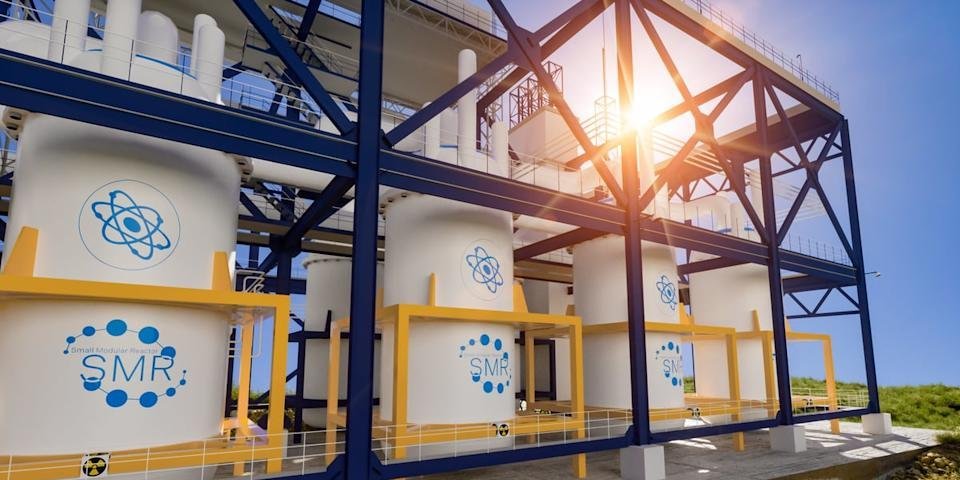
Imagem: Internet
Project Size and Flexibility: Oklo’s smaller modules allow phased rollouts and the possibility of siting reactors directly at or near data centers, reducing transmission losses and expediting deployment. NuScale’s larger aggregated plants are more aligned with traditional utility procurement models and grid-level integration.
Target Customers: Oklo is cultivating relationships with technology companies that possess strong balance sheets and a pressing need for low-carbon energy. NuScale is focusing on utilities and government-backed entities, which can offer creditworthy off-takers but often move through lengthier regulatory and procurement processes.
Timeline to Operation: Oklo aims to deliver its first commercial power before 2030, beginning with a single Aurora unit on a U.S. government site. NuScale has outlined early-2030s commissioning for its first multi-module installation, contingent on agreements such as the TVA project reaching final investment decisions.
Capital Requirements: NuScale’s multi-reactor plants may demand higher upfront financing, though they could achieve lower per-kilowatt costs over time. Oklo’s modular approach seeks to lower initial outlays and rely on repetitive manufacturing to drive cost reductions.
Investor Considerations Amid an AI-Driven Energy Boom
Market enthusiasm for nuclear technology has intensified as electricity demand forecasts climb. Data center operators, already major consumers of power, are accelerating expansion to support large language models, real-time analytics and other AI applications. This demand surge coincides with policy incentives for carbon-free generation, positioning nuclear energy as a potential cornerstone of future grids.
For investors evaluating nuclear equities as a means to capitalize on the AI trend, Oklo and NuScale offer contrasting exposures. Oklo’s alignment with corporate data center strategies may provide earlier revenue visibility if its partnerships transition from memoranda to binding contracts. NuScale’s regulatory progress and pursuit of sizable utility deals could yield substantial scale benefits over the long term, but its project timelines appear less synchronized with the immediate uptick in AI electricity needs.
Both firms must still clear technical demonstrations, secure construction licenses and navigate supply-chain challenges. Moreover, public acceptance and financing costs continue to shape the broader nuclear landscape. While Bank of America’s multi-trillion-dollar projection captures the sector’s theoretical potential, actual deployment will depend on sustained policy support and successful first-of-a-kind projects.
In the near term, Oklo’s smaller footprint and technology-sector partnerships furnish a tailored solution for hyperscale operators seeking dedicated, low-carbon generation. NuScale’s larger plants could become integral to national decarbonization roadmaps, but their scale and development timelines may be less compatible with the incremental build patterns favored by cloud and AI providers.
As the competition unfolds, both companies will be watched closely by investors tracking the intersection of AI infrastructure growth and nuclear innovation. Their ability to translate designs into operational reactors will determine whether SMRs can fulfill their promise of delivering flexible, scalable and climate-friendly power for the data-driven economy.