Employee Anxiety Intensifies
Worker sentiment has shifted noticeably as headlines highlight automation‐driven layoffs. Preliminary results from Mercer’s Global Talent Trends 2026 survey, which polled 12,000 employees worldwide, show that 40 percent now fear losing their positions to AI—up from 28 percent in 2024. The same study indicates that 62 percent of respondents believe corporate leaders underestimate the emotional and psychological toll of the transition.
Deutsche Bank analysts, in a note distributed during the Davos forum, predicted that employee anxiety will swell throughout 2026, leading to a wave of legal challenges covering copyright, privacy, data-center placement and even the protection of minors from harmful chatbot content. They referenced a November Stanford University study that found a 16 percent relative decline in employment for recent graduates in occupations heavily exposed to AI since the launch of ChatGPT in late 2022, while employment levels for more experienced workers have remained broadly stable.
Debate Over Actual Job Losses
Despite high-profile layoff announcements, several studies suggest the overall employment picture remains largely unchanged. A report released in October by Yale University’s Budget Lab examined U.S. labor market data from 2022 through 2025 and concluded that the distribution of workers across occupations had not shifted dramatically since generative AI tools gained prominence.
Randstad Chief Executive Sander van’t Noordende echoed those findings on the sidelines of the Davos event. He argued that recent job reductions are more closely tied to general economic uncertainty than to automation, and labeled 2026 “the year of the great adaptation.” In his view, the principal opportunity lies in integrating AI throughout talent acquisition, evaluation and onboarding processes to increase efficiency.
Investor Pressure for Upskilling
Mercer’s data reveal emerging financial incentives for companies to prioritize workforce development. Ninety-seven percent of investors surveyed said they are less likely to provide capital to organizations that fail to establish systematic AI upskilling programs, while more than three-quarters expressed a preference for firms that actively teach employees how to use the technology. Ravin Jesuthasan, senior partner at Mercer, noted that investor attention has shifted from rewarding vague references to AI in annual reports to scrutinizing how effectively businesses blend human and machine capabilities.
This trend aligns with broader calls for cohesive reskilling strategies. The World Economic Forum estimates that wide-scale adoption of AI and related technologies could displace or transform millions of roles globally over the next decade, making continuous learning a priority for maintaining economic stability.
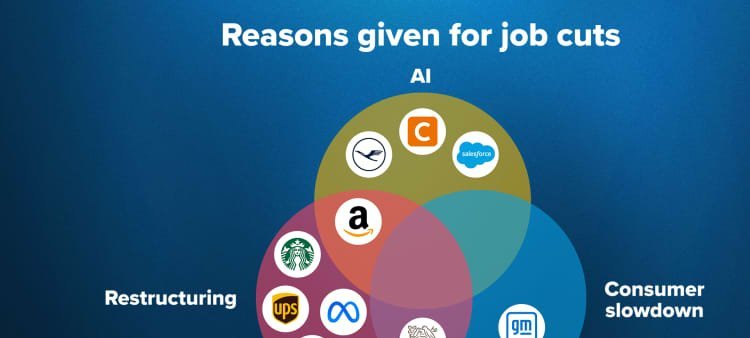
Imagem: Internet
Risks of “AI Redundancy Washing”
Deutsche Bank analysts cautioned that attributing staff cuts solely to AI may become commonplace in 2026, a practice they labeled “AI redundancy washing.” They urged stakeholders to examine corporate statements critically, emphasizing that technology often serves as a convenient explanation for layoffs motivated by other cost-containing measures.
Georgieva’s remarks in Davos reinforced that viewpoint. While acknowledging AI’s growth potential, she pressed both public and private sectors to identify emerging skill requirements and implement training programs before displacement accelerates. Failure to act, she suggested, could widen economic inequality and erode public trust in technological progress.
Preparing for the Next Phase
Companies that integrate comprehensive upskilling initiatives may gain a competitive edge as adoption rates climb. For staffing firms like Randstad, AI tools already streamline candidate outreach and assessment, freeing human recruiters to focus on relationship-building and strategic advising. Similar benefits could emerge across industries if managers allocate resources toward combining machine learning with human expertise.
At the same time, legal and regulatory frameworks are expected to evolve. Anticipated lawsuits targeting data privacy, intellectual property and algorithmic fairness could shape how organizations deploy AI systems. Policymakers will likely face mounting pressure to balance innovation with protections for individuals whose livelihoods and well-being are affected by automation.
Across the Davos discussions, one consensus emerged: the technology’s pace leaves little room for complacency. Organizations that prioritize transparent communication, targeted reskilling and responsible implementation may be better positioned to capture AI’s productivity gains without exacerbating social or economic risks.
Crédito da imagem: Thana Prasongsin | Moment | Getty Images


