The anxiety is not limited to Amazon. Alphabet, Microsoft and Meta Platforms—each pursuing sizable AI projects—have also come under pressure. Market analysts estimate that combined capital spending among the four companies could approach $700 billion in 2026 as they race to secure computing capacity for generative AI services. On Tuesday, Alphabet and Microsoft both traded more than 1 percent lower, headed for a fifth straight daily decline, while Meta’s stock edged up less than 1 percent.
During Amazon’s earnings call, Chief Executive Andy Jassy defended the expanded budget, arguing that large-scale investment is necessary to capture emerging AI revenue streams. Jassy told analysts he is confident the spending “will yield strong returns on invested capital” over time. Matt Garman, who heads Amazon Web Services, echoed that position in a separate interview last week, emphasizing that additional data-center capacity will enable AWS to meet surging demand for AI workloads in the cloud.
Even so, several Wall Street firms have urged caution until the payoff becomes visible. In a note published after the earnings report, Wedbush Securities wrote that Amazon is now in “prove-it mode,” contending that investors need tangible evidence the outlays can translate into incremental profit before sentiment stabilizes. The brokerage maintained its “outperform” rating but acknowledged that the heightened spending will remain an overhang in the near term.
Citizens JMP managing director Andrew Boone offered a more optimistic view during an appearance on CNBC Tuesday. Boone said he remains “bullish” on AWS because Amazon plans to double its data-center footprint by 2027, a move he believes is underappreciated by the market. According to Boone, increased capacity should accelerate AWS revenue growth once the facilities become fully operational.
Capital-intensive strategies have long defined Amazon’s approach, from building fulfillment centers to expanding its streaming catalog. What sets the present episode apart is the sheer scale of expenditure devoted to a technology still in its commercial infancy. Generative AI models require specialized chips and vast amounts of power, pushing tech giants into a competition for resources that carries uncertain financial outcomes.
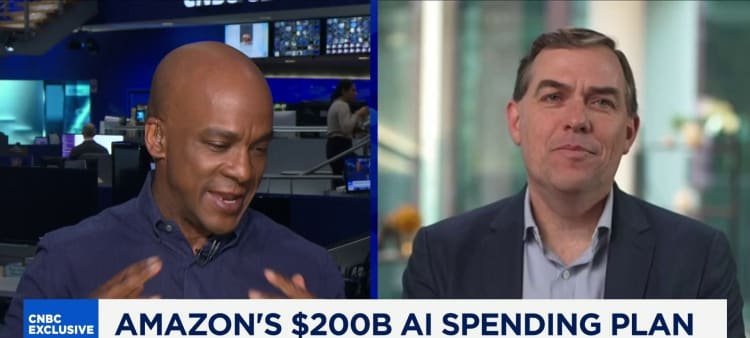
Imagem: Internet
Investors are also weighing external risks, including potential regulatory scrutiny of large cloud providers and the possibility that newer AI-focused startups could chip away at incumbent market share. Moreover, any slowdown in consumer or enterprise spending could pressure Amazon’s core retail and cloud units, complicating its ability to fund multiyear infrastructure projects without sacrificing margins.
Despite the market turbulence, Amazon’s management remains steadfast. Jassy told analysts the company will continue to evaluate spending levels but signaled no intention to scale back AI investments significantly. Management argues that delaying infrastructure expansion could leave Amazon trailing competitors in a field expected to shape the next generation of software services.
Historically, Amazon’s willingness to prioritize long-term growth over short-term profitability has yielded mixed reactions on Wall Street. When the company undertook heavy expenditures to create AWS in the mid-2000s, skeptics questioned the lack of immediate returns. That division now represents Amazon’s most profitable business line, generating the bulk of operating income. Whether the current AI-focused spending produces a similar payoff will likely determine how quickly the stock recovers from its present slump.
For now, traders are focused on day-to-day price action. Should Amazon fail to break its losing streak, the ten-session decline would rank among the most extended in the company’s 30-year history and intensify scrutiny of its capital allocation strategy. Analysts will monitor forthcoming financial updates for clearer indications of how quickly the AI investments can translate into revenue and whether free cash flow resumes an upward trajectory later this year.
Crédito da imagem: CNBC


