Cold persists through the afternoon
Limited daytime warming offered little relief. Forecast offices projected that afternoon wind chills would hover in the mid-teens around Chicago and stay near the mid-20s in New York City. A reinforcing push of Arctic air is expected to sweep through Minneapolis over the weekend, and forecasters anticipate another surge early next week that will likely drive wind-chill values well below zero across broad sections of the Midwest and Northeast.
First snow of the season in the Mid-Atlantic
While the most severe cold gripped the upper tier of the country, a separate band of moisture delivered the Mid-Atlantic’s first snow of the winter. Richmond, Virginia, and Washington, D.C., awakened to accumulating snow on Friday. Forecast totals called for 1 to 3 inches in Richmond and roughly 1 inch in the nation’s capital, with slick roads expected during the morning commute.
The snowfall prompted more than a dozen public-school districts across Virginia to announce closures or delayed openings. Transportation departments cautioned drivers about reduced visibility and icy surfaces, particularly on untreated secondary roads.
Additional snow ahead for the Northern Plains
Attention will shift westward on Saturday as a compact low-pressure system races across the Dakotas and Nebraska. Forecasters anticipate a quick burst of snow capable of depositing a general three to seven inches by the time the system reaches Iowa on Saturday evening. The National Weather Service has issued a winter storm watch for portions of Iowa in advance of the event. Chicago may pick up a light coating early Sunday as the disturbance tracks toward the Great Lakes.
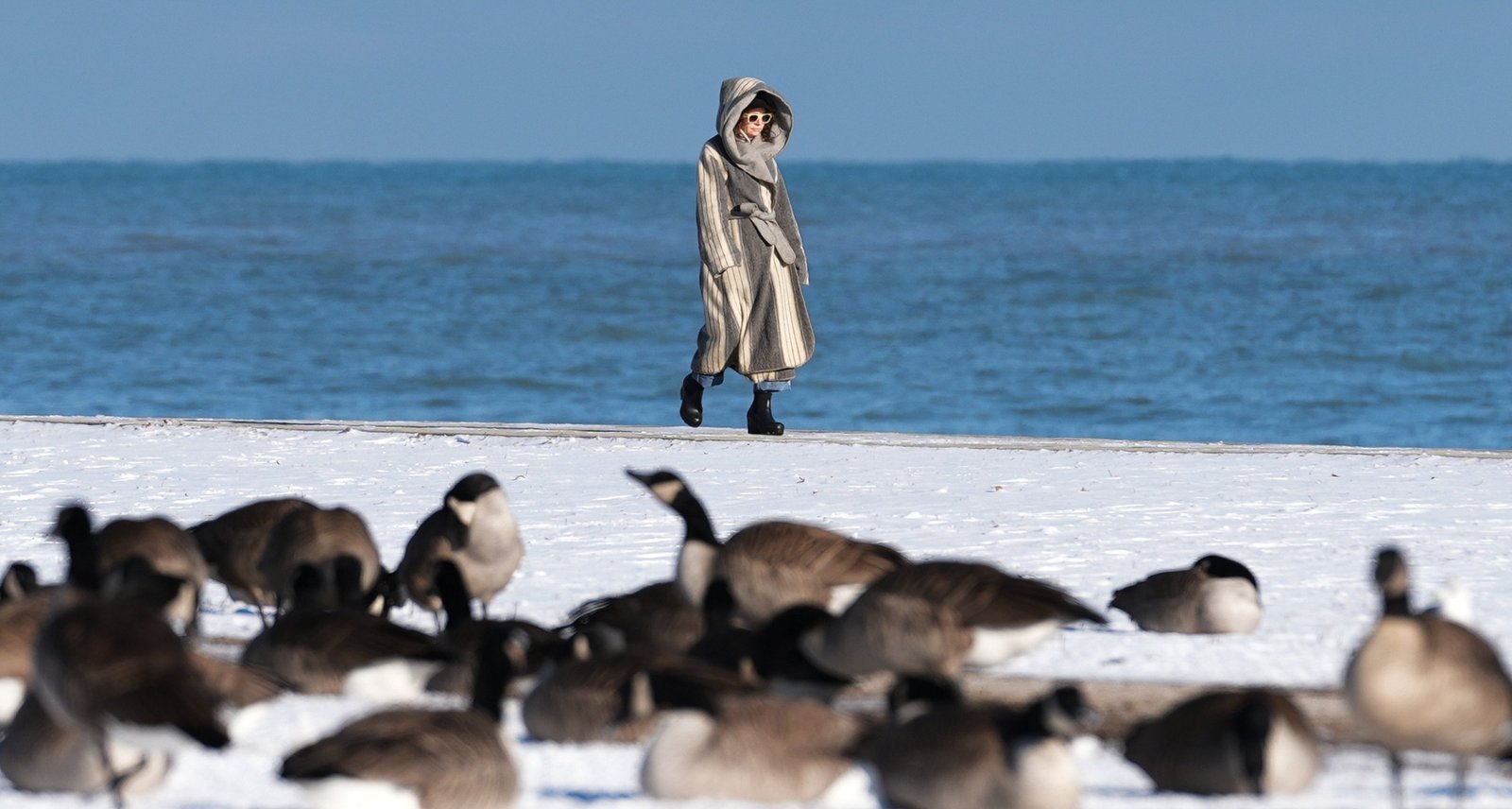
Imagem: Internet
Staying safe in extreme cold
Authorities across affected states urged residents to limit time outdoors, dress in layered clothing, and monitor vulnerable individuals for signs of hypothermia or frostbite. According to the National Weather Service, frostbite can occur within minutes when wind-chill values fall below minus 20 °F, a threshold likely to be reached in parts of the Upper Midwest during the forthcoming Arctic push.
Outlook into early next week
Computer models suggest that temperatures will moderate briefly early Sunday across portions of the East Coast before a secondary Arctic front dives southward on Monday and Tuesday. This pattern is expected to reinforce sub-freezing highs across the Great Lakes, Ohio Valley and interior Northeast, prolonging winter hazards such as icy roadways and elevated energy demand.
While no major coastal storm is currently forecast, meteorologists caution that the clash between entrenched cold air and periodic moisture incursions could produce additional rounds of light to moderate snow through the middle of the month.
Crédito da imagem: AP Photo/Nam Y. Huh


