Both the FAA and the National Transportation Safety Board (NTSB) have opened formal investigations. FAA inspectors arrived at the site Sunday night to document wreckage distribution, examine flight-control surfaces and recover onboard recorders, while NTSB investigators were expected to reach Bangor early Monday. The two agencies will work jointly to establish a timeline, analyze maintenance records and review pilot qualifications. A preliminary report is typically issued within a few weeks, though a final analysis can take a year or longer.
Weather conditions at the time of the accident were influenced by a powerful winter storm that has been sweeping across large portions of the United States, bringing heavy snow, freezing rain and gusty winds to the Northeast. Bangor International Airport, located roughly 130 miles northeast of Portland, experienced intermittent snow showers and reduced visibility throughout the day. Meteorological observations recorded around the time of the crash indicated winds from the northwest at 18 mph with higher gusts and a temperature near 25 degrees Fahrenheit.
The same storm system has severely disrupted commercial aviation nationwide. Flight-tracking services reported that more than 11,000 flights were canceled within, into or out of U.S. airports on Sunday, adding to substantial delays that began earlier in the weekend. Bangor had already seen multiple schedule adjustments before the Challenger 600 attempted departure.
Bangor International is a joint-civilian and military facility that serves as a diversion airport for transatlantic flights and as a refueling stop for cargo carriers. The field is equipped with a 11,440-foot runway capable of handling wide-body aircraft, as well as Category II instrument landing capabilities. Its on-site fire department maintains Aircraft Rescue and Firefighting index C readiness, which covers aircraft up to the size of a Boeing 737. The airport’s quick response was credited with preventing secondary hazards such as post-impact fire from escalating, officials said.
The Bombardier Challenger 600 series, introduced in the early 1980s, is certified to carry up to 19 passengers, though typical corporate or charter configurations seat eight to 12. The twin-engine jet has a range of about 3,500 nautical miles and a maximum takeoff weight of roughly 48,200 pounds. According to the FAA’s civil aircraft registry, fewer than 100 examples of the original CL-600 variant remain active in the United States, many operated by private owners, charter firms or specialized transport services.
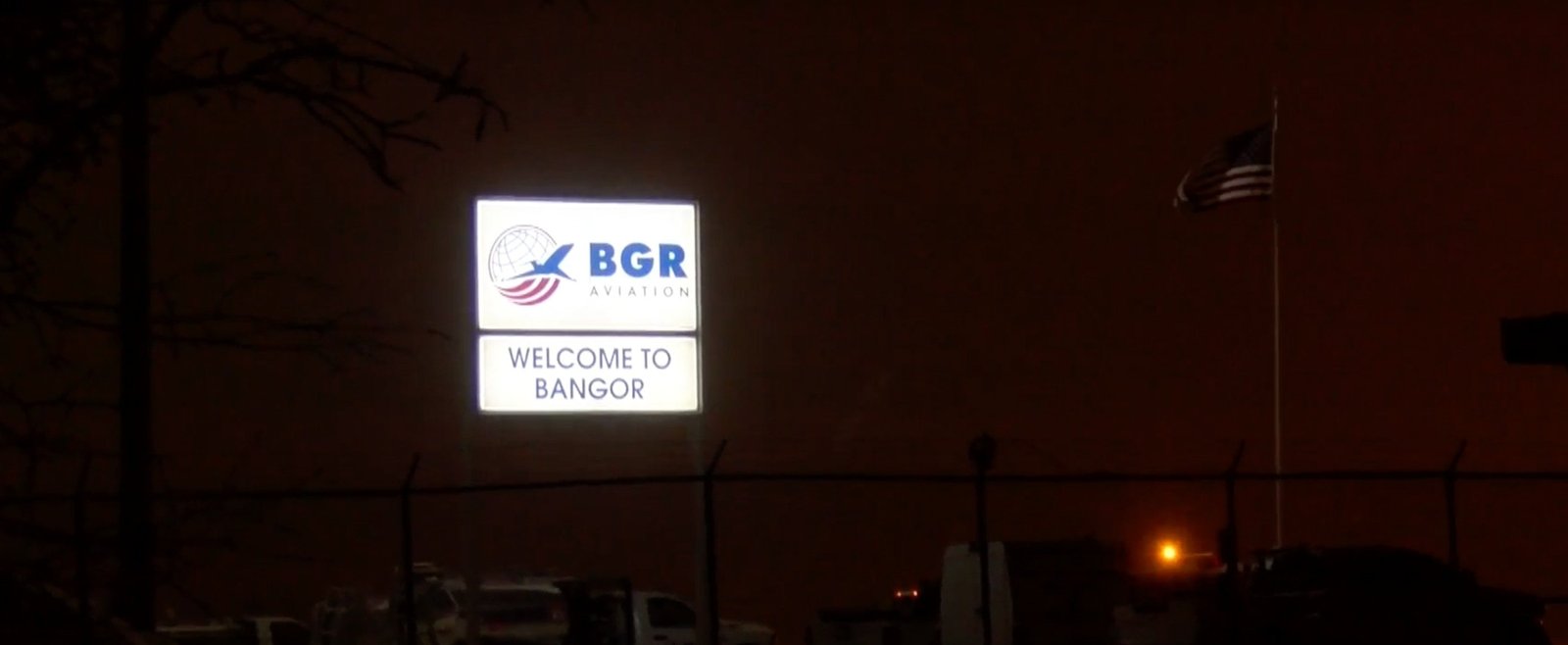
Imagem: Internet
Investigators will examine several potential factors, including weather, runway surface conditions, engine performance and possible mechanical anomalies. Data retrieved from cockpit voice and flight data recorders — standard equipment on most Challenger models — will be critical to reconstructing the jet’s final moments. The NTSB will also interview air-traffic controllers, witnesses and maintenance personnel who last serviced the aircraft.
Bystanders in the airport terminal reported seeing emergency vehicles converge on the runway shortly after hearing a loud noise consistent with a high-power engine surge. The airport was closed to all traffic for several hours while crews worked to secure the scene and remove debris. Limited operations resumed early Monday morning, though authorities warned travelers to check with airlines for updated schedules.
Sunday’s accident is the most serious incident at Bangor International in more than two decades. It follows a series of weather-related aviation disruptions this month, underscoring the challenges posed by winter operations in the Northeast. According to historical data compiled by the National Transportation Safety Board, takeoff and initial climb account for a significant portion of business-jet accidents, often because of engine issues, runway contamination or weight-and-balance irregularities.
Federal officials emphasized that all information released so far is preliminary and subject to change as the inquiry progresses. The FAA is expected to issue safety recommendations if investigative findings point to systemic concerns. In the meantime, Bangor International Airport management said it is cooperating fully with federal authorities and providing support to those affected.
Additional updates will be provided by the investigating agencies as verified details become available.
Crédito da imagem: WVII