Scientists note that the reaction serves multiple purposes in nature. In some organisms, the light may deter predators; in others it can attract prey or mates. While the exact species responsible for the glow in the New Zealand video has not been identified publicly, similar coastal events around the world are frequently linked to dinoflagellate concentrations.
Documented bioluminescent bays in regions such as Puerto Rico’s Vieques Island and bioluminescent lagoons in Jamaica provide year-round examples of the effect. New Zealand itself has reported seasonal occurrences, particularly in areas where warm currents and nutrient availability create favorable conditions for plankton blooms. According to the National Oceanic and Atmospheric Administration, environmental factors such as water temperature, salinity and nutrient levels all influence the intensity and duration of these light shows. National Geographic notes that while bioluminescence happens globally, coastal sightings are often unpredictable, making each event a draw for locals and tourists.
Public Reaction and Safety Considerations
In the video, beachgoers appear to maintain a respectful distance from the waterline while observing the glow. Authorities typically advise viewers to exercise caution near waves, especially after dark, when visibility is limited. Standard safety recommendations include wearing appropriate footwear, keeping torches or smartphone lights on hand and remaining aware of changing tides.
Although no injuries or disruptions were reported in connection with the New Zealand sighting, local councils and environmental agencies often monitor such gatherings to ensure both public safety and minimal disturbance to marine life. In instances where large crowds are expected, temporary signage or patrols may be deployed to manage parking, litter disposal and shoreline access.
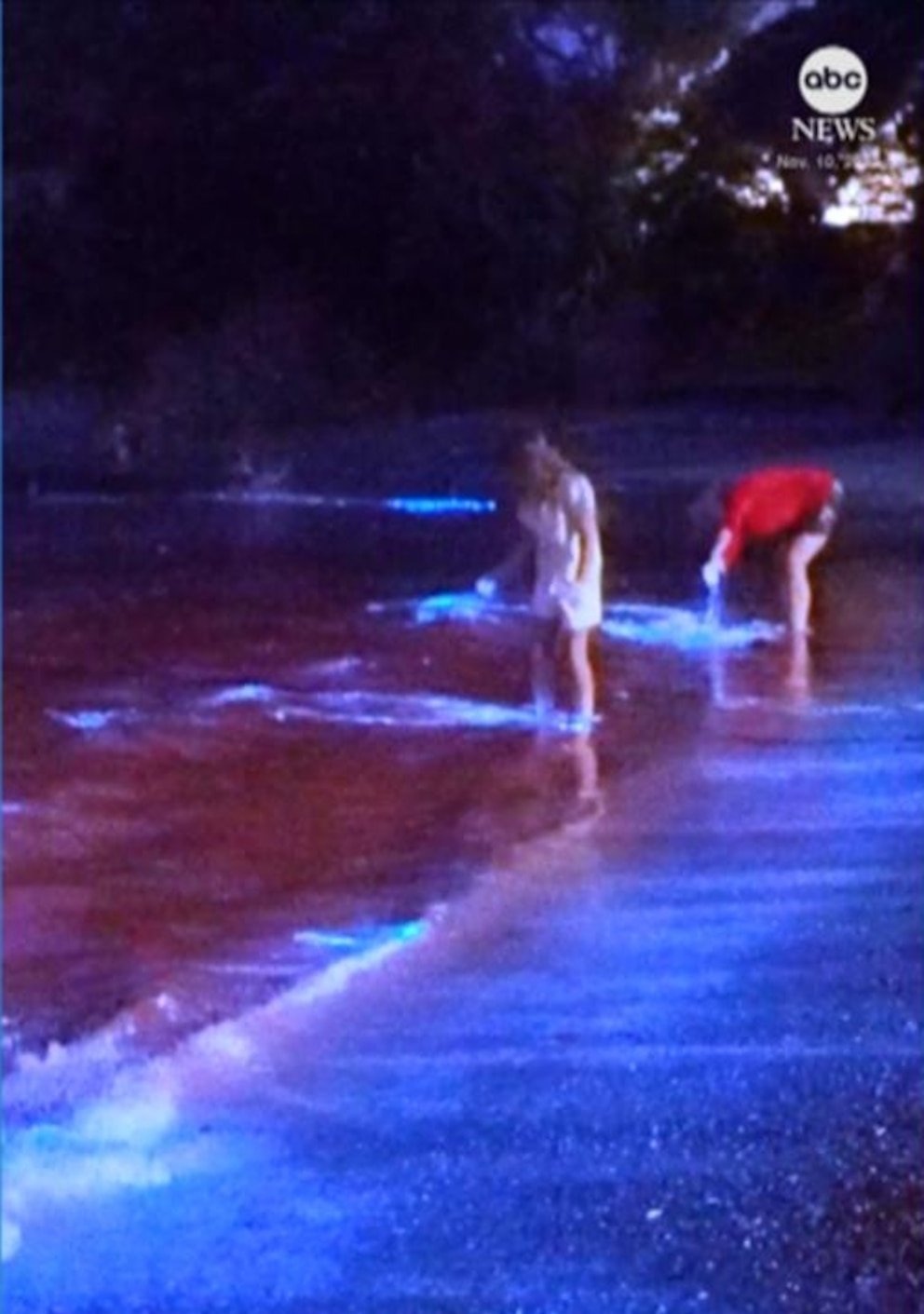
Imagem: Internet
Environmental Impact and Research
Marine biologists point out that casual observation of bioluminescence generally poses little risk to the microorganisms involved, provided spectators do not collect samples or introduce contaminants into the water. However, increased foot traffic can lead to erosion or trampling of delicate dune systems adjacent to beaches. Sustainable tourism practices—such as sticking to designated paths and removing all personal waste—remain key to preserving coastal habitats.
Research into bioluminescence contributes to broader scientific fields, including biomedical imaging and materials science. Proteins derived from luminous organisms have become crucial tools in molecular biology for tracking cellular processes. Observations like the one documented in New Zealand help scientists improve understanding of plankton distribution, bloom cycles and the potential influence of climate variability on marine ecosystems.
Looking Ahead
For now, the New Zealand shoreline seen in the widely shared video serves as the latest reminder of the spontaneous beauty produced by natural marine processes. With no schedule for when or where the next glow will appear, experts advise would-be observers to monitor local weather conditions, tide charts and community forums that occasionally alert residents to fresh sightings. Each occurrence, scientists emphasize, adds another opportunity to study and appreciate an intricate feature of ocean life that continues to fascinate both researchers and the public.
Crédito da imagem: Source video via social media


