The scale of spending is illustrated by the plans of leading platforms. Amazon and Meta have earmarked tens of billions of dollars annually for AI-related investments, while Microsoft has restructured its partnership with OpenAI to provide additional resources for the developer of ChatGPT. OpenAI, meanwhile, is reported to be exploring an initial public offering that could value the firm at about US$1 trillion, according to Reuters.
BlackRock’s view is that much of the forthcoming expenditure will filter into long-term procurement agreements. Semiconductor contracts are being signed years in advance, and grid operators from North America to the Middle East are racing to secure new generation capacity for hyperscale facilities. Data-center developers are also locking in renewable-energy purchasing agreements to manage both cost and sustainability targets.
Market analysts expect the power requirements of these facilities to accelerate. S&P Global projects that global data-center electricity demand could nearly double by 2030, led by hyperscale, enterprise and colocation sites alongside crypto-mining installations. The projection supports BlackRock’s conviction that utility companies and specialized energy providers will remain critical beneficiaries of the AI build-out.
Powell emphasized that leading technology firms have only begun to access debt markets to finance the next wave of expansion. Early bond sales suggest significant additional firepower is available, giving hyperscalers flexibility to maintain aggressive spending even if internal cash flow moderates. BlackRock expects this incremental capital to reinforce demand for the hardware, power and raw materials required to construct next-generation server farms.
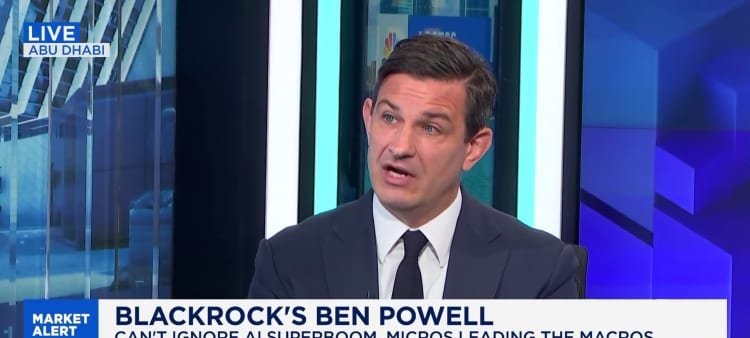
Imagem: Internet
While AI model developers have attracted public attention, BlackRock’s analysis suggests the risk-reward profile is more favorable further up the supply chain. The firm notes that competition among cloud providers could compress margins on AI services, whereas suppliers of scarce components—such as cutting-edge chips and high-capacity electrical infrastructure—are likely to preserve pricing power amid persistent shortages.
Powell added that hyperscalers are acting under the assumption that falling behind in AI capability could jeopardize their entire platform businesses. This mentality, he said, encourages expenditure levels that may overshoot immediate demand but nonetheless benefit the companies delivering the underlying technology. BlackRock forecasts that positive earnings surprises in these segments are probable over the next 12 months as orders continue to land.
Taken together, BlackRock’s thesis characterizes the current environment as a capital-expenditure “super boom” centered on the physical enablers of artificial intelligence. As long as the race among tech giants persists, the asset manager expects the investment spotlight to remain on semiconductor designers, equipment manufacturers, energy producers and even basic-materials suppliers that form the backbone of the AI economy.
Crédito da imagem: Bloomberg | Getty Images


