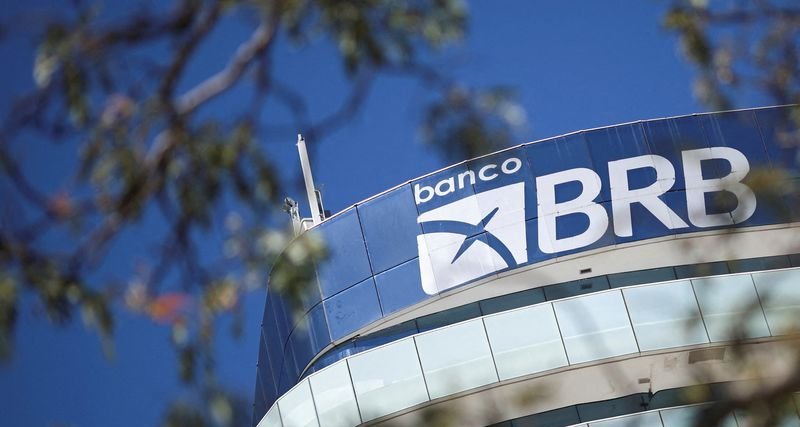
Another person familiar with the review process indicated that regulatory concerns extend beyond the question of contingent liabilities. Specific issues were not disclosed, but a third source said Banco Master needs “significant fresh capital” to stabilize its balance sheet.
Brazil’s financial regulator rarely comments publicly on pending or rejected transactions, and in this case repeated its standard policy of not discussing individual operations. Banco Master also declined to comment.
High-yield strategy under scrutiny
Banks across Brazil have faced tighter supervision in recent years as they diversify funding sources. Banco Master drew industry attention by issuing high-yield notes through digital investment platforms and marketing them as covered by the national deposit insurance fund, which guarantees up to 250,000 reais per depositor in the event of bank failure. Funds raised from those offerings were used to purchase illiquid assets, including court-ordered government receivables and equity stakes in distressed companies targeted for turnaround.
BRB stated at the outset that it was interested only in what it called Banco Master’s “healthy assets.” The central bank’s rejection suggests regulators remain cautious about transfers that could move riskier positions off the balance sheet of one institution without adequate safeguards. Such caution is in line with global trends; for context, Brazil’s central bank has emphasized in past communications the need for acquirers to demonstrate full capacity to absorb risks when buying troubled peers.
Possible structure of a new bid
The revised plan under study would likely exclude large portions of Banco Master’s loan book and other exposures deemed difficult to value, thereby limiting BRB’s future provisioning requirements. Negotiators are also exploring contractual clauses that would place responsibility for any undisclosed liabilities on Banco Master’s current shareholders, according to the first source.
Timelines for submitting a new application remain open. BRB must first analyze the central bank’s detailed decision, which is expected to become available in the coming days. The lender remains under pressure to identify growth opportunities after an aggressive expansion of its retail and digital operations in the Federal District, the region that controls BRB.
Market reaction underscores the stakes. A 5.6 percent drop in BRB’s preferred shares erased gains accumulated earlier this quarter and contrasted with a broader market uptick. Analysts noted that clarity on the central bank’s objections will be key to restoring investor confidence.
Capital requirements and broader impact
The episode also highlights the growing importance of capital adequacy in Brazil’s mid-size banking sector. Should Banco Master fail to secure new funding, it may need to seek alternative investors or dispose of additional assets to meet minimum regulatory ratios. Meanwhile, potential acquirers such as BRB must demonstrate both financial capacity and robust risk-management frameworks to receive approval.
The Brazilian Deposit Insurance Fund’s coverage limit of 250,000 reais per investor continues to serve as a backstop for retail noteholders, but it does not eliminate systemic concerns if a bank’s asset quality deteriorates. Industry observers will watch whether other state-controlled or regional lenders step in with competing offers should BRB’s second attempt be rejected.
Current foreign-exchange levels may also influence negotiations: the real recently traded at approximately 5.42 per U.S. dollar. Any significant currency movements could alter valuations, especially for assets with dollar-linked cash flows.
For updated analysis on how regulatory actions shape Brazil’s banking landscape, visit our Finance News Update section.
Crédito da imagem: Banco de Brasília