
Berkshire Hathaway’s latest quarterly filing reveals a sharp adjustment in the conglomerate’s equity portfolio, highlighted by a sizeable reduction in its Amazon investment and the addition of a new stake in The New York Times Company. The document, covering the first quarter of 2026, shows Warren Buffett’s firm cutting its Amazon position by more than 77 percent and deploying part of the freed capital into the media group’s shares. The moves continue a multi-year pattern in which Berkshire trims some of its most recognizable technology holdings while selectively adding to more traditional or diversified businesses.
Amazon Stake Reduced to 2.3 Million Shares
The filing indicates that Berkshire now holds approximately 2.3 million Amazon shares, down from a figure that exceeded 10 million at the close of 2025. Berkshire first purchased Amazon in 2019, surprising observers who had long noted Buffett’s caution toward large, high-growth technology names. The latest sale removes Amazon from the list of Berkshire’s top equity positions, turning it into a relatively minor line item in a portfolio still led by Apple, Coca-Cola, American Express, and other long-standing holdings.
While the filing provides no commentary on specific motivations, the scale of the divestiture suggests a reassessment of Amazon’s risk-reward profile. Potential factors include Amazon’s valuation after a multi-year share-price recovery, heightened competition in cloud services, or a preference for cash that can be redirected toward lower-priced assets. The reduction also follows earlier, smaller trims during 2025, indicating a deliberate step-down rather than a single-trade exit.
Continued Paring of Large Positions
Amazon’s sale runs parallel to incremental reductions in other major holdings such as Apple and Bank of America. Apple, long Berkshire’s single largest equity investment, has been partially trimmed in consecutive quarters, although it still represents a dominant share of the conglomerate’s $360 billion publicly disclosed stock portfolio. Similarly, Berkshire reduced its Bank of America stake during 2025, maintaining majority exposure yet lowering concentration risk.
The collective activity aligns with Buffett’s historical approach of concentrating capital when valuations appear compelling and easing positions when opportunities arise elsewhere. It also underscores Berkshire’s flexibility: despite enjoying sizable unrealized gains in past tech investments, the conglomerate continues to recycle funds into sectors it believes can generate durable cash flows over the long term.
New $351.7 Million Stake in The New York Times
Offsetting the Amazon sale, Berkshire initiated a new position worth roughly $351.7 million in The New York Times Company, equal to about 5.1 million shares based on prices prevailing during the quarter. The purchase marks Berkshire’s re-entry into the newspaper space after divesting its portfolio of local papers in 2020. Buffett had previously characterized the print newspaper model as structurally challenged, but the Times’ expansion into digital subscriptions, audio, and games appears to have changed that calculus.
The New York Times ended 2025 with 12.8 million total subscribers, according to its year-end report, after adding 1.4 million net new digital subscribers during the year. Management has set a target of 15 million subscribers by the close of 2027, a goal it says remains on schedule. The company also produced about $551 million in free cash flow, meeting criteria that Buffett has often cited—predictable earnings, a recognizable brand, and the ability to reinvest in growth without excessive leverage.
Digital Transition Draws Interest
Berkshire’s decision to back the Times highlights the ongoing transformation of legacy media firms into subscription-led digital platforms. The newspaper’s migration away from a print-centric revenue model has produced multiple income streams, including digital news, cooking, crosswords, audio products, and the acquisition of sports-media outlet The Athletic. These developments appear to align with Berkshire’s preference for businesses that can generate recurring cash and maintain pricing power through brand loyalty.
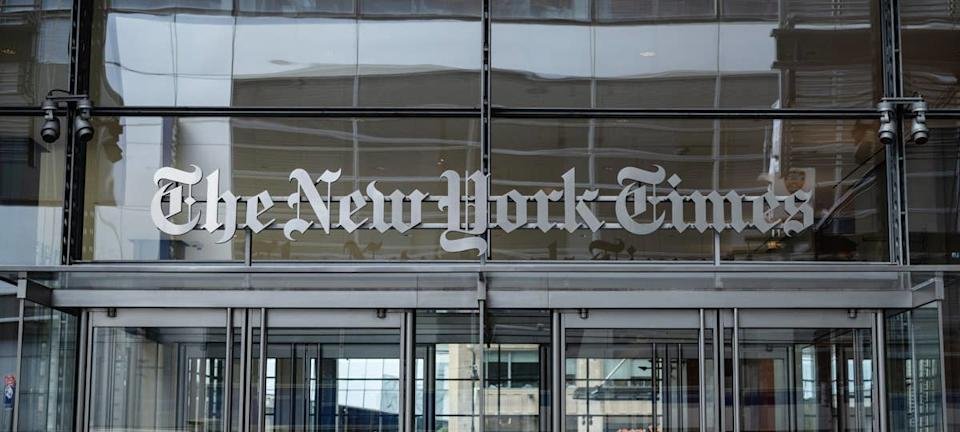
Imagem: Internet
Industry observers note that the purchase does not signal a reversal on print media more broadly. Rather, it emphasizes one company’s success in converting its globally recognized brand into a digital business at scale. A report from the U.S. Securities and Exchange Commission shows that subscription revenue now accounts for a majority of the Times’ top line, underscoring the sustainability of the model in contrast to advertising-dependent peers.
Implications for Berkshire’s Cash and Capital Allocation
Berkshire finished 2025 with more than $167 billion in cash and Treasury holdings, giving it ample flexibility to manage equity positions without affecting its overall liquidity. The Amazon trim and Times purchase combined represent a modest shift relative to Berkshire’s balance sheet but provide insight into where the firm currently sees value. With share repurchases, prospective acquisitions, and additional equity buying all competing for capital, the latest adjustments suggest the company remains patient yet opportunistic.
Analysts tracking Berkshire’s regulatory disclosures point out that the firm has also continued to buy back its own shares when prices fell below Buffett’s estimate of intrinsic value. That option remains available in 2026, particularly if market volatility raises uncertainty around new external investments. In parallel, Berkshire’s operating subsidiaries—from insurance to energy to railroads—continue to contribute the bulk of earnings, cushioning the impact of equity market swings.
Rotation Reflects Evolving Market Landscape
The repositioning away from a high-growth technology leader and toward a media company rooted in subscriber revenue reflects the changing opportunities in the post-pandemic equity environment. As interest rates stabilize and corporate earnings growth normalizes, companies with more predictable cash generation can become relatively attractive. The Times’ success in scaling digital subscriptions, alongside Amazon’s maturity in e-commerce and cloud services, illustrates divergent stages of growth that investors such as Berkshire must weigh.
Whether the pattern continues will depend on multiple variables, including equity valuations, macroeconomic developments, and Berkshire’s pipeline of acquisition prospects. The firm has not ruled out additional purchases or sales in 2026, and quarterly filings will remain the primary public window into its evolving strategy.
For now, the headline adjustments—cutting more than three-quarters of the Amazon stake and initiating a substantial position in The New York Times—signal that Buffett’s team is willing to reallocate capital decisively when underlying conditions shift. The twin moves offer a snapshot of how one of the world’s largest investment conglomerates navigates a market still balancing growth potential with the search for consistent returns.