Key elements of the strategy included:
- Investing in e-commerce capabilities to complement physical locations.
- Routing online orders through local stores rather than a single distribution center, reducing shipping times and costs.
- Diversifying real estate beyond traditional malls, including outlets, tourist venues and pop-ups.
- Maintaining the hands-on assembly experience as a core differentiator against mass-produced plush sold at general merchandise retailers.
Within several years, nearly every company-owned store was profitable, validating the shift toward efficiency and channel flexibility. The business also began leveraging licensing partnerships and seasonal tie-ins to widen its product mix.
Market performance and all-time stock high
The operational improvements translated into a notable equity rally. Earlier in 2023, Build-A-Bear shares recorded a surge comparable to high-growth technology names, reaching an all-time intraday high of roughly $76 in September. Although the price subsequently retreated, the stock remains more than 125% higher over the past two years, substantially outperforming broad retail indices.
On the operations side, management forecasts revenue will surpass the $500 million threshold for the 2023 fiscal year, a milestone for a company that posted less than half that total a decade earlier.
Tariff exposure and revised outlook
Despite recent gains, Build-A-Bear faces external pressures tied to international trade policy. More than 90% of its plush toys and accessories are sourced from factories in China and Vietnam. The company’s third-quarter report, released in early December, projected an $11 million tariff-related expense for fiscal 2025. Analysis from Small Cap Consumer Research this month cited those costs and softer third-quarter revenue as reasons to trim earnings estimates and lower its price target by $10.
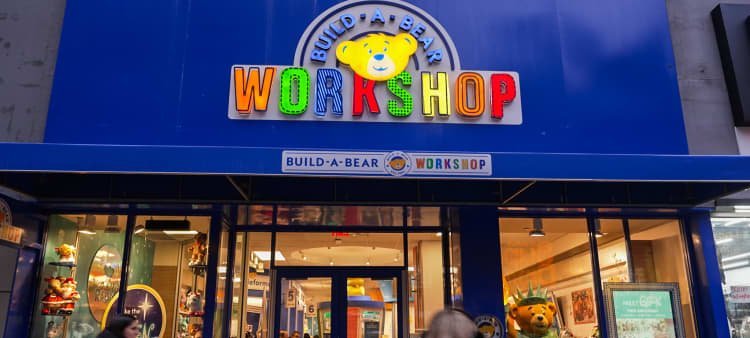
Imagem: Internet
The headwinds are not limited to import duties. Executives told analysts that October traffic declined during the brief U.S. government shutdown, illustrating the company’s sensitivity to macro events that restrict consumer activity.
Tariffs affecting toy imports stem from the Section 301 actions initiated in 2018. Information from the Office of the United States Trade Representative outlines the current rate structure, which includes duties of up to 25% on certain categories that encompass plush toys.
Competitive position
Analysts note that Build-A-Bear retains an advantage over commodity plush sellers because customers actively participate in creating the final product. That experiential element, they contend, supports higher conversion and return visits even as comparable toys can be purchased at big-box chains or specialty gift shops.
While management must navigate tariff costs and shifting traffic patterns, the brand’s combination of interactive retailing, diversified channels and disciplined cost controls has lifted it from crisis to sustainable growth. Results over the last two fiscal years indicate that the turnaround plan put in place a decade ago remains intact, positioning Build-A-Bear as a notable success story among small-cap consumer companies.
Crédito da imagem: CNBC


