The complaint also criticizes the camp’s recent decision to reopen Cypress Lake, a sister facility inaugurated in 2020, for the 2026 season while continuing to evaluate whether to rebuild the Guadalupe River site. Plaintiffs state that the camp has publicly framed the disaster as an unavoidable “act of God” and has refused to accept responsibility for what they characterize as a preventable tragedy.
Second lawsuit focuses on single victim
A separate filing by the parents of eight-year-old Eloise “Lulu” Peck mirrors many of the same allegations. It contends that camp leaders were well aware that the property sits in an area colloquially known as “Flash Flood Alley,” had documentation of past flood events, and received warnings from family members about potential hazards. The Peck family also seeks at least $1 million in damages, blaming both negligence and gross negligence for their daughter’s death after floodwaters swept through low-lying cabins.
Sequence of the July 4 disaster
According to emergency management reports, more than 12 inches of rain fell within six hours across Kerr County on the night of July 4. The Guadalupe River subsequently surged more than 20 feet per hour, overwhelming Camp Mystic’s riverfront property. Many campers were asleep when water inundated their cabins, leaving little time for organized evacuation. Search-and-rescue teams spent two days combing the area for missing children and staff.
Satellite data and field measurements from the National Weather Service confirm that the Hill Country experiences some of the fastest-rising waterways in the United States, making rapid-onset floods especially hazardous.
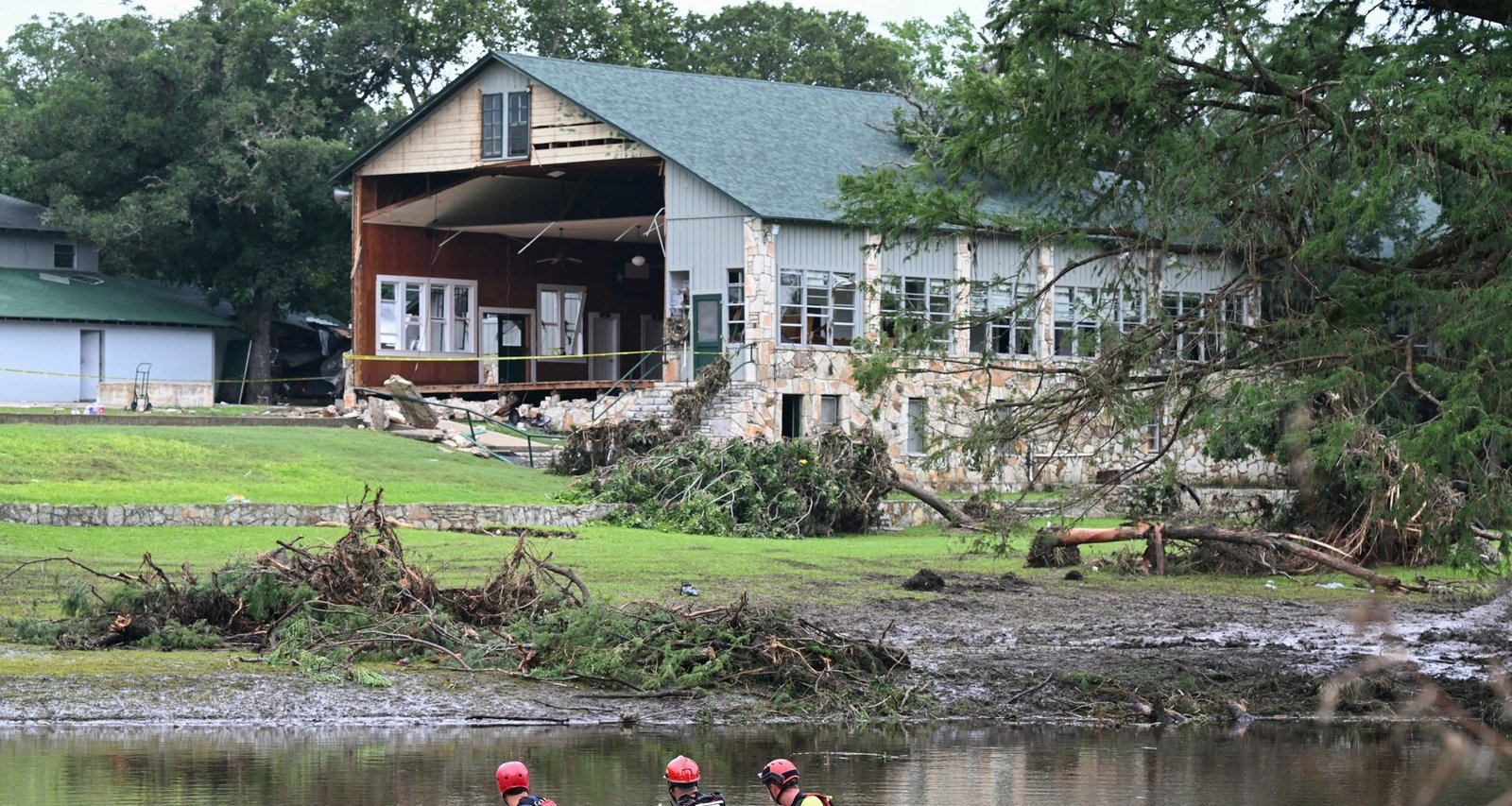
Imagem: Internet
Legislative response
The high fatality count prompted state lawmakers to revisit regulations covering youth camps situated near waterways. New legislation enacted in the aftermath of the flood requires summer camps to develop enhanced emergency-action plans, install weather alert systems and participate in a grant program aimed at adding early-warning sirens in flood-prone zones. Compliance deadlines are scheduled to take effect before the 2026 camping season.
Camp’s rebuilding plans
In September, Camp Mystic issued a statement to families announcing that Cypress Lake will resume operations in summer 2026, while the Guadalupe River site remains closed because of extensive structural damage. Camp officials said they intend to rebuild “in a way that is mindful of those we have lost,” emphasizing their commitment to community and ministry. They have not publicly addressed the specific allegations outlined in either lawsuit.
Next steps in court
Both cases accuse the defendants of failing to implement adequate flood-mitigation measures, ignoring weather forecasts and providing no clear evacuation protocol. The suits also argue that cabin placement in a low-lying section of the camp created a predictable danger when river levels rose. Attorneys for the families state that the litigation aims to uncover internal decision-making and ensure similar incidents do not recur.
As of Tuesday, representatives for Camp Mystic and the Eastland family had not responded to requests for comment. The court has yet to set initial hearing dates.
Crédito da imagem: Ronaldo Schemidt/AFP via Getty Images


