
Mounting scientific evidence confirms that octopuses, squid and cuttlefish can feel pain, a conclusion that is reshaping legislation in several countries and intensifying debate over the ethics and sustainability of eating these animals. As new laws restrict octopus farming and wild stocks show signs of strain, divers and other ocean enthusiasts are reassessing whether a plate of grilled tentacles aligns with conservation values.
Sentience Supported by Research
A comprehensive review commissioned by the United Kingdom in 2021 applied eight neurological and behavioral criteria to evaluate cephalopod sentience. The study found strong evidence that the animals experience pain, pleasure, hunger and anxiety. Separate laboratory work that same year demonstrated affective pain responses in octopuses: individuals injected with a mild acid avoided the location where the discomfort occurred and later sought out a chamber where they had received pain relief. Comparable experiments showed cuttlefish exercising delayed gratification, waiting for preferred prey with a level of self-control previously documented in crows and chimpanzees. Collectively, the findings place cephalopods nearer to vertebrates on the spectrum of cognition and emotion.
Growing Legal Recognition
Legislation is beginning to reflect the research. The United Kingdom’s Animal Welfare (Sentience) Act 2022 formally acknowledges cephalopods as sentient beings, obligating authorities to develop handling and slaughter guidelines. The European Union has regulated their use in research settings since 2010. In the United States, protections are less uniform, but momentum is building.
Washington became the first U.S. state to prohibit commercial octopus aquaculture, and California followed with Assembly Bill 3162 in 2024, citing both welfare concerns and the environmental cost of rearing a carnivorous species. At the federal level, a bipartisan measure known as the OCTOPUS Act of 2025 has been reintroduced in the Senate; if adopted, it would ban large-scale farming nationwide and block imports of farm-raised octopus. Each step narrows the gap between U.S. policy and European standards, although nationwide protections remain uncertain.
Farming May Exacerbate Environmental Pressure
Proponents of aquaculture argue that raising octopus in tanks could reduce pressure on wild populations. Critics counter that the biology of the species makes intensive farming problematic. A proposed facility by seafood firm Nueva Pescanova in Spain crystallized the debate: company documents indicate that producing one kilogram of octopus would require more than three kilograms of wild-caught fish for feed. Densely stocked tanks would hold animals that are normally solitary, raising the risk of stress, cannibalism and disease outbreaks. Waste from concentrated operations could also increase nutrient pollution in coastal waters.
These concerns underpinned the recent bans in Washington and California and feature prominently in federal discussions. Lawmakers argue that aquaculture might magnify rather than relieve fishing pressure by diverting additional wild fish into feed and by stimulating consumer demand.
Wild Catches Already Tightening
Market data compiled by the Food and Agriculture Organization show a downward trend in global octopus landings over the last several years, even as demand rises. The agency projects annual consumption could exceed 625,000 tonnes by 2025, nearly double current harvest levels. Some fisheries are approaching biological limits, and higher prices signal that catches are not keeping pace with appetite. Removing a top-tier predator from reefs and seagrass beds can alter local ecosystems, affecting species that divers travel long distances to observe.
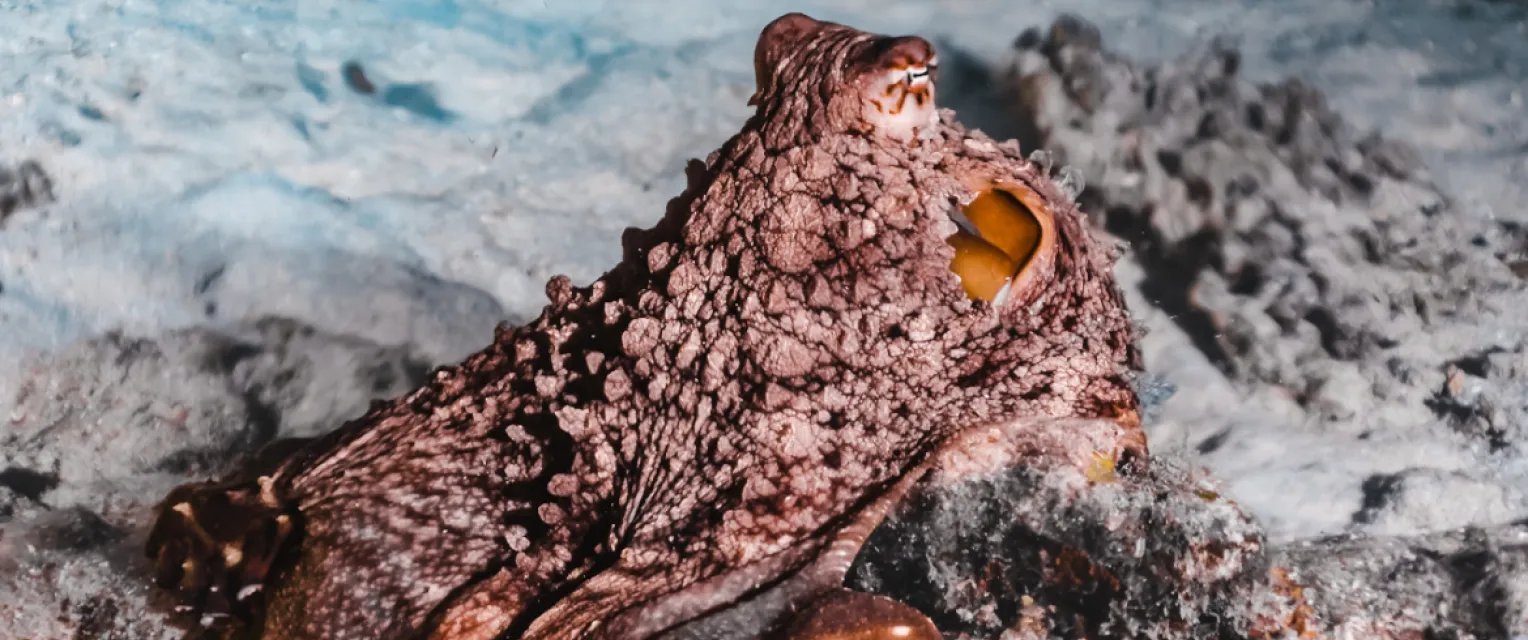
Imagem: Internet
Because octopuses grow quickly and reproduce only once, fisheries often operate on young age classes, making accurate stock assessments difficult. Fisheries scientists warn that a sudden decline can occur without extensive early warning signs.
Conflict With Conservation Messaging
Divers, snorkelers and other marine recreationists routinely participate in reef-restoration projects, beach cleanups and campaigns against shark finning. Yet calamari and other cephalopod dishes remain common on post-dive menus. Conservation groups note that consuming animals now recognized as capable of suffering sends mixed messages to local communities and tour operators about which species deserve protection. The inconsistency can weaken broader outreach efforts on marine stewardship.
Available Alternatives
Observers suggest several practical steps for consumers who wish to align dietary choices with emerging science. Plant-based calamari made from oyster mushrooms or heart of palm replicates the texture of fried rings. Divers can support legislation such as the OCTOPUS Act by contacting representatives or signing petitions. Submitting cephalopod sightings to citizen-science programs helps researchers track population shifts.
Wildlife agencies, academic institutions and nongovernmental organizations are also expanding public education initiatives. The Food and Agriculture Organization of the United Nations, for example, publishes regular analyses of cephalopod market trends and stock health, offering open data that inform both policy and consumer guidance.
Outlook
Scientific consensus on cephalopod sentience, combined with tightening wild supplies and the ecological drawbacks of farming, is prompting lawmakers and consumers to revisit long-held culinary habits. While regulatory frameworks differ across jurisdictions, the trajectory points toward stronger animal-welfare protections and greater scrutiny of supply chains. For communities that value vibrant oceans, choosing not to eat octopus is emerging as one tangible—and immediate—way to match words with actions.