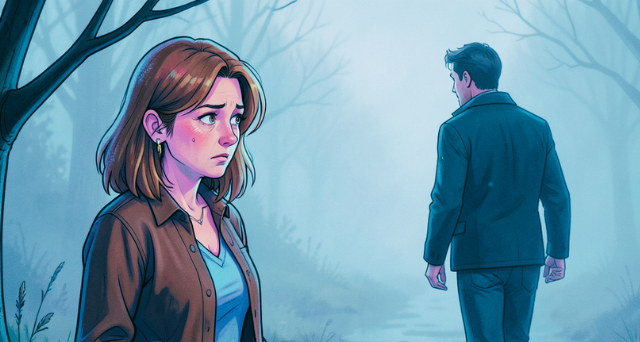
A new relationship rekindles old wounds
Early this year, Viera met a man she identifies only as “Brian.” She describes him as outwardly strong yet emotionally exposed, traits that felt familiar and compelling. After an initial period of mutual affection, Brian’s behavior shifted. He started distancing himself, alternating between warmth and indifference, and referencing other women to provoke jealousy. He later admitted that these actions were deliberate tests of Viera’s reactions.
Despite noticing the volatility, Viera says she empathized with Brian’s pain, partly because she sensed similarities to her own history. That sense of shared vulnerability, she explains, led her to overlook emerging warnings in the relationship’s early stages.
Escalating criticism and self-blame
As the relationship progressed, Brian allegedly withdrew for extended periods, criticized Viera’s behavior, and attributed every conflict to her faults. Each reconciliation was followed by a repeated cycle of verbal hostility and distance. Viera acknowledges that her own lingering self-hatred—rooted in her past hospitalizations and abuse—left her susceptible to accepting blame even when the accusations felt exaggerated or unfounded.
The dynamic triggered a regression into destructive coping strategies from her youth, including disordered eating, self-harm, depression, and anxiety. When she disclosed these developments, Brian purportedly labeled her emotional reactions as solely her responsibility, refusing to offer support.
Recognition of emotional abuse
Viera recounts instances in which Brian employed the silent treatment for weeks, resorted to name-calling, and leveraged financial offers to maintain psychological control. One episode she recalls with particular clarity involved a remark suggesting her “insides were broken,” a statement she found especially cruel because of her history of sexual abuse. When she reacted with visible distress, Brian dismissed her as overly sensitive.
Eventually, Viera concluded that the pattern met the threshold of emotional abuse. She observed that her attempts to correct perceived shortcomings only intensified Brian’s belittling behavior, reinforcing her belief that she had to diminish herself for the relationship to continue.
Decision to leave and lessons identified
Unable to reconcile continued mistreatment with her efforts to heal, Viera decided to end the relationship. In reflecting on the experience, she emphasizes that while she was not a flawless partner, none of her imperfections justified emotional punishment.
Drawing on her ordeal, Viera outlines five practical guidelines for individuals whose childhood shame might cloud judgment in adult relationships:
- Understand that attraction can stem from familiar emotional states, whether positive or negative, and recognize when a partner evokes more shame than love.
- Evaluate the quality of companionship; enduring hardship with someone may feel loyal, but the partnership can derail personal wellbeing if abusive dynamics emerge.
- Refuse to excuse silent treatments, verbal attacks, or financial manipulation, even when personal healing is incomplete.
- Delay pursuing committed relationships until developing a clear sense of personal boundaries and thresholds for acceptable behavior.
- Differentiate between love and pain; tolerating suffering does not equate to genuine affection.
Context from trauma research
Viera’s story aligns with psychological findings that early trauma can influence adult relationship patterns. The National Institute of Mental Health notes that childhood adversity often elevates the risk of post-traumatic stress, depression, and difficulties with trust—all factors that can complicate intimate partnerships.
Experts widely recommend therapy, support groups, or other structured interventions to address unresolved trauma. While Viera credits her spiritual practice for sustaining recent stability, her experience underscores that self-guided recovery can still leave residual vulnerabilities, particularly when new relationships trigger memories of earlier harm.
Ongoing recovery and broader implications
Since ending the relationship, Viera has focused on reinforcing the coping strategies that previously kept her stable: meditation, service activities, and social connections outside romantic contexts. She stresses that individuals do not need to achieve complete healing before expecting basic respect and emotional safety from partners.
Her account adds to a growing body of public narratives illustrating how survivors can misinterpret abuse as normal or deserved, especially when historical shame remains unresolved. By sharing concrete reminders and describing the progression from initial attraction to emotional harm, Viera aims to help others identify warning signs earlier and prioritize their own wellbeing.
The story also highlights a wider societal issue: adults coping with childhood trauma frequently lack clear models for healthy intimacy. Without such reference points, they may equate instability with passion or consider endurance of pain a prerequisite for love. Viera’s experience serves as a case study in how self-awareness and firm boundaries are critical to breaking cycles that perpetuate emotional damage across relationships.
While each survivor’s path differs, the narrative affirms a core principle echoed by mental-health professionals: unresolved trauma can distort self-perception and decision-making, but recognizing these patterns is a pivotal step toward safer, more supportive connections.