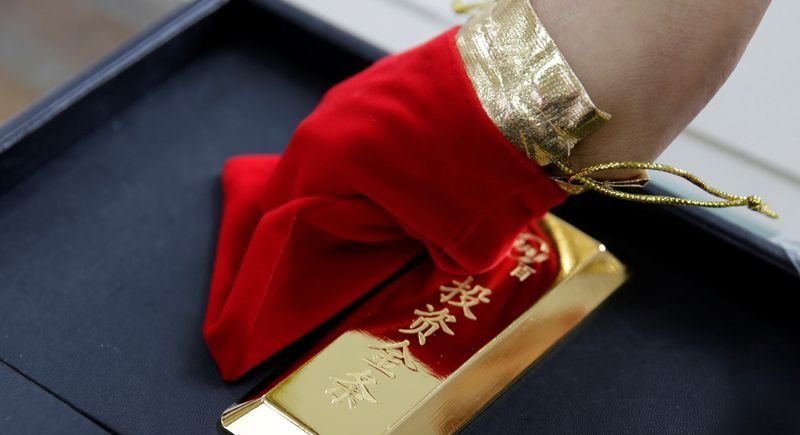
Gold prices have rallied alongside the central-bank demand. Spot bullion reached a record high of US$3,508.50 per troy ounce on Tuesday, extending a two-year surge that began in 2023. According to the World Gold Council, official-sector activity has become a key driver of the metal’s performance during this period.
Diversification after sanctions on Russia
Beijing’s renewed appetite for bullion coincides with a broader movement among emerging economies to diversify foreign-exchange reserves. Western sanctions imposed in 2022 froze roughly US$300 billion of Russia’s assets, exposing the vulnerability of holding large portions of reserves in dollars, euros and other G7 currencies.
Because gold is not issued by any government and can be stored domestically, it is viewed in many capitals as insurance against similar restrictions. “We will continue seeing demand from the PBOC as China carries on with diversification and de-dollarization of its reserves,” said David Wilson, an analyst at BNP Paribas.
Central banks traditionally scale back gold buying when prices climb to record levels. However, the United Nations Conference on Trade and Development noted this week that “uncertainty itself has become systemic,” citing persistent geopolitical frictions, supply-chain disruptions and questions about U.S. policy consistency. Those factors, the agency said, have encouraged developing nations to prioritise assets that are insulated from sanctions or currency volatility.
How far could China go?
Beijing does not publish forward-looking targets for its bullion holdings, and any internal objectives remain classified. In 2009, Hou Huimin, then vice general secretary of the China Gold Association, suggested that 5,000 tons would be an appropriate level given the country’s economic scale following the global financial crisis.
Analysts argue that benchmark is likely outdated. “If China targeted 5,000 tons in 2009, a higher number should probably be expected now as the economy has since expanded rapidly,” Wilson said.
A stockpile in the 5,000-ton range would make China the second-largest official holder of gold, trailing only the United States and surpassing leading European nations. While a timetable for such an expansion is unknown, the recent pace of acquisitions signals that bullion will remain a strategic priority.
Implications for the gold market
Continued demand from the world’s second-largest economy may tighten supply in the physical market and provide ongoing price support, according to traders. Central-bank purchases accounted for roughly one-quarter of global gold demand in 2024, a share expected to rise if emerging economies accelerate de-dollarization.
Market participants will monitor monthly updates from the PBOC for clues on Beijing’s intentions. Any slowdown could ease upward pressure on prices, while further acceleration may reinforce the metal’s role as a hedge against inflation and geopolitical stress.
For additional context on reserve management and broader financial trends, readers can consult our recent coverage in the Finance News Update section.
Image credit: original source