During Tuesday’s broadcast, he emphasized that the goal is not to abandon the market completely but to reduce exposure to investments that have surged without clear fundamental support. “I’m advocating that you take a sizable percentage of your gains and move it to cash,” he said, adding that investors should then view the remaining position as “the house’s money.”
The commentary arrived amid a broader market pullback attributed in part to geopolitical developments. Earlier in the day, President Donald Trump intensified rhetoric surrounding the Danish territory of Greenland and floated the possibility of new tariffs, unsettling global equities. While Cramer did not link the speculative rally directly to the latest political headlines, he noted that elevated uncertainty can accelerate profit taking once traders become nervous.
Market data support Cramer’s observation about concentrated gains in a limited slice of stocks. At the close of last week’s trading, the S&P 500 had risen modestly for the year, yet several niche names posted year-to-date advances well above the index. Many of these companies operate in emerging industries where long-term business models remain untested. History shows that sudden corrections are common when valuations disconnect from underlying performance, a theme Cramer revisited repeatedly on his show.
Financial regulators have also cautioned retail participants about the risks of momentum-driven markets. The U.S. Securities and Exchange Commission, in an investor alert, reminds individuals that stocks experiencing rapid price swings can reverse direction without warning. Although Cramer’s advice is delivered through an entertainment platform, it echoes regulatory guidance that emphasizes diversification, discipline and awareness of valuation metrics.
One reason speculative cycles persist, according to Cramer, is the fear of missing out on outsized returns. He acknowledged that selling into strength can feel uncomfortable, particularly when momentum appears to reward those who stay fully invested. Still, he argued that the discipline of trimming positions has historically preserved capital during periods of volatility. “It’s easier to re-enter a stock you know well than to watch gains disappear,” he said.
Seasoned professionals often adopt similar strategies. Portfolio managers frequently pare back holdings that exceed predetermined weighting limits or price targets, reallocating funds to cash or undervalued assets. Cramer recommended retail investors follow a comparable approach by identifying holdings that have outperformed both the broader market and their own expectations.
The current environment bears several similarities to previous episodes of exuberance. Last summer, shares in quantum computing firms and newly public alternative energy ventures rallied on optimism about transformative technology and future policy support. Valuations climbed despite limited revenue visibility, and a subsequent pullback illustrated how quickly sentiment can shift. Cramer’s reference to that period served as a reminder that elevated prices alone do not signal sustainable growth.
Although he highlighted risks, Cramer did not discourage investors from maintaining exposure to growth themes. Instead, he advocated a balanced allocation that keeps some upside potential while safeguarding a portion of gains. By raising cash, he argued, investors can deploy capital opportunistically if the market undergoes a broad correction.
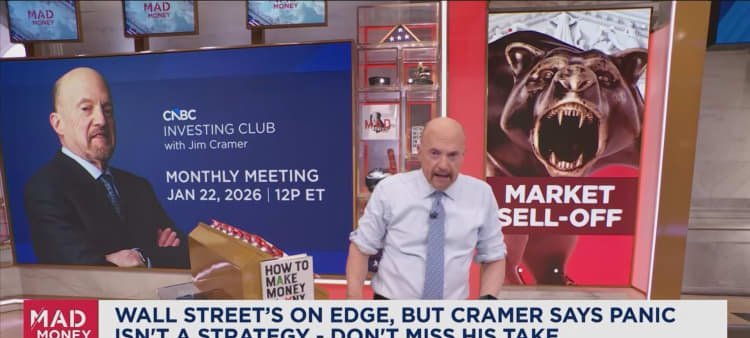
Imagem: Internet
The impetus for Tuesday’s segment was a streak of outsized daily moves in several small-to-mid-cap names. Some stocks on Cramer’s watch list recorded double-digit percentage jumps within single trading sessions, fueling chatter across online forums and social-media platforms. The pattern mirrors dynamics previously seen during the meme-stock phenomenon, where rapid price escalation drew in short-term traders before reversing abruptly.
Cramer’s guidance also touched on psychological factors. Locking in profits can help investors avoid anchoring their expectations to inflated price levels, a behavior that often leads to holding through steep declines. By converting part of a winning position to cash, individuals may reduce the emotional burden associated with timing an exit during market turbulence.
In closing, Cramer reiterated that his counsel centers on prudent risk management rather than wholesale pessimism. The fundamental backdrop, including low unemployment and resilient consumer spending, still supports equities in his assessment. Nonetheless, pockets of speculation pose dangers that can undermine portfolios if left unchecked.
Investors seeking to implement his recommendations might begin by reviewing positions that have doubled or tripled in a short span without corresponding improvements in earnings forecasts. Rotating a fraction of those profits into cash—or into more conservatively priced securities—can serve as a hedge against potential pullbacks, according to the television commentator.
Cramer’s message resonated with viewers who called into the program’s live question-and-answer segment, many of whom asked whether to trim holdings in technology and biotechnology names leading the current charge. His response remained consistent: identify the biggest winners, determine an acceptable level of exposure and monetize the excess.
Whether investors heed the advice could become evident during upcoming earnings seasons, when lofty expectations face scrutiny. A disappointing report from even a single high-momentum company can shift sentiment rapidly, a scenario Cramer highlighted by recalling sharp declines in several speculative stocks last autumn.
For now, his main takeaway is clear: extraordinary rallies offer an opportunity to realize gains, and failing to act may leave portfolios vulnerable if enthusiasm fades.
Crédito da imagem: CNBC


