The political pressure intensified after two high-profile fatalities involving federal officers in Minneapolis. Renee Good, a mother of three, was shot on Jan. 7, while ICU nurse Alex Pretti was killed in a separate encounter on Jan. 24. Both incidents prompted renewed scrutiny of ICE and broader DHS policies.
In a joint letter to Republican leaders, Jeffries and Schumer outlined 10 demands they say must be met within the 2026 DHS funding bill. Key provisions include requiring judicial warrants before agents may enter private property, prohibiting ICE officers from wearing face masks, mandating body cameras, and establishing tougher use-of-force standards. The letter also urged the administration to scale back its enforcement surge in Minnesota and called for the removal of Homeland Security Secretary Kristi Noem.
Sen. Patty Murray, chair of the Senate Appropriations Committee, said Democrats are “focused on getting a bill, but it has to rein in the abuses we are seeing by ICE and CBP.” Despite that posture, formal bipartisan negotiations have not begun. Speaker Mike Johnson adjourned the House a day early on Wednesday, leaving little time to craft legislation once lawmakers return.
A separate complication centers on who should take the lead in talks. Schumer said Senate Majority Leader John Thune directed Democrats to negotiate directly with the White House, while Thune contended Jeffries and Schumer were under pressure from their party’s progressive flank. “Thune is scared of his own shadow,” Jeffries responded, stressing that any final deal must be “bold, meaningful and transformative.”
Republicans have pushed back against several Democratic proposals. Johnson dismissed the idea of requiring both an immigration judge’s warrant and a separate judicial warrant before entering private property, arguing that added paperwork would hamper time-sensitive operations. He signaled openness to equipping agents with body cameras but rejected a mask ban, citing concerns that officers could be doxxed or harassed if their identities were exposed.
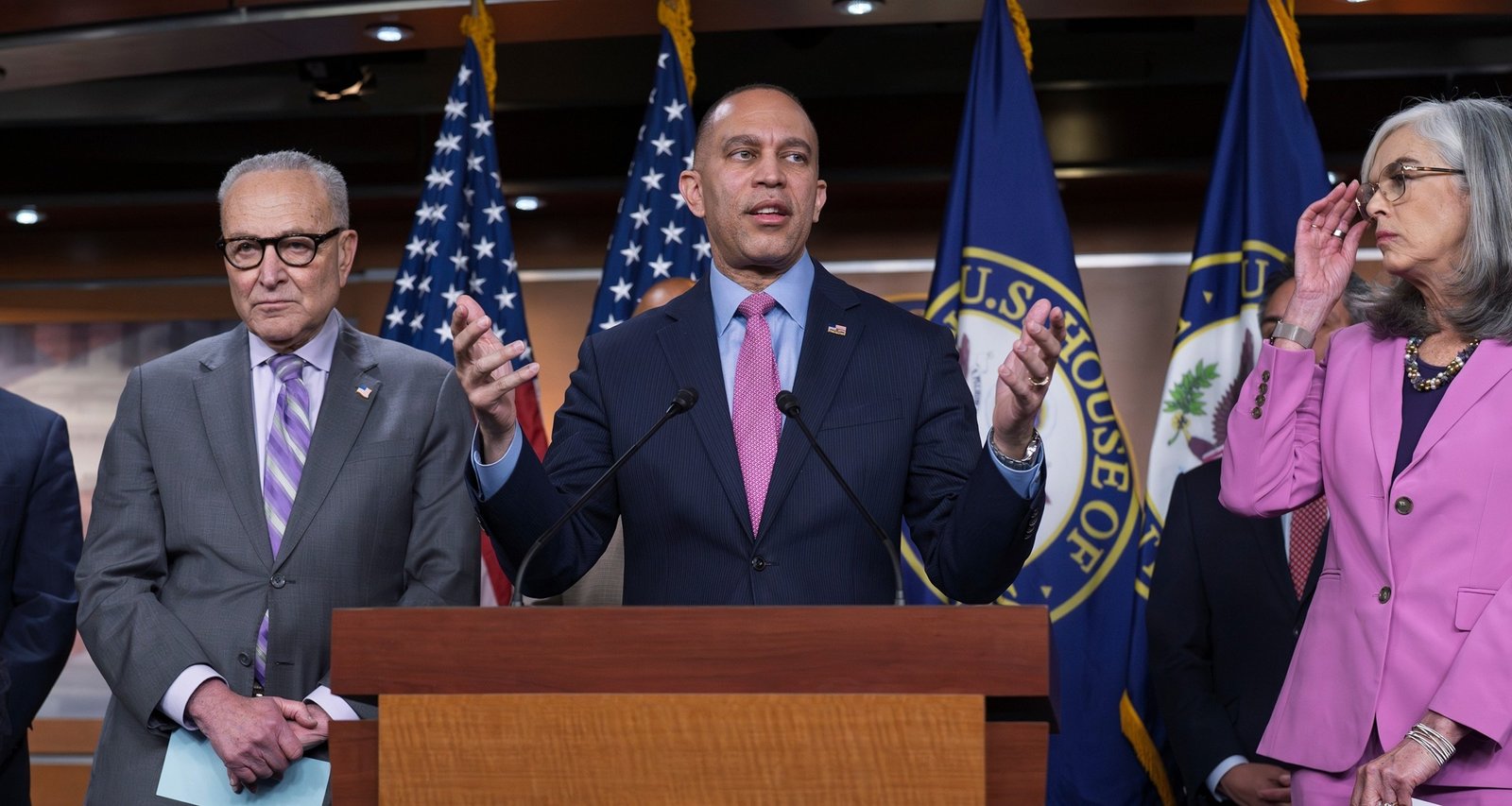
Imagem: Internet
To date, neither party has converted its positions into legislative text. Johnson said Republicans are “happy to have that debate” but noted that Democrats have yet to present a concrete offer. Jeffries ruled out another temporary spending patch, saying, “We need to resolve this issue by Feb. 13. American citizens are being killed in the streets.”
Each side has accused the other of maneuvering toward a shutdown. Jeffries said Johnson’s stance would allow “masked and lawless ICE agents” to operate unchecked, while Johnson warned that Democratic demands could jeopardize essential services. A lapse in DHS funding would affect the Transportation Security Administration, Federal Emergency Management Agency, Coast Guard and Secret Service, among others. ICE would continue core functions because it previously secured a $75 billion, multi-year appropriation under the “Big Beautiful Bill,” but broader DHS activities could stall during winter storm recovery efforts.
“What they’ll be shutting down is FEMA operations, TSA, Coast Guard—so many important functions,” Johnson told reporters, urging negotiators to find common ground. Jeffries countered that the real risk lies in failing to overhaul enforcement practices he describes as dangerous and unpopular.
The White House remains a pivotal but ambiguous player. Johnson planned to meet with President Donald Trump on Wednesday, and Democrats insist the administration can demonstrate good faith immediately by reducing its Minnesota enforcement surge. For now, neither branch has indicated how it will bridge the policy gap.
As the deadline approaches, legislative drafters face the dual challenge of reconciling sharply contrasting visions for immigration enforcement while safeguarding the broad portfolio DHS oversees. The agency’s responsibilities extend from disaster relief to aviation security, a scope detailed on the Department of Homeland Security’s official website. Whether Congress can craft an agreement that both curbs controversial tactics and preserves essential services will determine if the federal government avoids another abrupt shutdown.
Crédito da imagem: J. Scott Applewhite/AP