Next stop: the Kremlin
Witkoff’s forthcoming trip to the Russian capital represents the Trump administration’s first in-person presentation of the revised plan to Putin. The Kremlin leader has signaled little willingness to compromise; in remarks last week he repeated his insistence that Ukrainian forces withdraw from territory Russia claims as its own and called negotiations with President Volodymyr Zelenskyy “pointless.” Russian officials have suggested that battlefield momentum favors Moscow and that they are prepared to wait until Kyiv accepts their conditions.
Rubio told reporters after Sunday’s meeting that the negotiation process is “delicate” and involves “a lot of moving parts,” emphasizing that ultimate progress depends on the third party that “will have to be a part of the equation” when talks shift to Moscow. U.S. diplomats have maintained intermittent communication with Russian counterparts, giving Washington what Rubio called “a pretty good understanding” of the Kremlin’s current position.
Ukrainian and European coordination
President Zelenskyy, who received an initial briefing from his envoys, said on social media that he expects a comprehensive report when he meets the delegation in person. He is scheduled to be in Paris today for consultations with French President Emmanuel Macron, a meeting likely to focus on the Florida discussions and on maintaining European unity ahead of any potential engagement with Russia.
The European Union has been a critical financial and military supporter of Ukraine since the invasion began in February 2024. For context, the EU and its member states have pledged more than €80 billion in assistance, according to publicly available data aggregated by the United Nations.
Key elements under review
A person briefed on the Florida talks said negotiators examined possible security guarantees for Ukraine, the status of billions of dollars in Russian assets frozen by Western governments, and the feasibility of holding national elections in Ukraine under wartime conditions. The frozen funds reportedly constitute a “key” concern for Moscow, which has urged the West to release or redirect them as part of any settlement.
The revised 19-point document is understood to incorporate language on territorial integrity, reconstruction financing and longer-term security arrangements. Officials have not confirmed whether further amendments were made during the Hallandale Beach session. Both sides characterized the atmosphere as pragmatic, yet acknowledged that fundamental disagreements persist.
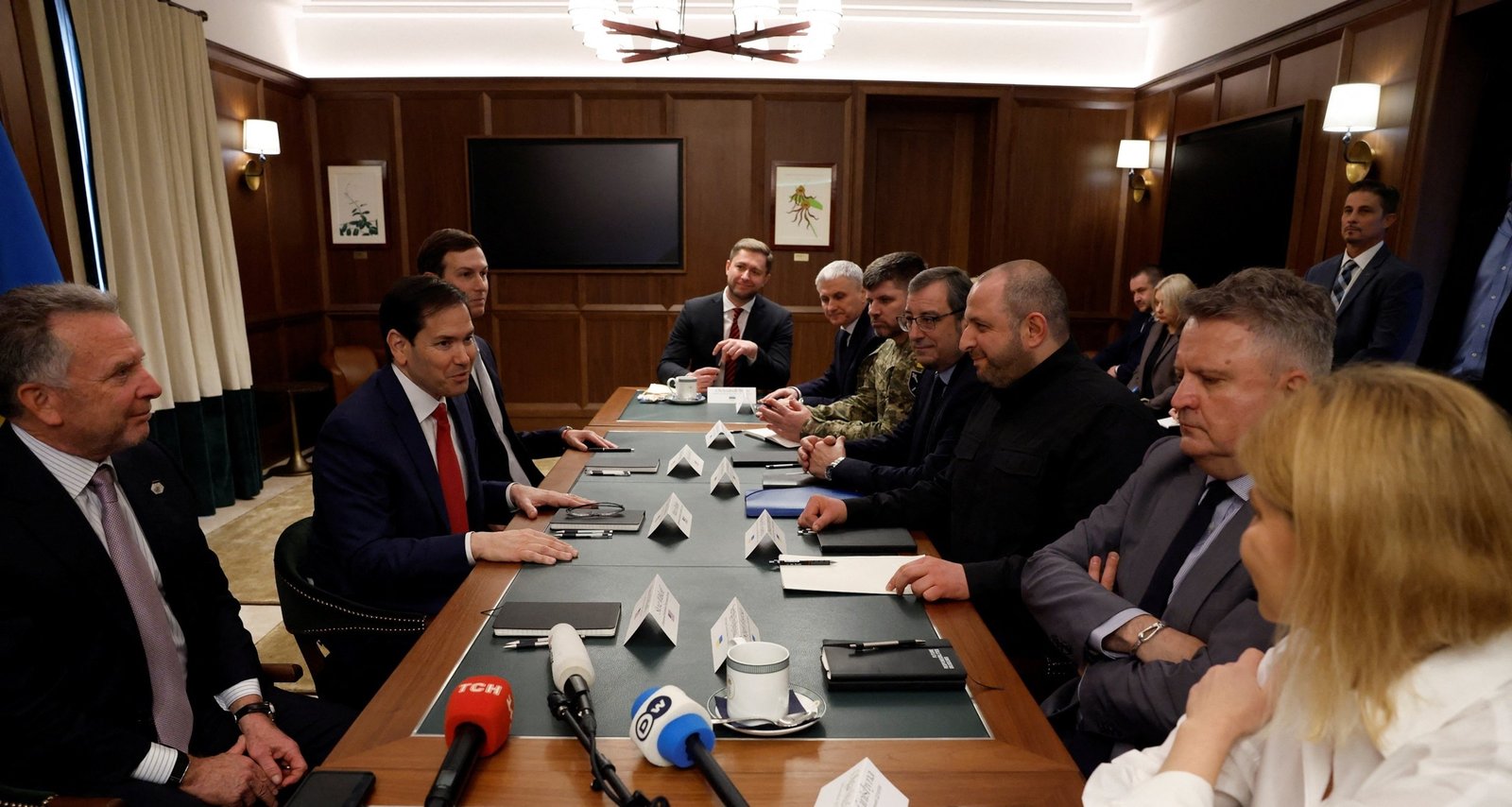
Imagem: Internet
“We had a very productive and useful session where additional progress was made,” Rubio said, standing alongside Umerov after emerging from the closed-door meeting. Umerov called the talks a continuation of earlier “success” in Geneva and noted that future stages are planned, without elaborating on timing or format.
Limited expectations in Moscow
Despite efforts to keep diplomatic channels open, expectations for a positive reception in Moscow are low. Putin has repeatedly framed the conflict as a struggle over historical territory and national security, positions that leave little room for compromise on borders. Russian state media have portrayed the upcoming visit by Witkoff as routine and unlikely to change the Kremlin’s calculus.
Analysts in Kyiv and Western capitals point out that Russia’s stance may be influenced by battlefield developments. Russian forces continue localized offensives in eastern Ukraine, while Ukrainian troops focus on defending critical infrastructure and receiving new air-defense systems from allies. Any shift in military dynamics could affect Moscow’s willingness to engage seriously with peace proposals.
What comes next
If Witkoff secures even limited concessions from Putin, negotiators intend to reconvene for further trilateral discussions, according to U.S. officials. Should the Russian side dismiss the plan outright, Washington and Kyiv are expected to intensify consultations with European partners to map alternative diplomatic or economic pressure options.
For now, the revised proposal remains confidential, and all parties have underscored that significant hurdles lie ahead. The Florida meeting, however, marks the most detailed U.S.–Ukraine coordination on a single text since the conflict began, and Monday’s encounter in Moscow will test whether diplomacy retains any viable path forward.
Crédito da imagem: Eva Marie Uzcategui/Reuters


