Shortly after his Davos address, Trump met privately with NATO Secretary-General Mark Rutte. Following the session, the president wrote on social media that Washington had secured “everything we wanted” in the preliminary understanding on Greenland. Rutte, speaking to Fox News, said the topic of Greenland’s sovereignty “did not come up,” but he did not elaborate further. A NATO spokesperson later confirmed that trilateral discussions involving the United States, Denmark and Greenland were still under way.
Danish Prime Minister Mette Frederiksen issued a statement early Thursday emphasizing that Copenhagen and Nuuk remained closely coordinated. “We can negotiate on everything political—security, investments, economy,” she said, “but we cannot negotiate on our sovereignty.” Frederiksen added that only Denmark and Greenland are entitled to make decisions regarding the territory’s status, and she noted that NATO had been fully briefed on Denmark’s position prior to Rutte’s conversation with Trump.
European Council President Antonio Costa outlined the agenda for the emergency summit in a statement posted on the Council’s website. According to Costa, leaders will seek unity on “the principles of international law, territorial integrity and national sovereignty,” reaffirm solidarity with Denmark and Greenland, and address shared security interests in the Arctic, particularly through NATO cooperation. Costa also warned that any revival of U.S. tariff measures would undermine the existing EU-U.S. trade agreement.
Several diplomats said the meeting would feature a single working session followed by a joint press availability. Officials intend to underscore that the European Union supports constructive engagement with the United States but will oppose any effort that challenges established borders or bypasses the Kingdom of Denmark. One senior EU official, speaking on background, added that leaders are expected to reaffirm respect for the North Atlantic Treaty as the cornerstone of Euro-Atlantic security.
Greenland, the world’s largest island, has been a self-governing part of the Kingdom of Denmark since 2009. While Copenhagen retains authority over foreign affairs and defense, Nuuk manages most domestic matters and maintains extensive natural resources, including rare-earth minerals. The territory’s strategic location in the Arctic has long made it significant to U.S. defense planning, and Washington operates the Thule Air Base on Greenland’s northwest coast.
Tensions over the island resurfaced during Trump’s first term, when he expressed interest in purchasing Greenland outright. Denmark rejected the idea, and a planned state visit by the president was postponed amid the dispute. The proposal returned during Trump’s second term, culminating in the recent deployment of NATO troops and the tariff threats that unsettled European capitals.
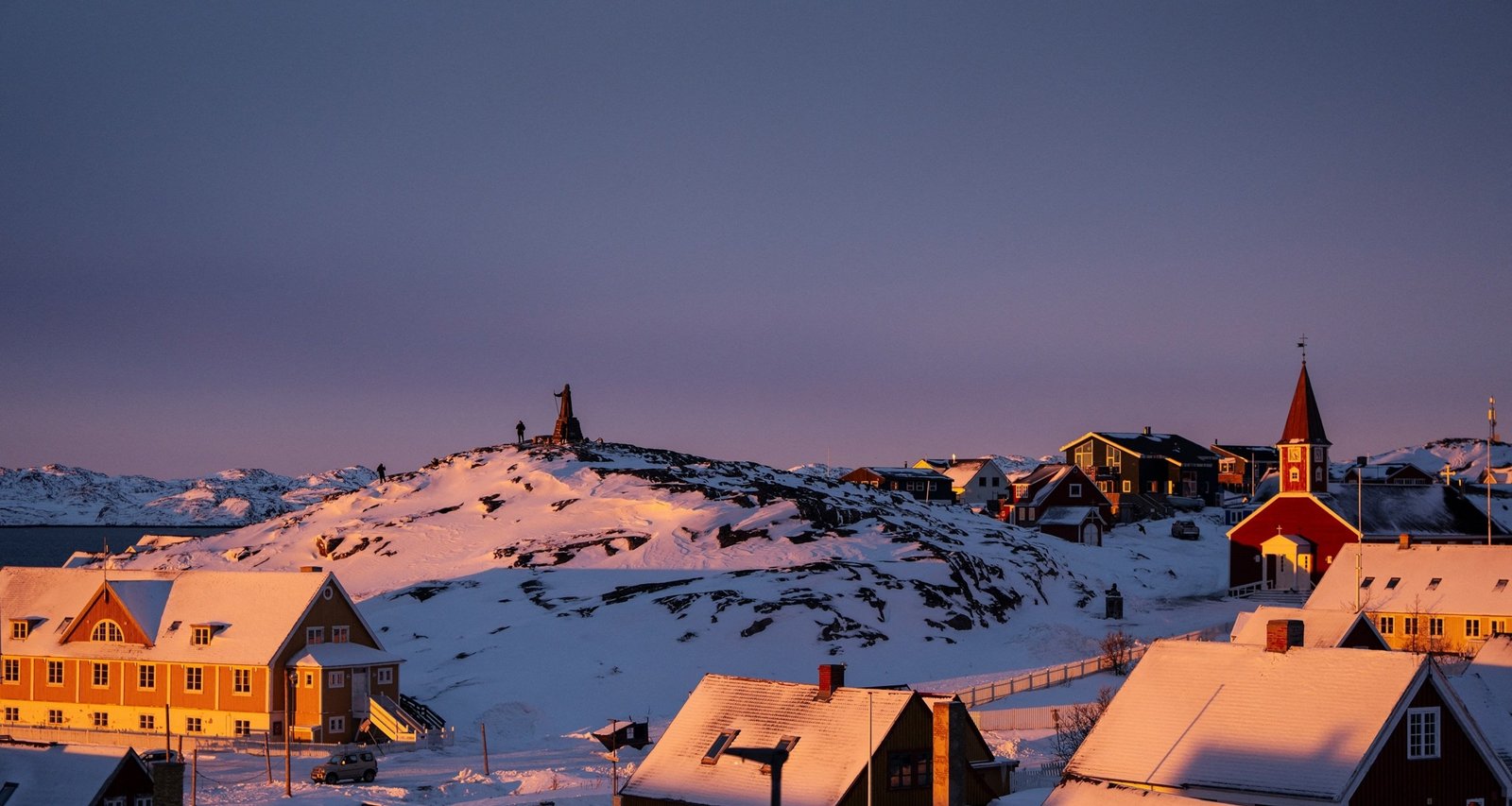
Imagem: Internet
Within the European Parliament, lawmakers have urged the Council to adopt a firm stance. A draft resolution circulating among members calls on the United States to respect Danish sovereignty and urges Brussels to consult closely with Arctic partners, including Canada and Norway, on any security adjustments. Although the resolution is non-binding, it reflects broad cross-party support for Denmark’s position.
In Washington, congressional reaction has been mixed. Several senators praised the administration’s assertiveness in the Arctic, citing competition with Russia and China. Others questioned the legality and practicality of acquiring territory from a NATO ally, warning that an aggressive approach could fracture the alliance.
Trade experts note that even a temporary suspension of the threatened tariffs leaves lingering uncertainty for industries on both sides of the Atlantic. Sectors potentially affected include automotive, aerospace and agriculture, all of which rely on predictable market access between the EU and the United States. The European Commission has previously indicated it would respond swiftly with countermeasures if Washington reintroduced duties.
As leaders assemble in Brussels, diplomats say the immediate objective is to coordinate messaging and avoid unilateral moves that could embolden Washington or unsettle financial markets. Officials are also expected to discuss contingency plans should negotiations between the United States, Denmark and Greenland stall or collapse. Such plans could involve increased EU investment in Greenlandic infrastructure, expanded Arctic research funding and a unified approach to any renewed U.S. tariff threats.
The summit is slated to conclude later Thursday night. Any formal conclusions adopted by the European Council will be published shortly after the meeting, offering the first concrete indication of how the bloc intends to navigate one of the most unusual territorial disputes in recent trans-Atlantic history.
Crédito da imagem: Mads Claus Rasmussen/Ritzau Scanpix/AFP via Getty Images


