In January, the Danish Energy Agency authorized preservation work on Nord Stream 2 sections located in Denmark’s exclusive economic zone. The objective is to prevent additional gas leaks and limit seawater corrosion. The operator must file yearly maintenance plans and obtain further clearance before any restart. No such application has been submitted.
Technical assessments suggest partial repairs are feasible. Analysts note that one of the two parallel strings remains largely intact, while the ruptured segment could be replaced for an estimated $1 billion. Industry specialists add that the pipes currently hold stagnant gas and are not undergoing active upkeep.
Whether repairs would proceed depends on multiple political factors. Ukraine opposes any measure that could bolster Moscow’s revenue, and Poland has publicly advocated dismantling the unused Nord Stream 2 infrastructure. Kyiv previously earned transit fees from an older pipeline crossing its territory, but that bilateral agreement expired at the end of 2024 and was not renewed amid the conflict.
In parallel, the United States has expanded liquefied natural gas exports to Europe and is expected to resist a revival of Russian pipeline deliveries that could dilute its growing market share. Germany, however, faces industrial pressure to secure lower-cost energy and might view restored volumes—if politically acceptable—as a way to ease electricity and manufacturing expenses.
Market conditions have evolved since the 2022 supply shock. Front-month contracts at the Dutch Title Transfer Facility, the continent’s benchmark hub, remained roughly double pre-war averages in early 2025, according to the International Energy Agency. Although prices have moderated recently, policymakers remain cautious about overreliance on a single supplier, citing Russia’s earlier reduction of flows during the certification delay for Nord Stream 2.
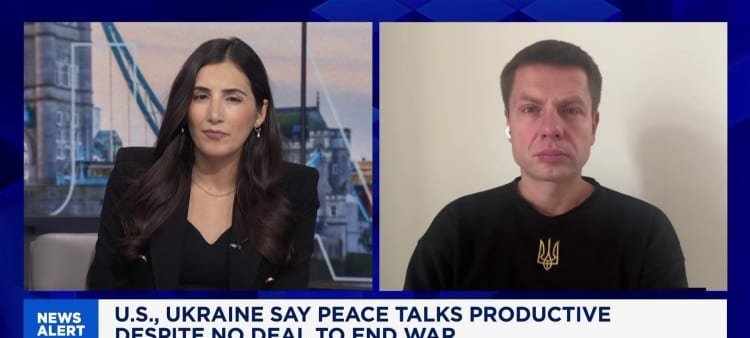
Imagem: Internet
Geopolitical dynamics also influence the outlook. Observers point out that Moscow has increased gas sales to Asia through the Power of Siberia pipeline network, signaling diversification away from the European market. Europe, for its part, continues to develop domestic renewable capacity and invest in additional LNG terminals, positioning itself to cover future demand without Russian volumes.
Exceptions in the EU legislation allow Hungary and Slovakia to request temporary waivers during emergencies, highlighting lingering regional disparities in energy security. Nonetheless, the broader policy trajectory emphasizes diversification and independence after what Brussels termed the “weaponisation” of gas.
Several conditions would have to align for Nord Stream to resume operation. A durable peace agreement would be required; governments would need to reassess sanction frameworks; regulators would have to certify the repaired line; and commercial buyers would have to commit to long-term contracts. Even then, experts forecast that any restored flow would likely be capped at the surviving string’s capacity of 27.5 billion cubic meters per year—about half the volume previously shipped through each pipeline.
Industry analysts argue that Europe could leverage Russia’s limited export options to negotiate favorable pricing, yet political risk remains high. Recent violations of European airspace by Russian aircraft have reinforced concerns over future hostilities, complicating the case for renewed energy ties.
With additional U.S. export terminals slated to enter service and global LNG supply expanding, market participants see downward pressure on prices that could offset the absence of Russian gas. For now, the scenario of Europe welcoming Nord Stream back into its energy mix remains speculative, contingent on diplomatic breakthroughs and a significant shift in public sentiment across the bloc.
Crédito da imagem: CNBC


