Minneapolis police confirmed that Pretti possessed a valid Minnesota permit to carry a handgun. State law permits open carrying of a firearm with such a permit. Authorities have not yet disclosed whether Pretti’s weapon was ever drawn or pointed at officers.
Federal officials invoke terrorism rhetoric
DHS Secretary Kristi Noem and Border Patrol Commander at Large Greg Bovino told reporters that investigators believe Pretti arrived with “weapons and ammunition to inflict maximum damage.” Noem labeled the act “domestic terrorism,” though neither official produced evidence showing Pretti brandished a weapon or fired any rounds. Both declined to answer direct questions on those points during a Saturday evening press briefing.
The rhetoric has drawn immediate pushback from Minnesota Gov. Tim Walz, who accused federal leaders of shaping a narrative before any independent findings are available. “The most powerful people in the federal government are spinning stories,” Walz said in a written statement, adding that state investigators would open their own probe and renew calls for federal immigration agents to withdraw from Minneapolis.
Tensions already elevated
Saturday’s shooting follows a Jan. 6 incident in which another Minneapolis resident was killed during an unrelated federal operation. Together, the two deaths have reignited community concern over the deployment of immigration and border agents far from the nation’s borders. Demonstrators gathered at the intersection where Pretti died, holding a candlelight vigil that stretched into the early hours of Sunday. A makeshift memorial now features photographs, flowers, and notes addressed to Pretti’s family.
Pretti worked in the intensive-care unit of the Minneapolis Veterans Affairs hospital and was an Army veteran, according to coworkers who attended the vigil. Friends say he frequently volunteered at community health clinics and was known for providing free CPR training to neighborhood youth.
Ongoing investigations
The Minneapolis Police Department confirmed that body-worn cameras used by municipal officers were activated during their limited role in crowd control but noted that federal agents involved in the shooting were not required to use the same equipment. The Hennepin County Medical Examiner is conducting an autopsy; preliminary results are expected within the week.
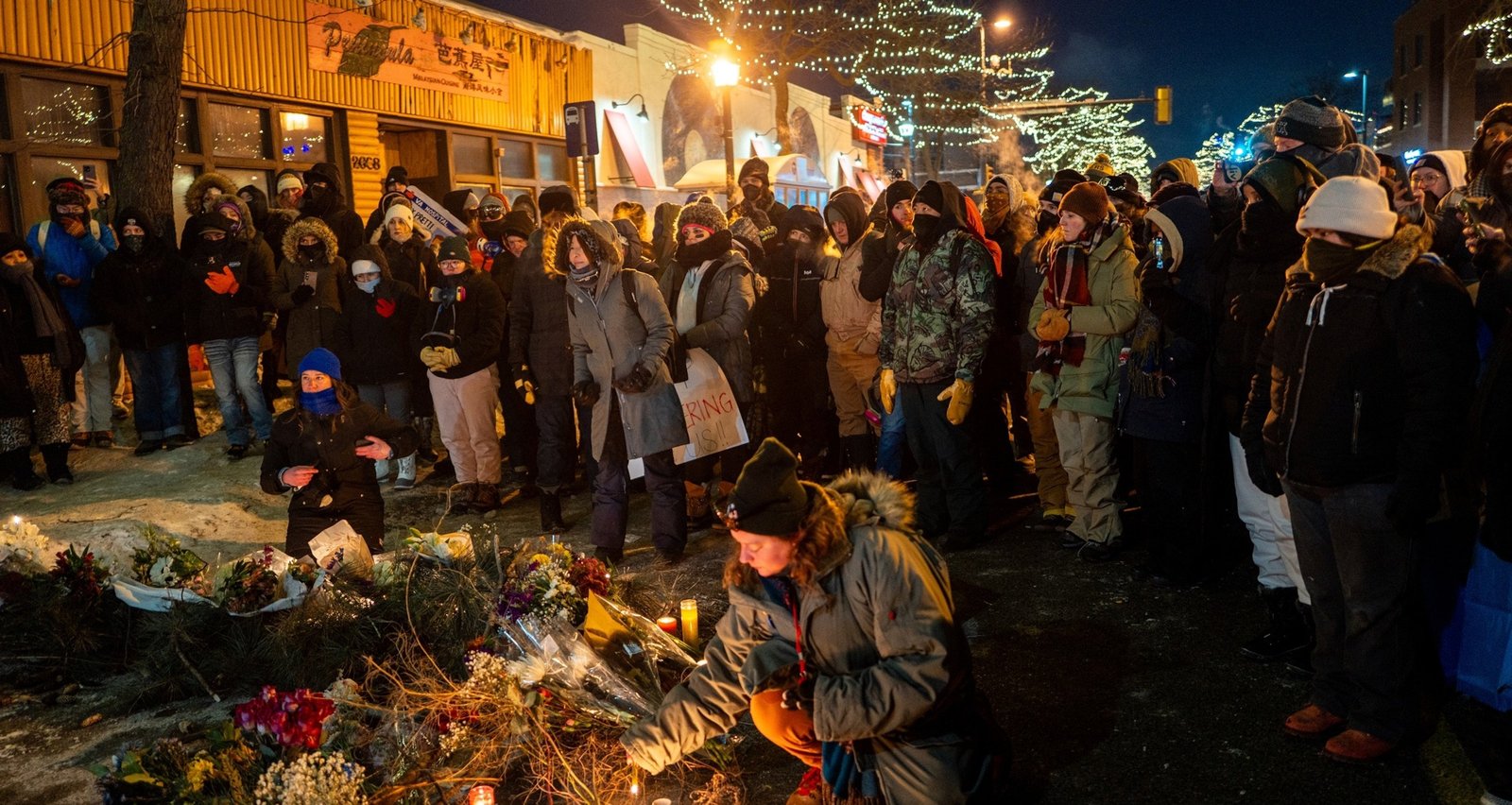
Imagem: Internet
The state Bureau of Criminal Apprehension (BCA) has launched an inquiry at the request of Mayor Jacob Frey and Chief of Police Teresa Redding. Separately, DHS internal affairs personnel are reviewing the use of force by the Border Patrol agent. Federal officials have not released the agent’s name, citing personal security concerns. Under Minnesota statute, the BCA investigation must conclude before any findings are shared with a grand jury or prosecuting authority.
Civil-rights advocates are urging the U.S. Department of Justice to open a pattern-or-practice investigation into federal law-enforcement activity in Minneapolis. The American Civil Liberties Union issued a statement Sunday calling the latest shooting “symptomatic of unchecked federal power.”
Legal context
Minnesota’s permit-to-carry law requires background checks, training, and renewals every five years. Data from the state’s Department of Public Safety show that roughly 450,000 Minnesotans hold active permits. Despite those provisions, interactions between armed civilians and law-enforcement officers remain contentious, particularly when multiple agencies with differing policies operate in the same area.
The incident also highlights jurisdictional complexity. Border Patrol officers typically enforce immigration laws within 100 miles of an international border, but the U.S. Customs and Border Protection operational guideline permits deployments elsewhere when authorized by DHS leadership. Critics argue that such flexibility leads to overlapping authority and inconsistent accountability mechanisms.
Next steps
Officials from the BCA said investigators will interview all federal agents present, review available video, and collect physical evidence from the scene. A spokesperson indicated that findings could be released in preliminary form within 30 days, though final determinations often take longer when federal agencies are involved.
Meanwhile, community groups plan additional vigils and are organizing a march to the Minneapolis federal courthouse later this week. Pretti’s family, through a representative, requested privacy and declined comment until the autopsy is complete.
Crédito da imagem: Brandon Bell/Getty Images