The NTSB’s initial teardown of the left engine pylon revealed fatigue cracks consistent with progressive structural failure. Metallurgical analysis is underway to determine whether the cracks originated from manufacturing defects, corrosion, or inadequate maintenance inspections. Investigators have also collected flight data recorder and cockpit voice recorder information, which remains under analysis at the agency’s laboratory in Washington, D.C.
In total, 23 individuals on the ground sustained injuries ranging from burns to blunt-force trauma. Local hospitals reported treating patients for smoke inhalation and lacerations caused by debris. Emergency response included personnel from the Louisville Fire Department, Louisville Metro Police Department, and the Kentucky National Guard’s 41st Civil Support Team, which conducted hazardous-materials monitoring at the crash site.
Following the accident, the Federal Aviation Administration (FAA) issued an emergency airworthiness directive that temporarily grounded all U.S.-registered MD-11 aircraft pending inspection of engine pylons. Approximately 70 of the three-engine wide-body jets remain in service with UPS, FedEx, and Western Global. The directive required ultrasonic testing of pylon attachment points and inspection for corrosion or visible cracking. Most carriers returned aircraft to operation within two weeks after completing required checks and submitting compliance documentation.
UPS stated that the crashed aircraft had accumulated over 80,000 flight hours since its delivery in 1995 and had undergone a heavy maintenance check earlier in 2025. The company continues to cooperate with federal investigators and has provided maintenance logs, engineering data, and crew training records for review.
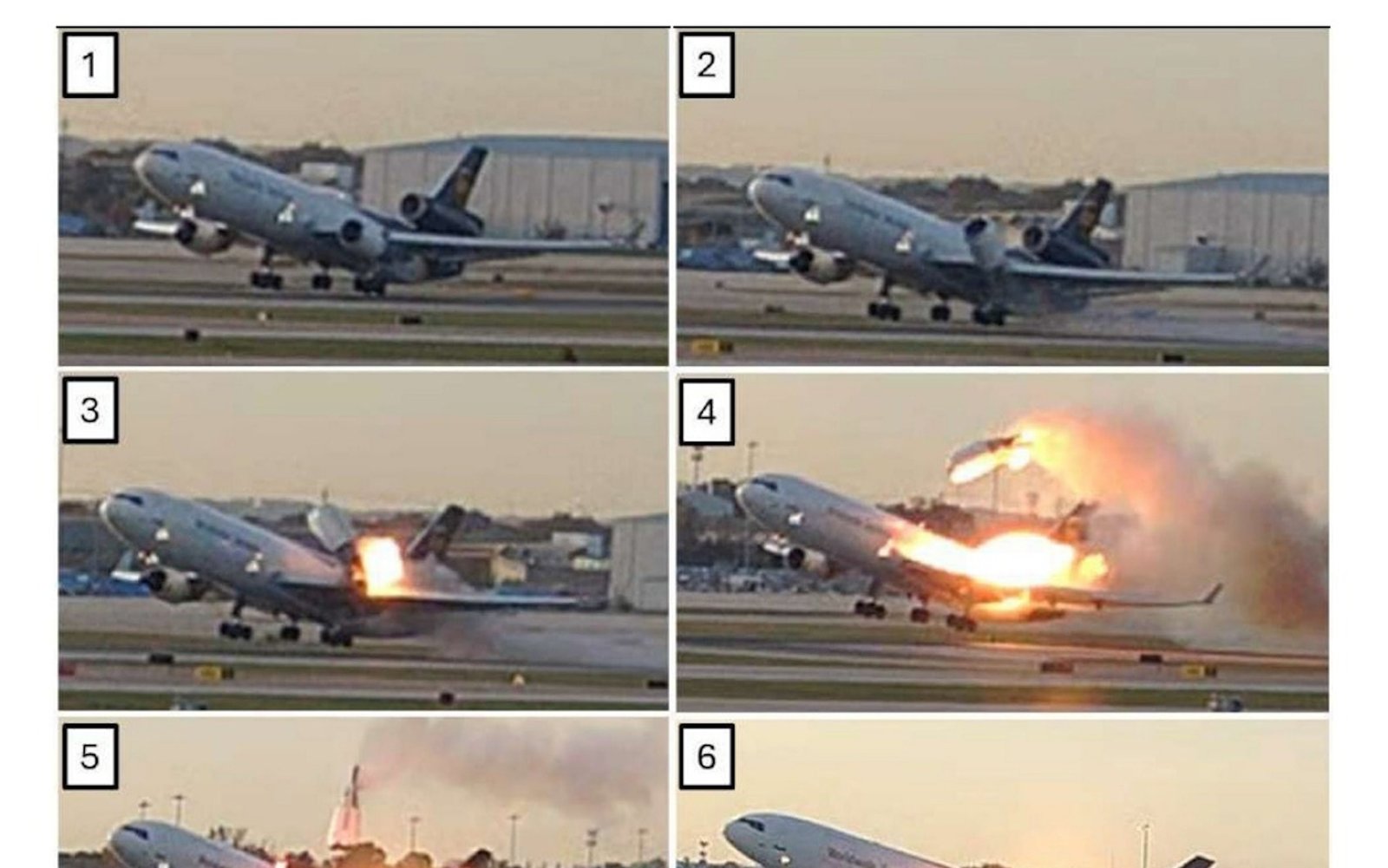
Imagem: Internet
The crew consisted of a captain, first officer, and flight engineer. According to information released by the NTSB, all held current medical certificates and were qualified on the MD-11. Toxicology tests performed on flight crew remains found no evidence of alcohol or controlled substances.
Investigators are also examining environmental factors. Weather at the time of departure was reported as clear with light winds, and no mechanical abnormalities other than the pylon failure have been identified. The airport’s runway, lighting, and navigation aids were functioning normally, and no other traffic was present on the runway during takeoff.
The NTSB will issue a final report after completing metallurgical examinations, flight-deck performance analysis, and a review of UPS maintenance programs. The agency’s online docket is expected to include witness statements, maintenance histories, and operational data once the factual investigation phase is complete. Additional updates will be posted on the NTSB website, which can be accessed through the agency’s official portal.
Governor Beshear urged continued support for the families of victims and acknowledged first responders for their efforts. No memorial services have been announced for the most recent victim.
Crédito da imagem: Phil Speck / AP


