Other large airports were also coping with significant disruptions. New York’s LaGuardia Airport and Ronald Reagan Washington National Airport in Arlington, Virginia, both posted elevated cancellation and delay totals, reflecting their inclusion on the FAA’s list of facilities facing capacity limitations. Passengers at these locations confronted crowded terminals and long lines while monitoring departure boards scrolling with revised times or canceled status notifications.
Industry analysts noted that capacity limits at en-route centers and airport towers were prolonging recovery times once weather systems cleared. With fewer controllers on duty, the FAA has reduced the number of takeoff and landing slots during peak periods, compelling airlines to trim schedules in advance rather than risk extended ground delays. Additional information about current traffic management initiatives is available on the Federal Aviation Administration’s official website.
The operational stress comes as the government shutdown entered its forty-first day. Earlier in the week, President Donald Trump publicly urged air traffic controllers to resume work despite the ongoing funding impasse. While the majority of controllers are considered essential employees and continue to report for duty, staffing constraints related to unpaid leave and reduced overtime remain evident, according to airline and airport representatives.
Weather was an equally important factor behind Monday’s elevated cancellation totals. A broad swath of the Midwest and Northeast experienced snow, freezing rain and strong winds, prompting airlines to issue travel waivers and adjust flight schedules proactively. Meteorologists predicted that the heaviest precipitation would taper off by late Tuesday, but residual operational challenges—such as de-icing backlogs, aircraft and crew repositioning, and gate congestion—could extend delays into midweek.
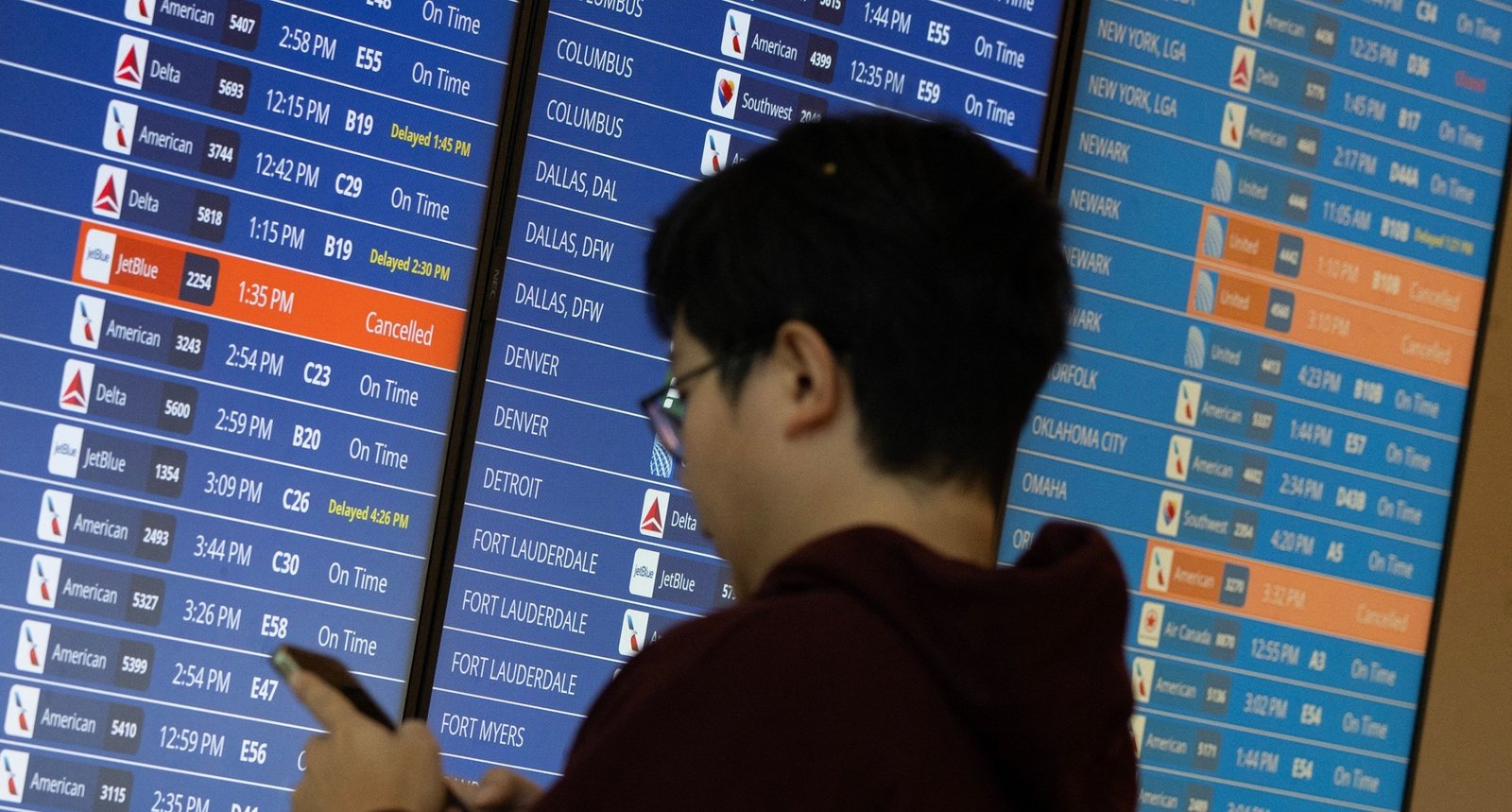
Imagem: Internet
Travelers are being encouraged to confirm flight status frequently, utilize airline mobile applications for rebooking options, and arrive at airports earlier than usual. Customer service centers and reservation phone lines were handling high call volumes overnight, and online chat queues lengthened as affected passengers sought alternative itineraries.
The Transportation Security Administration reported normal staffing levels at security checkpoints, with wait times remaining within standard parameters at most large airports. However, TSA officials warned that sudden spikes in passenger volume caused by rebooked flights could lead to localized backups, particularly during mid-morning and early-evening banks of departures.
As of early Tuesday, no major U.S. carriers had issued blanket system-wide waivers beyond those tied directly to winter weather. Airline spokespeople indicated that additional adjustments would be evaluated hour by hour in coordination with the FAA’s Air Traffic Control System Command Center. With forecasts calling for improved conditions later in the week, industry observers anticipated a gradual reduction in cancellations, provided that the government shutdown does not prompt further capacity restrictions.
The situation remains fluid, and airlines have signaled that they will continue to revise flight schedules as necessary to protect crew duty limits and maintain operational safety. Passengers with flexible travel plans are advised to monitor updates closely as carriers work to clear the backlog of displaced travelers and equipment.
Crédito da imagem: AFP via Getty Images


