The Ford—currently the world’s largest aircraft carrier—embarks more than 60 fixed- and rotary-wing aircraft that can be tasked for surveillance, maritime interdiction and strike missions. “These forces will enhance and augment existing capabilities to disrupt narcotics trafficking and degrade and dismantle Transnational Criminal Organizations,” Pentagon press secretary Sean Parnell said in a written statement.
Recent imagery also revealed that an AC-130J gunship and two additional reconnaissance planes have been operating from a Salvadoran military facility co-located with El Salvador International Airport. The forward basing arrangement offers relatively quick access to both Caribbean and eastern Pacific smuggling corridors.
Since the administration’s expanded effort began in September, U.S. military units have carried out 19 maritime strikes against vessels suspected of smuggling narcotics, according to Pentagon figures. Those strikes, largely executed in the Caribbean and the eastern Pacific, have resulted in 76 fatalities among alleged traffickers. The Pentagon has not specified the volume of drugs seized during the operations.
Including the Ford contingent, approximately 14,000 U.S. service members are now dedicated to the regional mission. The enhanced posture follows a pattern of high-visibility demonstrations ordered by President Donald Trump. In recent weeks, Air Force B-52 bombers flew near the Venezuelan coastline, and B-1 bombers conducted sorties over the Caribbean Sea. A U.S. special operations aviation unit also carried out training flights in international waters close to Venezuela during October, a defense official confirmed.
The buildup has prompted questions from lawmakers and analysts who argue that the deployment may serve a dual purpose: counter-narcotics enforcement and strategic pressure on Venezuelan President Nicolás Maduro. Experts acknowledge Maduro’s ties to trafficking networks but note that the bulk of narcotics entering the United States typically move through Mexico or via Pacific maritime routes. The Caribbean, they say, is more frequently used for shipments destined for Europe.
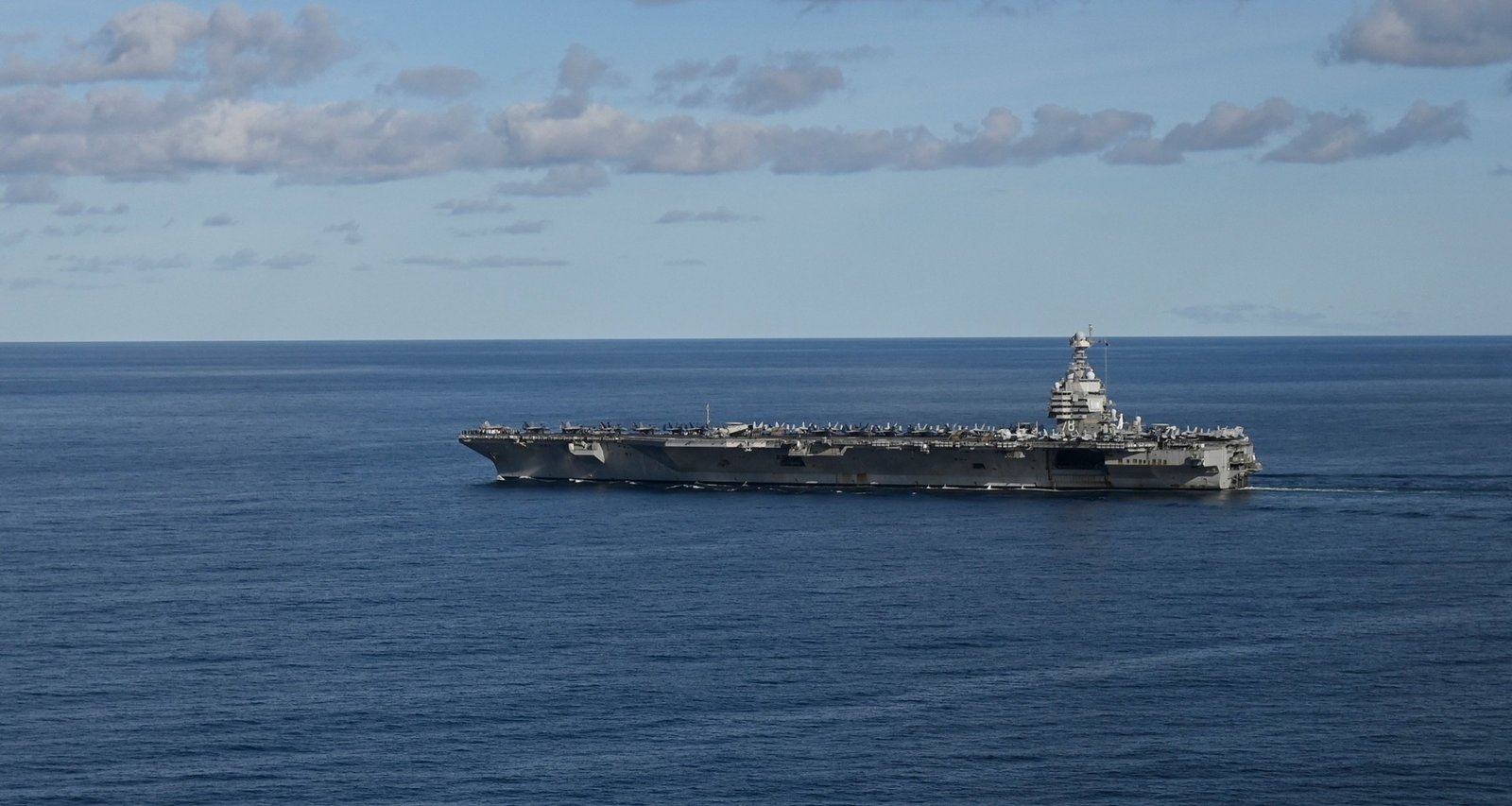
Imagem: Internet
SOUTHCOM oversees U.S. military activities across Central and South America, the Caribbean and surrounding waters. The command’s counter-narcotics mission blends interdiction operations, intelligence sharing and cooperative efforts with regional security forces. According to the U.S. Department of Defense, Washington has increased both aerial surveillance hours and naval patrols over the past two years in response to cartel adaptations and the emergence of new smuggling corridors.
Defense officials have not signaled how long the Ford strike group will remain in theater. The carrier’s presence, however, provides a scalable platform that can launch intelligence-gathering flights, conduct maritime boarding operations and, if ordered, deliver precision strikes against cartel infrastructure. The group’s destroyers also bring Aegis radar systems capable of tracking small craft and low-flying aircraft that traffickers often employ.
While the administration touts the deployment as a decisive step against transnational crime, critics in Congress have requested clearer metrics for success and a detailed assessment of how large-scale naval assets contribute to drug interdiction compared with law-enforcement and partner-nation initiatives. The Pentagon has indicated that the campaign is part of a broader interagency approach that includes the Coast Guard, the Drug Enforcement Administration and regional governments.
The Navy has not announced any port visits or engagement activities for the strike group during its current assignment. For now, the Gerald R. Ford and its accompanying ships remain on station, adding significant air and sea power to an operation aimed at disrupting the flow of narcotics through the Western Hemisphere.
Crédito da imagem: Jonathan Klein/AFP via Getty Images


