Building the Beds
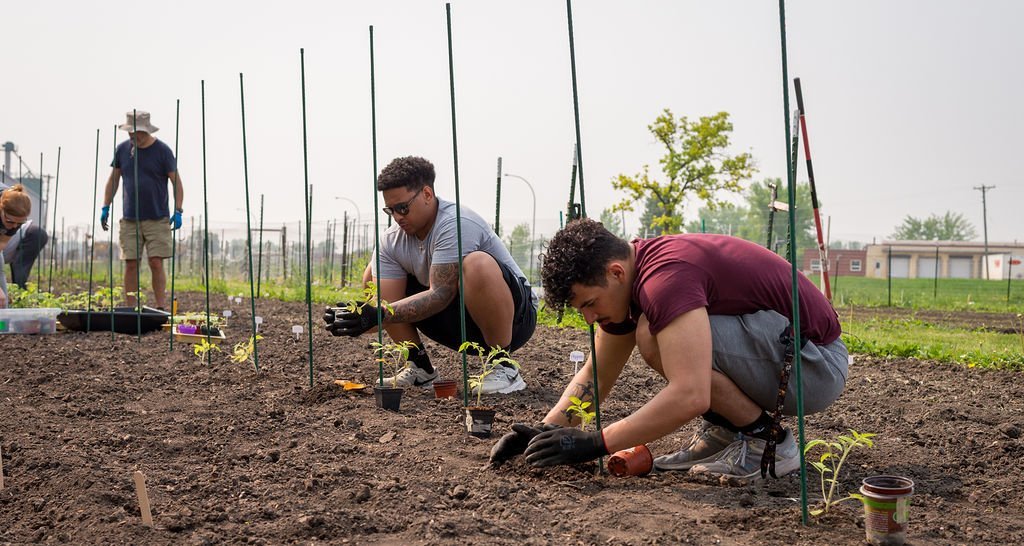
On 30 May 2025, more than 20 volunteers from the Grand Forks Air Base spent five hours installing raised beds, filling them with soil, and setting up irrigation lines. Additional community workdays in June and July refined the infrastructure and introduced new gardeners to basic maintenance. By mid-summer, ten local families were rotating caretaking duties every three to five days, an arrangement that turns routine physical activity—watering, weeding, and harvesting—into a shared habit consistent with the Blue Zones principle of Move Naturally.
Each plot tells a story. Some contain cilantro, mint, and tomatoes destined for traditional salsa; others feature leafy greens used in Southeast Asian dishes. The gardeners exchange recipes as readily as they swap seedlings, reinforcing another Blue Zones guideline, Right Tribe, which underscores the health benefits of supportive social networks.
A Living Classroom
Education permeates nearly every aspect of the garden. Throughout the summer, youth organizations such as the Girl Scouts visited for hands-on lessons in soil health and plant biology. Winship Elementary integrated the space into its curriculum, scheduling fall field trips that align science instruction with real-world observation. Parents often stay to translate or demonstrate preparation methods, turning an ordinary class outing into a cross-generational learning session.
Moroney-Fernandez is documenting these interactions as part of her graduate research. Her data will measure not only crop yields but also changes in participants’ confidence, language skills, and social ties. Early observations suggest that shared tasks, from planning weekly chore lists to cooking group meals, reduce isolation often reported by recent immigrants.
Support and Sustainability
Funding for the inaugural season covered land rental, tools, and seedlings. Blue Zones Project Grand Forks absorbed the rental costs, while community donors supplied lumber, hoses, and storage bins. Looking ahead, Thomasine Heitkamp—who oversees the Gail Hand Fund for Grand Forks Public Schools—has signaled interest in multiyear support. Securing permanent backing would allow organizers to expand programming, purchase perennial plants, and create an on-site composting system.
Long-term stability is critical. According to the Centers for Disease Control and Prevention, access to fresh, culturally relevant produce improves dietary quality and fosters community resilience. Consistent funding would help ensure that the Grand Forks garden remains accessible to families regardless of income or residency status.
Community Impact
Although still in its first full growing season, the garden has become a venue for potlucks, informal language exchange, and mentorship. New arrivals learn how to navigate local growing conditions—short summers, cool nights—while longtime residents discover unfamiliar ingredients. Participants report pride in sharing dishes made with vegetables they cultivated themselves.
The project also offers a template for other schools and neighborhoods. By pairing structured support with community leadership, organizers have demonstrated that even a small parcel of land can address multiple objectives: nutrition, cultural preservation, and social connection. City officials and nonprofit leaders have begun visiting the site to evaluate whether similar models could fit other parts of Grand Forks.
Next Steps
As autumn approaches, gardeners are preparing for a final harvest and planning cold-weather workshops on seed saving and indoor planting. Moroney-Fernandez and the Gro.UND team are drafting a proposal that outlines budget requirements for 2026, including the addition of fruit trees and a shelter that would extend the growing season. Meanwhile, Blue Zones Project Grand Forks is coordinating publicity to attract new volunteers and potential sponsors.
Whether additional funding arrives through grants, school district resources, or private donations, organizers say the core mission will remain the same: provide a welcoming environment where diverse traditions take root. By centering the project on foods that hold personal meaning, the garden continues to build bridges among families who might otherwise rarely interact.
What began as a single idea now stands as a collaborative enterprise that feeds bodies and nurtures belonging. With each harvest, the Grand Forks community garden reinforces the notion that health is cultivated not only in clinics but also in shared outdoor spaces—one seed, one conversation, and one meal at a time.
Crédito da imagem: Blue Zones Project Grand Forks