
The nationwide rise in beef prices continues to pressure the steakhouse segment, prompting additional closures at a brand that once spanned nearly 100 locations. Landry’s Inc. has confirmed the permanent shutdown of its McCormick & Schmick’s restaurant on Fifth Avenue in downtown Pittsburgh, ending an 18-year run for the upscale steak and seafood venue. A notice posted on May 26 informed patrons that the doors were closed and redirected them to nearby sister brands within the Landry’s portfolio.
The Pittsburgh closure marks the latest contraction for McCormick & Schmick’s, which has scaled back dramatically since its 2009 peak. At that time, company founders Bill McCormick and Douglas Schmick oversaw roughly 94 restaurants under several banners, including Jake’s Famous Crawfish, M&S Grill, McCormick & Kuleto’s, William Douglas Steakhouse, and The Boathouse. Today the chain operates 14 locations across 11 states and maintains an additional catering unit at Seattle’s Museum of Flight, bringing the total number of shuttered outlets to about 80.
Landry’s did not cite a specific financial or operational reason for ending service in downtown Pittsburgh. However, industry conditions provide significant context. Steak prices have climbed sharply over the past year, with the average U.S. retail cost for choice beef reaching $12.73 per pound in March 2026, a 16 percent year-over-year surge, according to data from the Federal Reserve Bank of St. Louis. Higher commodity costs ripple through restaurant supply chains, forcing operators to raise menu prices even as consumers become more cautious about discretionary spending.
Operators across the sector report that the ability to pass along full cost increases is limited. As entrée prices grow, diners often shift to lower-priced alternatives or reduce frequency of visits, resulting in softer traffic counts and lower overall sales. The double pressure of elevated input costs and declining guest volumes has contributed to a wave of closures at both independent steakhouses and corporate chains.
McCormick & Schmick’s arrival in Pittsburgh began in 2005 with a location at SouthSide Works, followed by the downtown dining room three years later. The SouthSide Works restaurant ceased operations in 2021, leaving the Fifth Avenue site as the brand’s final presence in the city until last week’s announcement. In the notice to guests, Landry’s highlighted six area options—Del Frisco’s, Ground Concourse, Morton’s, Bill’s Bar & Burger, Houlihan’s, and Mitchell’s Fish Market—underscoring the company’s strategy of channeling demand to other concepts within its extensive portfolio.
Chief Operating Officer Shah Ghani stated that employees from the closed site are being offered positions at nearby sister restaurants. The move aligns with Landry’s typical approach of retaining experienced staff when consolidating underperforming units. The Houston-based hospitality group owns more than 600 properties worldwide, spanning casual dining, fine dining, and entertainment venues.
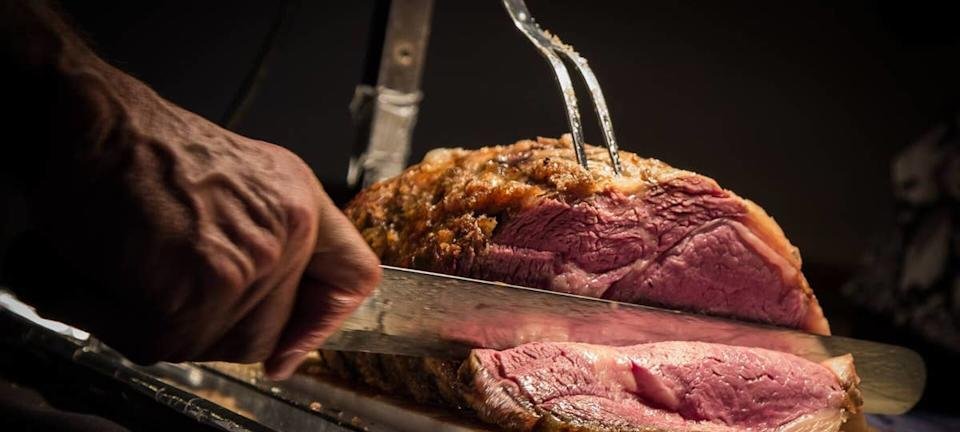
Imagem: Internet
The high-end steakhouse category, once perceived as largely insulated from economic swings, has demonstrated vulnerability in the current cost environment. Commodity inflation has been especially acute for beef, which comprises a substantial share of food expenditures in such establishments. While seafood prices can also be volatile, the protein mix at McCormick & Schmick’s skews heavily toward premium steaks, intensifying exposure to beef market fluctuations.
Restaurant analysts note that chains with a diversified menu and flexible pricing tiers may weather the storm more effectively than concepts concentrated in a single, high-cost protein category. Landry’s broader portfolio offers a variety of price points and cuisines, potentially allowing the company to offset softness in one segment with performance in others. Nevertheless, the reduction from 94 McCormick & Schmick’s sites to 14 illustrates the magnitude of the challenges facing the brand.
Even as costs rise, competitive dynamics within urban dining districts remain intense. Downtown Pittsburgh hosts numerous independent operators and chain restaurants competing for limited foot traffic, which has yet to fully rebound to pre-pandemic levels. Remote and hybrid work arrangements continue to dampen midday and early evening patronage in central business districts, compounding the impact of higher ingredient costs on revenue streams.
Looking ahead, industry observers will monitor whether additional closures emerge within the steakhouse space as commodity pricing trends unfold. For now, McCormick & Schmick’s exit leaves a gap in Pittsburgh’s upscale dining landscape, while Landry’s focuses on reallocating resources and staff to other regional properties.