Consumer advocates soon raised concerns. A study released earlier in February by Consumer Reports and partner organizations found that shoppers using Instacart paid materially different prices for the same basket of goods, depending on which test group they were assigned. The analysis calculated that the total cost of identical products at one store could swing by about 7 percent, translating into more than $1,000 in extra annual spending for a frequent Instacart user.
Though Instacart argued that individual retailers set their own prices, lawmakers and regulators took notice. Reuters reported that the U.S. Federal Trade Commission (FTC) issued a civil investigative demand to the company seeking information about its pricing practices. The probe coincided with broader scrutiny of online subscription services, “satisfaction guarantee” advertising and other marketing tactics across the e-commerce sector.
Last week, Instacart agreed to provide $60 million in refunds to resolve separate FTC allegations that it used deceptive methods in subscription sign-ups and marketing claims. The company denied any wrongdoing in that settlement but said it had responded to the agency’s questions on its algorithmic pricing tests during the process. Details of the investigation were not disclosed, and the FTC has not formally commented on the latest decision. Background on the agency’s enforcement authority can be found on the official FTC site.
In its Monday statement, Instacart emphasized that the Eversight trials never relied on personal, demographic or individual-level data. The company also pushed back against descriptions of the program as “surveillance pricing” or full dynamic pricing, terms that critics often use to describe algorithms that set prices in real time based on user behavior. Instead, Instacart characterized the effort as limited, time-bound experiments affecting a small subset of items and customers.
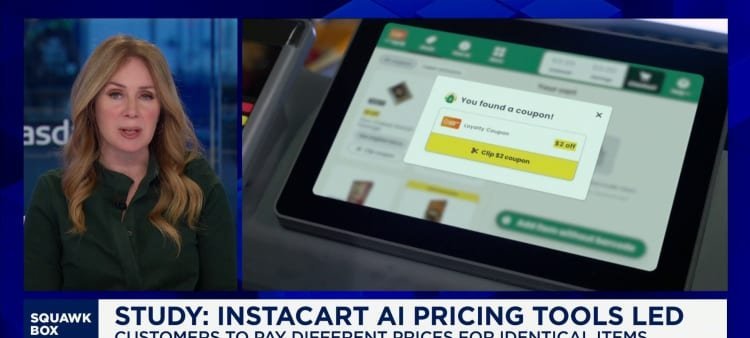
Imagem: Internet
Effective immediately, retailers on the Instacart platform can no longer initiate or continue Eversight pricing tests. The company did not specify how many merchants participated or how long individual experiments ran. Instacart said it is evaluating additional ways to provide clearer pricing information and reiterated its commitment to fixed, retailer-determined pricing for each customer.
The decision comes as Instacart navigates heightened competition and regulatory oversight following its 2023 initial public offering. Investors have focused on the company’s ability to expand revenue through advertising, subscriptions and data-driven services such as Eversight. Shuttering the AI pricing program removes one potential growth lever but may help mitigate legal and reputational risks at a time when consumers and policymakers are increasingly skeptical of opaque algorithmic practices.
Instacart did not announce any changes to other AI initiatives, including tools that help supermarkets manage inventory or promote digital coupons. For shoppers, the most immediate impact is the elimination of price discrepancies that arose during Eversight tests. Going forward, identical items listed by the same retailer on Instacart are expected to carry uniform prices, regardless of which customer views them.
Crédito da imagem: Bloomberg


