In addition, officials are looking at the emotional impact of a recent event in Afghanistan: the death of a commander with whom Lakanwal allegedly worked before leaving the country. Sources say Lakanwal held the commander in high regard, and the loss appears to have affected him deeply. Authorities are evaluating whether grief over that death compounded his financial circumstances to create a potential mental health crisis.
Investigators have learned that Lakanwal drove from his residence in Washington state to the nation’s capital shortly before the shooting. Once in Washington, D.C., he allegedly approached the Guardsmen, opened fire and then surrendered after being wounded in the exchange that followed. The officers he targeted were on routine duty just blocks from the White House.
Employment history with U.S. agencies
Lakanwal’s ties to U.S. security operations date back several years. Officials say he previously served with an Afghan partner force in Kandahar known as the Zero Unit, which conducted counterterrorism missions alongside the Central Intelligence Agency and the Joint Special Operations Command until the U.S. military withdrawal in 2021. Sources describe him as a trusted member of that team.
Records reviewed by investigators show that Lakanwal entered the United States in September 2021. He applied for asylum in 2024 and was granted that status in April 2025. Since his arrival, he had not secured long-term employment, contributing to financial instability outlined by law-enforcement officials.
No confirmed terrorism link to date
Authorities are also exploring whether the shooting was directed or inspired by international terrorist groups. However, no evidence publicly connects Lakanwal to any organization, and no terrorism-related charges have been filed. A senior law-enforcement official said the inquiry remains in its early stages, emphasizing that investigators are “looking at everything” while prioritizing the suspect’s personal and financial circumstances.
The FBI has not released detailed findings, and officials caution that additional information may emerge as interviews and forensic analyses continue.
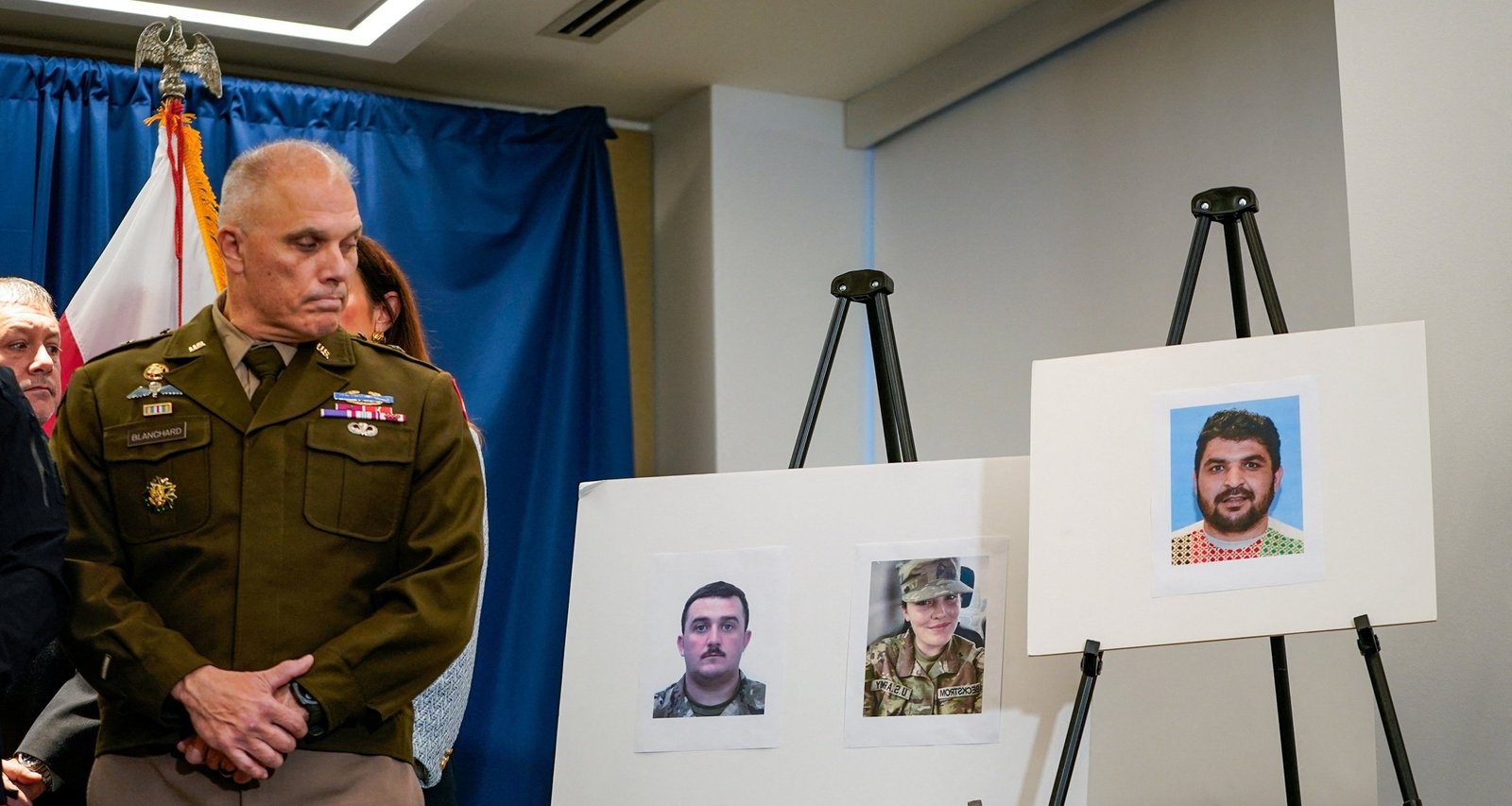
Imagem: Internet
Reaction from federal leadership
During remarks following the attack, President Donald Trump characterized the shooting as “an act of evil, an act of hatred and an act of terror,” calling it “a crime against our entire nation.” The president noted that, according to Homeland Security data, Lakanwal’s entry into the United States occurred under the previous administration. He also criticized U.S. immigration policies in place at that time.
At a press conference on Nov. 27, Brigadier General Leland D. Blanchard II stood beside FBI Director Kash Patel and attorney Jeanine Pirro as images of the wounded Guardsmen and the suspect were displayed. Officials reiterated that the slain service member’s name would be released once next of kin notifications were complete.
Continuing investigative steps
Over the weekend, agents conducted additional interviews and gathered electronic records in an effort to reconstruct Lakanwal’s recent activities. Analysts are mapping his travel from Washington state to the District of Columbia and reviewing any correspondence that might reveal intent or planning.
Meanwhile, the surviving Guardsman remains hospitalized in serious condition, and the fallen service member’s unit has organized a memorial observance. National Guard leadership has directed commanders to review local force-protection measures as a precaution.
Charges against Lakanwal are expected to include first-degree murder and attempted murder. Prosecutors have not announced when he will make an initial court appearance, pending medical clearance.
Authorities encourage anyone with information related to the suspect or the events of Nov. 26 to contact the FBI tip line. Officials stress that the case remains active and that conclusions about motive will depend on evidence gathered in the coming weeks.
Crédito da imagem: Nathan Howard/Reuters


