
Investors around the world will focus on Washington, D.C., on Wednesday when the Federal Reserve’s Open Market Committee (FOMC) gathers for its first monthly policy meeting led by newly appointed chair Kevin Warsh. The session is expected to be pivotal because it will offer the earliest indications of how Warsh intends to steer U.S. monetary policy at a moment of mounting inflationary pressure and heightened geopolitical uncertainty.
The FOMC, which sets the federal funds rate and outlines the central bank’s economic outlook, typically draws close scrutiny from financial markets. This particular meeting carries additional weight for two principal reasons. First, it marks the debut of a chair whose policy leanings have not yet been tested in the top job. Second, it arrives as several macroeconomic forces—most notably higher energy costs tied to the ongoing conflict involving Iran—are pushing consumer prices upward, intensifying the debate over whether interest rates should rise or remain steady.
Warsh, a former Federal Reserve governor who was confirmed as chair earlier this year, inherits an economy that continues to expand yet shows clear signs of inflationary strain. The recent jump in West Texas Intermediate crude futures, driven in large part by supply disruptions and shipping concerns in the Middle East, has filtered into broader price indexes. Gasoline, diesel fuel and fertilizer—products whose costs are closely linked to oil—have all registered noticeable increases. American households are beginning to feel the impact at the pump and in grocery aisles, raising questions about how aggressively the central bank should act to temper price growth.
Within this context, market participants are weighing two broad scenarios. A hawkish approach from Warsh—signaling a preference for higher rates to cool demand—could reinforce the Fed’s anti-inflation credentials but risk slowing consumer spending, corporate borrowing and, ultimately, overall growth. Alternatively, a dovish stance that keeps rates unchanged or guides them lower would support near-term economic momentum yet run the risk of allowing inflation to become more deeply entrenched.
Political and business leaders are already lobbying on both sides of the issue. Prominent lawmakers have urged the Fed to avoid actions that might jeopardize employment gains, while several industry groups argue that unchecked price increases threaten long-term competitiveness. Warsh’s remarks during the customary post-meeting press briefing will therefore be dissected for any clues about where he, and by extension the FOMC, intends to strike the balance between price stability and economic growth.
The committee itself comprises seven governors and five of the 12 regional Federal Reserve Bank presidents, a mix that frequently produces spirited debate. In the past, divergent views inside the panel have led to split votes and dissenting statements, signaling differing levels of urgency about inflation or growth. Analysts will look not only at the final rate decision but also at any recorded dissents, which can reveal how unified—or divided—the committee is under its new leader.
Beyond the headline policy rate, markets will also parse the accompanying statement and the updated Summary of Economic Projections, if released, for information about future growth, unemployment and inflation estimates. Even subtle changes in wording—such as shifting from “monitoring” to “closely monitoring” inflation—can influence expectations for monetary policy in the coming quarters. A single sentence hinting at possible adjustments could move bond yields, stock valuations and currency markets within minutes of publication.
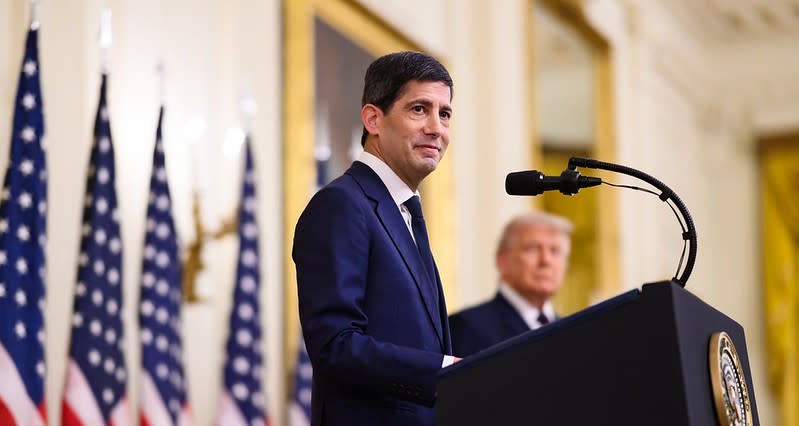
Imagem: Internet
While investors are most concerned with immediate rate decisions, the meeting’s broader significance lies in how it shapes the Fed’s communication strategy under Warsh. His predecessors established different reputations: some emphasized data dependence, others forward guidance. Warsh’s tone—whether cautious, forceful or pragmatic—will send a message about how transparently the central bank plans to telegraph its moves. Such clarity, or lack thereof, often determines how smoothly markets absorb policy shifts.
The international dimension of Wednesday’s event is equally important. Central banks in Europe, Canada and parts of Asia often calibrate their policies in response to the Federal Reserve’s actions. A U.S. rate hike can prompt foreign counterparts to tighten in order to defend exchange rates, while an unexpected pause can give them room to pursue more accommodative stances. For that reason, headlines from the FOMC meeting will be followed not only on Wall Street but also in major financial centers from London to Tokyo. The Federal Reserve’s official website will publish the statement immediately after the committee votes.
Historically, the first meeting under a new chair has set an enduring tone. Alan Greenspan’s inaugural session in 1987 established his readiness to respond quickly to market turbulence; Ben Bernanke’s debut in 2006 underscored his focus on transparency. Investors now seek similar cues from Warsh, a figure whose prior speeches and writings suggest both concern about asset bubbles and an appreciation for flexible policy making. Whether those themes translate into concrete action remains to be seen.
Regardless of the outcome, even a decision to leave rates unchanged can have sweeping effects. Treasury yields typically adjust in anticipation of future Fed actions, corporate borrowing costs track the benchmark rate, and equity valuations reflect discounted cash-flow models sensitive to interest-rate assumptions. A surprise move—either an increase or a cut—would likely trigger immediate volatility across asset classes.
With less than 24 hours before the gavel brings the meeting to order, investors, analysts and policymakers are preparing for a session that could redefine near-term monetary strategy. The stakes are amplified by global economic cross-currents and a leadership transition at the most influential central bank in the world. As Warsh takes his seat at the head of the FOMC table, markets will be listening for every word and watching for any hint of the path he intends to chart.