Limits on default search agreements
A central portion of Friday’s order addresses Google’s long-standing deals that set its engine as the default option in browsers and on mobile devices. Under the new terms, Google may no longer enter a default placement contract similar to its multi-billion-dollar arrangement with Apple unless the agreement automatically expires within one year of signing. The limitation applies to existing and future partners and covers any product or service that includes generative artificial intelligence (genAI) features or large language models.
By capping the duration of default contracts, the court aims to curb Google’s ability to lock in traffic over extended periods, a practice the Justice Department argued contributed significantly to the company’s market power.
Formation of an independent technical committee
The order establishes a technical committee responsible for determining which competitors are entitled to receive specific datasets from Google. Committee members must possess expertise in at least one of several fields—including software engineering, information retrieval, artificial intelligence, economics, behavioral science, data privacy and data security—and must be free of conflicts of interest. Anyone employed by Google or a direct competitor within six months before, or one year after, serving on the panel is disqualified.
To perform its oversight role, the committee will have confidential access to Google’s source code and algorithms. According to the court, such access is necessary to verify that the company complies with data-sharing requirements without revealing sensitive intellectual property to rivals.
Data-sharing obligations
Google must provide certain competitors with raw search interaction data—such as anonymized user queries and clicks—that the company uses to train ranking systems and AI models. The disclosure does not include the proprietary algorithms themselves, but Judge Mehta previously concluded that the underlying data comprise a “small fraction” of Google’s overall traffic volumes while still supplying a meaningful advantage that smaller firms lack.
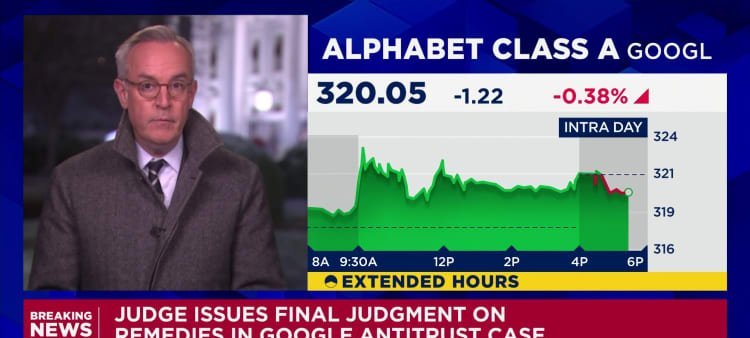
Imagem: Internet
The data-sharing mandate also extends to products or services that incorporate genAI or large language models. Judge Mehta wrote that generative technologies “play a significant role” in the remedies because they rely heavily on large volumes of training data, an area where Google’s scale can reinforce its competitive edge.
Compliance timeline and oversight
The finalized order does not specify an end date for the remedies; however, each default search contract must comply with the one-year limitation, and data-sharing rules will remain in force until the court determines they are no longer necessary. The Justice Department and the appointed committee will monitor implementation, and Google is required to submit periodic compliance reports.
Next legal steps
Google did not immediately comment on the new details but has previously stated its intention to appeal the underlying monopoly ruling. Any appeal would be heard by the U.S. Court of Appeals for the District of Columbia Circuit. Further litigation could focus on whether the behavioral remedies are sufficient or whether more sweeping measures are warranted.
The case is part of broader antitrust scrutiny of major technology platforms. Additional information about federal enforcement efforts is available on the U.S. Department of Justice Antitrust Division website.
Crédito da imagem: Andrew Kelly | Reuters


