The Court’s Decision
U.S. District Judge Fred Biery signed the release order on Saturday, Jan. 31. The ruling instructs the Department of Homeland Security (DHS) to free the pair “as soon as practicable,” setting a deadline of Feb. 3. The court also barred any transfer or removal while the habeas corpus petition challenging their detention remains active.
In his written opinion, Judge Biery criticized the federal government’s approach, saying the pursuit of removal quotas had led to actions that traumatize children and disregard orderly legal processes. He added that any eventual departure from the United States—voluntary or otherwise—should occur under a more humane framework than the one presently in place.
Conflicting Accounts of the Arrest
DHS and ICE maintain that agents targeted only the father during what they described as a “routine, at-large operation.” In a post-arrest statement, DHS Assistant Secretary Tricia McLaughlin said Conejo Arias ran when agents arrived, leaving his child behind. She asserted that officers safeguarded the boy, attempted to place him with a woman inside the house—identified by officials as the child’s mother—and ultimately honored the father’s request to keep Liam with him.
That description diverges from statements provided by school administrators and the family’s attorney. A staff member from the child’s school claimed an adult at the residence begged agents to look after the boy but was not permitted to do so. School officials also emphasized that Liam had just returned from preschool and was immediately swept into federal custody.
Legal Context
The habeas petition filed on behalf of the family argued that ICE lacked authority to detain the child because no removal order existed. Judge Biery initially issued a temporary stay preventing the government from moving the pair out of his jurisdiction while the case was reviewed, culminating in Saturday’s release directive.
Reaction From the Community
News of the ruling prompted relief among educators and local advocates in Minnesota. Columbia Heights Public Schools, where Liam is enrolled, released a statement welcoming the decision and reiterating support for keeping all children out of detention settings. Community members had already organized rallies, and demonstrators marched near the Dilley facility earlier in the week calling for the family’s freedom.
Broader Policy Debate
The case has intensified scrutiny of how immigration authorities handle mixed-status households and minor children. Critics argue that rapid, unannounced enforcement actions can separate families and undermine due process, especially when asylum claims are still pending. Supporters of strict enforcement counter that federal law requires ICE to arrest individuals who lack legal status once they have been located.
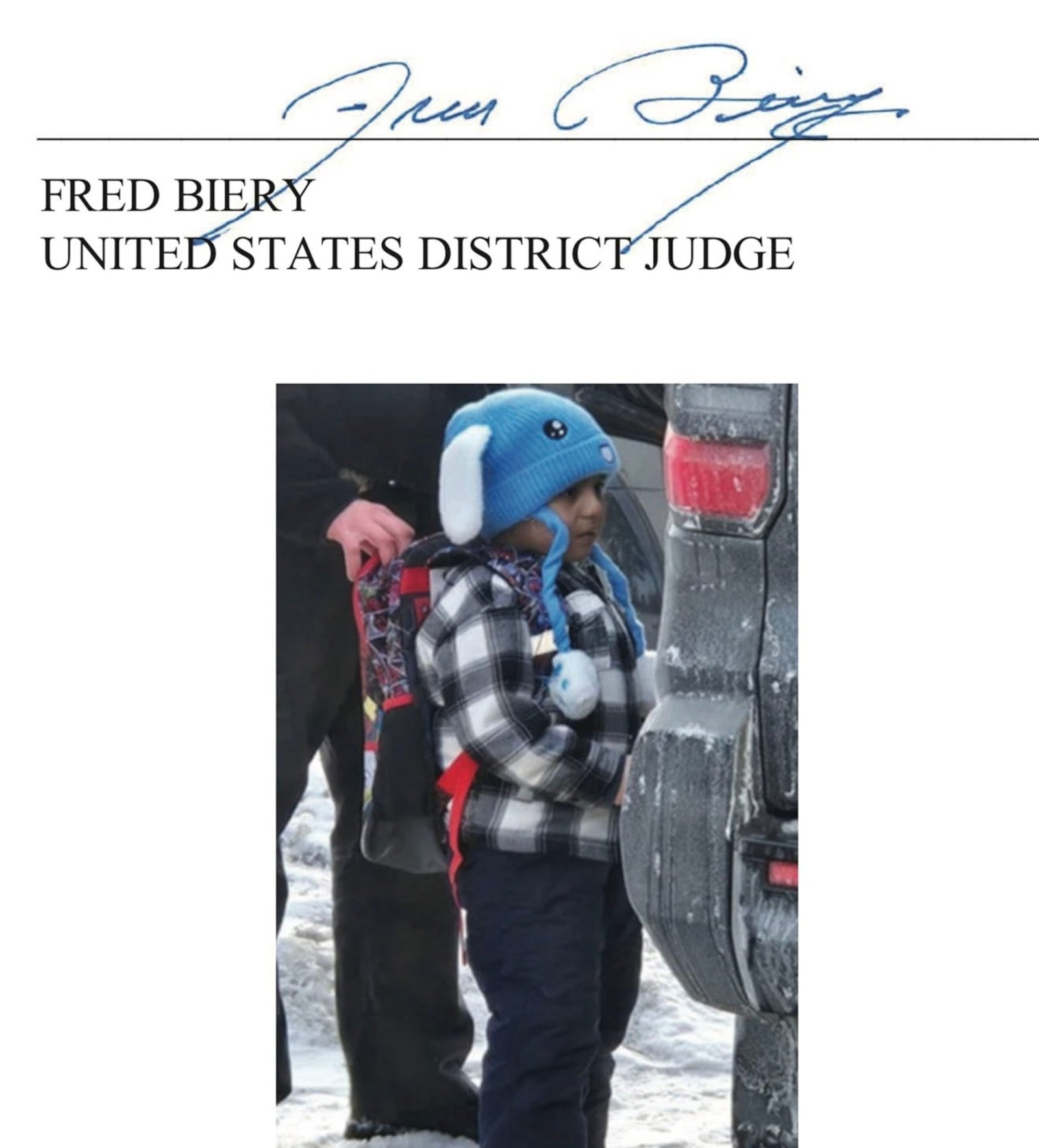
Imagem: Internet
DHS has defended its procedures, pointing to internal guidelines meant to protect vulnerable individuals and minors. The department says agents must consider humanitarian factors and minimize harm whenever possible. Federal policy documents outlining those guidelines are publicly available on the Department of Homeland Security website.
Next Steps for the Family
Upon release, Liam and his father are expected to return to Minnesota while their asylum petition proceeds. Immigration judges will ultimately decide whether they can remain in the country. Although Judge Biery acknowledged that removal could still occur in the future, his order stressed that any such action should respect legal norms and avoid unnecessary hardship.
The ruling does not resolve questions about the events of Jan. 20 or the accuracy of competing narratives. It does, however, temporarily prevent ICE from relocating or deporting the two until further notice from the court.
As of late Saturday, ICE had not publicly indicated whether it would appeal the decision or how quickly it would implement the release order. Under the court’s timeline, federal authorities must complete all necessary processing, including medical checks and travel arrangements, within the next few days.
Wider Implications
Legal analysts note that habeas petitions have become a key tool for challenging immigration detentions involving minors, particularly in jurisdictions where district courts have shown willingness to scrutinize agency practices. Saturday’s decision could encourage additional filings in similar cases, potentially influencing how ICE plans and executes future enforcement operations.
For now, the immediate impact is clear: a five-year-old boy and his father will leave a secure facility in rural Texas and reunite with their community in Minnesota while they continue to seek protection in the United States.
Crédito da imagem: U.S. District Court for the Western District of Texas / Joel Angel Juarez, Getty Images