Gene Seroka, who has led the port since 2014, stated on Sunday that he has not received outreach from the Office of the United States Trade Representative, the Department of Transportation or the Department of Commerce. Seroka indicated he has attempted to arrange meetings with those agencies since January but has not secured any communication regarding the ongoing incident.
Firefighting efforts are being conducted from LAFD fireboats that continue to cool the hull and attack remaining hot spots. The U.S. Coast Guard’s Eleventh District established a unified command and is overseeing salvage planning. A spokesperson for the joint information center confirmed the fire is contained but not fully extinguished, and a dedicated fireboat remains on station for suppression and cooling.
Data compiled by supply-chain analytics firm Vizion show the stricken containers hold a diverse range of cargo, including machinery, Toyota auto parts, Caterpillar components, fresh produce, Nike footwear, iron and steel items for Honda, frozen beef for multiple importers, and medical personal protective equipment. Lithium-ion batteries and other hazardous commodities are also listed on the manifest, increasing the complexity of extinguishing the blaze.
Marine insurers emphasize that fires aboard container ships are difficult to manage even under optimal conditions. Industry specialists note that vessel crews possess limited firefighting resources, and undeclared or misdeclared cargo can intensify flames. In this case, the ship was moored at a berth when the fire began, giving professional firefighters immediate access; despite that advantage, suppression took many hours.
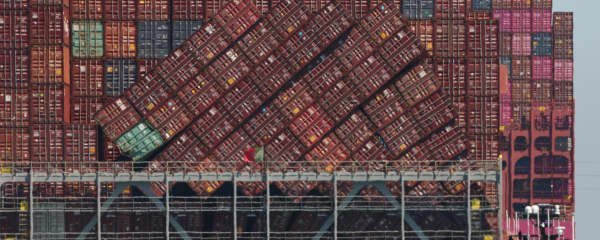
Imagem: Internet
Seroka said the port’s preliminary inspection suggests the One Henry Hudson was about two-thirds full when the incident occurred. Once firefighters eliminate remaining hot spots, surveyors will determine how much cargo is damaged by flames or water. The port director added that timely federal coordination would accelerate cleanup and help shippers confirm whether their freight should be written off as a loss.
As the largest container gateway in the Western Hemisphere, the Port of Los Angeles handled 8.9 million TEUs in 2024. Seroka warned that prolonged uncertainty could disrupt supply chains heading into the peak holiday import season. He has contacted state and local leaders, including Maryland Governor Wes Moore, for guidance on contracting protocols used after the Francis Scott Key Bridge collapse earlier this year.
Under the unified command, the Coast Guard is expected to approve a salvage and debris-removal plan once the fire is fully out. Environmental monitoring will continue throughout the response to ensure no fuel or hazardous cargo enters coastal waters. According to the U.S. Coast Guard, any release would trigger containment booms and additional cleanup assets.
While port terminals remain open, Seroka reiterated that a federally led push is essential for securing specialized contractors, expediting insurance assessments and restoring berth availability. For now, fireboats, tugboats and a salvage team remain alongside the One Henry Hudson until the last embers are extinguished and the vessel is deemed safe to enter port for off-loading and repairs.
Crédito da imagem: U.S. Coast Guard District 11


