Among the overt acts outlined in the filing is a 2007 meeting in which Flores allegedly accepted bribes to arrange contact between a high-volume drug trafficker and Néstor Reverol Torres, then head of Venezuela’s National Anti-Drug Office. The trafficker, prosecutors say, agreed to pay Torres a monthly bribe and an additional payment of about $100,000 for each cocaine flight that received safe passage. Torres was later charged in the Eastern District of New York and remains a fugitive.
The indictment also lists four additional defendants who are not in U.S. custody: Nicolás Ernesto Maduro Guerra, the former president’s son; Interior Minister Diosdado Cabello Rondón; former interior minister Ramón Rodríguez Chacín; and Héctor Rusthenford Guerrero Flores, identified as leader of the Venezuelan gang Tren de Aragua.
Custody Status and Health Concerns
Maduro and Flores consented to remain detained without bail for the time being, although defense counsel may seek release at a later date. Flores appeared in court with a visible bruise on her forehead. Attorney Mark Donnelly requested medical evaluation, including an X-ray, citing possible broken or severely bruised ribs sustained during Saturday’s capture.
Judge Hellerstein scheduled the next conference for March 17. Until then, both defendants will be held at a federal facility in the New York area.
Defense Arguments
Barry Pollack, who represented WikiLeaks founder Julian Assange in an unrelated federal case, is now serving as Maduro’s lead attorney. Pollack told the court his client “is head of a sovereign state and entitled to the privilege” that accompanies that position. He added that the legality of what he described as a “military abduction” from Venezuelan territory would be challenged through extensive future filings.
Donnelly, a former federal prosecutor in Texas, represents Flores. He did not address reporters after the hearing, but court records show the defense plans to contest the jurisdictional basis of the prosecution.
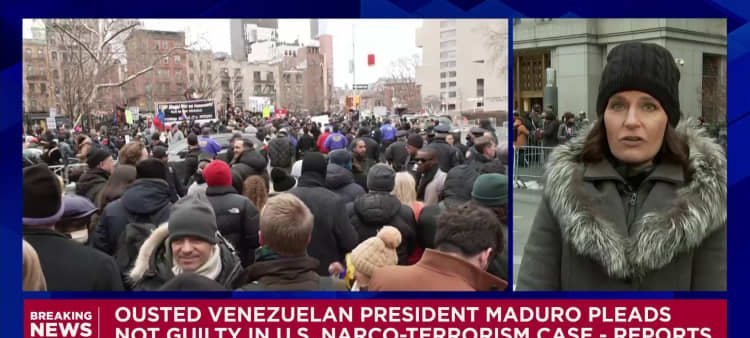
Imagem: Internet
Prosecutorial Stance
Manhattan U.S. Attorney Jay Clayton, whose office is bringing the case, said on CNBC’s “Squawk Box” earlier Monday that he is “completely comfortable” moving forward. Prosecutors describe Maduro as the “illegitimate ruler” of Venezuela, citing what they call fraudulent election results that kept him in power.
The United States has long alleged that Venezuela became a safe haven for trafficking groups moving cocaine northward. According to background information from the U.S. Drug Enforcement Administration, transnational criminal organizations frequently rely on official corruption to secure air and maritime routes for narcotics shipments.
Context and Political Repercussions
The Trump administration’s decision to extract Maduro has drawn scrutiny, particularly in light of the president’s recent pardon of former Honduran leader Juan Orlando Hernández, who was convicted in 2024 of collaborating with traffickers to move hundreds of tons of cocaine into U.S. territory. The White House has not commented publicly on the legal strategy behind apprehending a foreign head of state while simultaneously granting clemency to another Latin American figure convicted of similar offenses.
The Venezuelan government, now headed by interim officials loyal to Maduro’s political faction, has condemned the operation as a violation of national sovereignty. U.S. officials have not yet detailed the military actions that preceded the arrests, nor have they indicated whether additional charges could follow.
As the case proceeds, prosecutors are expected to present evidence of financial kickbacks, protected smuggling corridors and alleged ties between the Venezuelan leadership and narco-terrorist organizations. Defense lawyers are likely to focus on questions of head-of-state immunity, extraterritorial jurisdiction and the circumstances of the defendants’ removal from their home country.
Image credit: Reuters


