Mamdani told the Sunday program that he entered the Oval Office to secure tangible results for constituents, not to stage a political confrontation. “I was not there to make a point or take a stand; I was there to deliver for New Yorkers,” he said, adding that he believed an open acknowledgment of profound disagreements was essential to any working relationship with the White House.
The divergence between the two men surfaced briefly during their post-meeting news conference. When a reporter asked whether Mamdani still believed the president was a fascist, Trump laughed, patted the mayor-elect on the back and quipped, “That’s OK, you can just say ‘Yes.’ It’s easier than explaining it.” Mamdani did not address the question at the time, but clarified his position during Sunday’s interview, again characterizing Trump as “a threat to democracy” and “a despot.”
Asked whether Trump had pledged not to send federal forces into New York City, Mamdani stopped short of confirming any guarantee. He said he emphasized during Friday’s discussion that the New York Police Department would continue to manage local public safety efforts. The president, speaking to reporters on Saturday, suggested that “other places need it more” when questioned about the possibility of deploying federal personnel to the city.
Beyond public safety, affordability dominated the private meeting’s agenda. Mamdani said he repeatedly stressed the financial pressures faced by New York residents, noting the rising costs of housing, transportation and basic goods. Trump reportedly agreed that those issues warrant federal attention, although neither side disclosed specific policy commitments.
The exchange marked a notable shift in tone after a contentious election season. During the campaign, Mamdani criticized expanded Immigration and Customs Enforcement operations and condemned the administration’s increased deportations. Trump, in turn, accused the mayor-elect of fostering an environment that would hamper federal immigration enforcement and jeopardize public safety. The president’s statements included warnings that federal funding could be curtailed if city officials refused to cooperate with federal agencies.
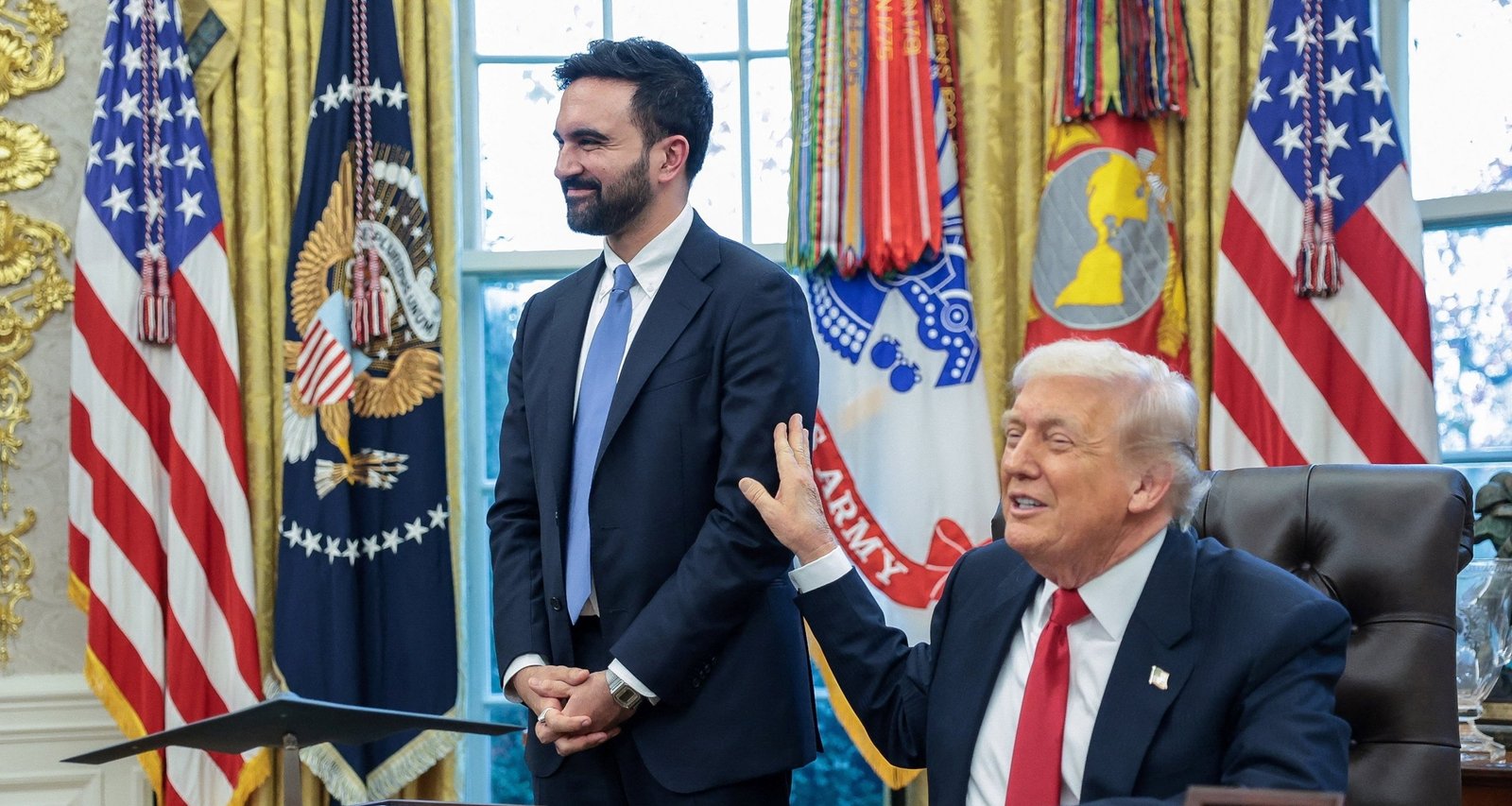
Imagem: Internet
Friday’s meeting also touched on municipal leadership. Mamdani confirmed afterward that New York Police Department Commissioner Jessica Tisch had agreed to remain in her post when the new administration takes office next year. The decision, he said, was intended to provide continuity while the city pursues strategies to reduce violent crime and improve community relations.
The mayor-elect framed his outreach to Trump as an effort to demonstrate that intense political disagreement need not preclude functional governance. “New Yorkers stay up late worrying about affordability and safety,” he told NBC. “If we can establish a working relationship focused on those concerns, that is what matters.”
An official White House summary of the meeting has not been released, and administration officials have not elaborated on any potential federal assistance or policy shifts. A transcript of Mamdani’s Sunday remarks is available through NBC News, which hosted the interview.
Mamdani will be sworn in as New York City’s 111th mayor on Jan. 1, 2026. His comments suggest he intends to sustain a pragmatic dialogue with Washington while maintaining a critical stance on the president’s broader approach to governance. Whether that balance can be maintained as policy negotiations progress remains to be seen, but for now both sides describe their initial conversation as “productive.”
Crédito da imagem: Jonathan Ernst/Reuters


