Older adults who practice traditional martial arts may experience improvements in brain health, emotional well-being, and social connection, according to a recent literature review conducted by researchers at the School of Kinesiology and Health Promotion, Dalian University of Technology in China.
Comprehensive review focuses on aging
The team—Yong Jiang, Pengsong Li, Yulong Yang, Liqing Liu, Haibin Liu, Yan Zhu, Fengshan Gao, Yanze Li, Suheng Li, Junjie Wang, Qingyong Wang, and Shuye Yang—examined scientific studies on martial arts participation among adults in later life. Their findings were published on 9 January 2026 in the journal Frontiers in Psychology under the title “Neural mechanisms and social support for mental health in old age by martial arts exercise.”
The authors analyzed data showing that aging often brings multidimensional declines: slower information processing, reduced physical capacity, and diminished social interaction. They then evaluated how martial arts address those declines through simultaneous physical, cognitive, and social stimuli.
Holistic activities demand body and brain
The review defines martial arts broadly, covering combat sports such as boxing, judo, and karate as well as traditional practices like Tai Chi. All feature aerobic exertion, complex motor sequences, controlled breathing, and structured forms that must be memorized, placing sustained demands on executive function. Participants learn to anticipate movements, make rapid decisions, and maintain focused attention—skills that engage multiple neural networks.
Studies cited in the review report that regular practice elevates levels of brain-derived neurotrophic factor (BDNF), a protein essential for synaptic plasticity that typically declines with age. Higher BDNF concentrations have been linked to better memory performance and slower cognitive deterioration. Imaging research, though still limited, indicates that older martial artists show increased gray matter volume in the hippocampus and prefrontal cortex, thicker cortical layers, and stronger functional connectivity in regions tied to cognitive flexibility and self-awareness.
Mental health indicators improve
Beyond neurobiological markers, psychological outcomes also trend upward. Training in judo, Taekwondo, and karate has been associated with lower self-reported depression and anxiety, higher life satisfaction, and greater self-esteem in senior populations. The authors attribute these changes partly to enhanced emotion regulation through controlled breathing and movement flow, and partly to supportive group dynamics.
Social context is a key component
Unlike cinematic portrayals that focus on solitary instruction, real-world martial arts instruction generally occurs in classes where peers progress together. Group drills, sparring, and ceremonial elements create a structured environment that encourages mutual encouragement and shared accomplishment. Such settings can counteract social isolation—a known risk factor for depression, anxiety, and accelerated cognitive decline in later life.
The review frames these interactions within the theory of embodied cognition, which posits that mental processes are rooted in sensorimotor experience. By synchronizing movement, attention, and interpersonal feedback, martial arts may stimulate neuroplasticity across motor, cognitive, and socio-emotional domains, aiding what gerontologists describe as “successful aging.”
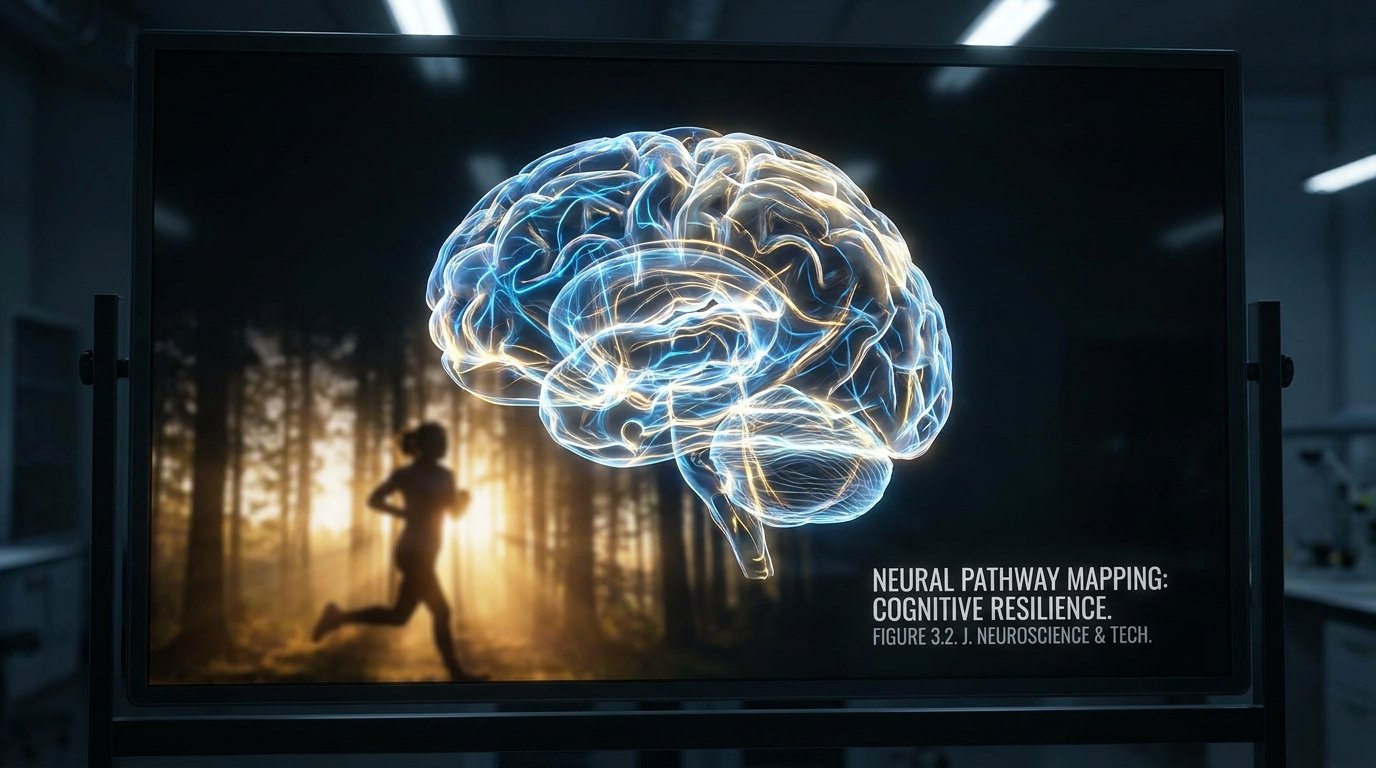
Imagem: exercise and brain health
Physical benefits complement cognitive gains
Although the primary focus was mental health, the researchers note that the same training improves muscle strength, balance, and cardiovascular fitness. Enhanced physical performance supports independence in everyday activities, thereby reinforcing confidence and psychological resilience. According to the U.S. National Institute on Aging, maintaining regular physical activity is one of the most effective strategies for preserving quality of life in older adulthood—a guideline that aligns with the movements practiced in martial arts classes.
Mechanisms still under investigation
While correlations between martial arts participation and positive outcomes are strong, causal pathways require further study. The review highlights the need for more longitudinal trials that combine neuroimaging, hormonal assays, and standardized cognitive testing. The authors also recommend examining different training intensities and styles to determine which elements—such as sparring frequency, form memorization, or meditation components—contribute most to specific health markers.
Implications for public health and program design
Population aging is accelerating worldwide, creating demand for interventions that simultaneously address physical, cognitive, and social challenges. The multidimensional nature of martial arts positions them as a candidate for community-based programs targeting seniors. Classes can be scaled for varying fitness levels, with low-impact options like Tai Chi offering accessible entry points while still engaging attention, memory, and coordination.
Integrating martial arts into senior centers, rehabilitation facilities, and wellness curricula could complement existing exercise recommendations. Instructors with geriatric training can adapt techniques to accommodate mobility limitations, minimizing fall risk while preserving the cognitive complexity central to the discipline.
Next steps in research and practice
Future investigations may compare martial arts to other group activities—such as dance, yoga, or team sports—to isolate unique benefits. Researchers also call for standardized measurement tools, consistent control groups, and larger sample sizes to strengthen evidence. At the same time, stakeholders in health promotion can pilot martial arts programs tailored to older adults, collecting outcome data that inform policy and funding decisions.
The review concludes that martial arts represent more than physical exercise; they deliver a synchronized package of movement, mental engagement, and social exchange. For aging populations facing intertwined declines in strength, cognition, and social contact, that package could play a meaningful role in maintaining independence and well-being.