Income investors often cite Medtronic’s dividend performance among the company’s most attractive attributes. The stock recently yielded 2.9 percent, and the board has lifted the payout for 48 consecutive years. A payout ratio near 79 percent indicates that most, but not all, earnings are distributed to shareholders, leaving room for incremental increases while keeping resources available for capital expenditures and research. That balance has helped Medtronic sustain dividends through multiple economic cycles and sector disruptions.
Behind the numbers is a sizable innovation engine. Medtronic reports more than 41,000 active patent matters and employs over 13,600 scientists and engineers distributed across more than 150 countries. Annual research and development spending stands at approximately $2.7 billion, financing 174 active clinical trials that explore treatments for upwards of 70 health conditions. Current product lines span surgical instrumentation, endoscopy, cardiac ablation, neurovascular care, neuromodulation, pelvic health, gastric interventions, and cranial and spinal technologies. This broad portfolio reduces reliance on any single therapeutic area and can smooth revenue fluctuations when individual product cycles peak or decline.
Strategic restructuring is also in progress. To channel resources toward faster-growing franchises, Medtronic plans to spin off its diabetes division in early March. Company officials estimate the standalone unit could command a valuation close to $8 billion, compared with Medtronic’s existing market capitalization of about $124 billion. The separation is intended to sharpen each entity’s focus: the parent organization will concentrate on surgical, cardiovascular, and neuroscience platforms, while the new diabetes company will pursue opportunities specific to insulin delivery and glucose monitoring technologies.
Market observers frequently debate how artificial intelligence, robotics, and data analytics might reshape medical device manufacturing. Medtronic’s Hugo system illustrates how the firm is integrating these technologies into its offerings. By combining robotics with image guidance and real-time analytics, Hugo is designed to assist surgeons in performing minimally invasive procedures with enhanced precision. Regulatory clearance allows Medtronic to begin commercial deployment in the United States, complementing launches already under way in other regions. Management anticipates that robotic systems will open additional recurring revenue streams through instrument sales, software updates, and service contracts.
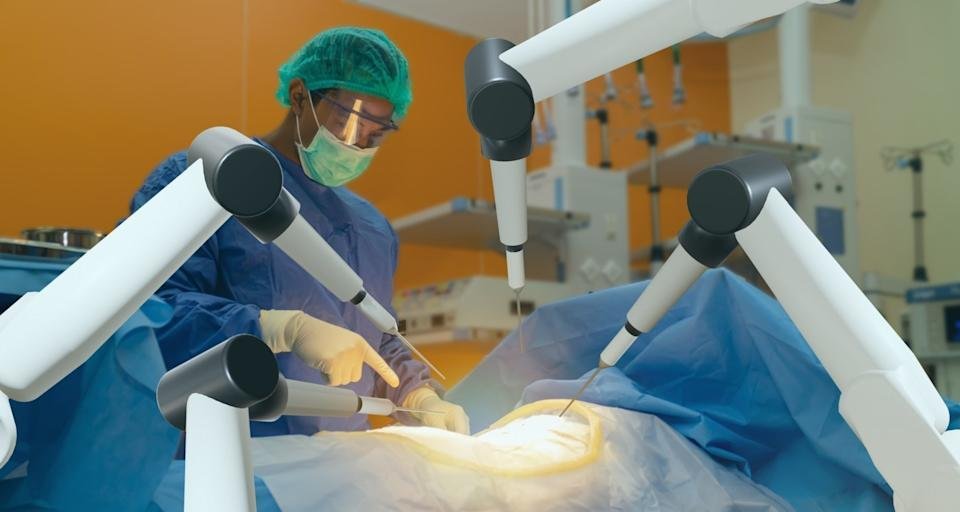
Imagem: Internet
The competitive landscape remains active. Intuitive Surgical’s da Vinci platform enjoys brand recognition and a large installed base, while other manufacturers, including Stryker and Johnson & Johnson, are also advancing robotic solutions. Medtronic’s approach of pairing an established global distribution network with price points that undercut premium systems could help it win hospital contracts, especially in emerging markets where cost sensitivity is higher.
Medtronic’s international footprint offers further scale advantages. With operations in more than 150 countries, the company can leverage manufacturing efficiencies, tap diverse talent pools, and navigate multiple reimbursement frameworks. Diversification helps cushion sales against region-specific slowdowns and currency fluctuations. In addition, large-scale logistics support rapid deployment of new devices, an important factor as the firm ramps up production of the Hugo platform and other next-generation products.
Risks remain inherent to the sector. Regulatory reviews can delay product launches, reimbursement rates may tighten under evolving health-care policies, and competition could pressure margins. However, Medtronic’s consistent reinvestment in research, broad patent estate, and strong balance sheet position it to address these challenges. The planned spin-off also demonstrates a willingness to realign resources when growth prospects diverge across business units.
In sum, Medtronic combines a moderate valuation, a nearly five-decade record of dividend increases, expanding exposure to robotics, and a diversified treatment portfolio supported by substantial research funding. Those elements underpin the view that the company can remain a core holding for investors seeking sustained participation in the medical technology industry.


