
Meta Platforms chief executive Mark Zuckerberg told employees during an internal town hall on 30 April that the company will move forward with another large round of layoffs this month, framing the decision as a trade-off between workforce size and expanding investments in artificial-intelligence infrastructure. The meeting was the first time he publicly addressed staff about the reductions since early plans surfaced in March.
The next cuts are scheduled to begin on 20 May and will affect roughly 8,000 people, or close to 10 percent of Meta’s global headcount of 78,865. In addition, around 6,000 vacant positions will be removed from the hiring plan, preventing them from ever being filled. California Worker Adjustment and Retraining Notification (WARN) filings already list 124 positions ending at the Burlingame campus on 22 May and 74 at the Sunnyvale site on 29 May.
Series of reductions dating back to 2022
The coming layoffs are part of a multi-year restructuring effort that has eliminated about 25,000 jobs since 2022. Earlier this year, Meta dismissed between 1,000 and 1,500 employees in its Reality Labs unit and shut down several virtual-reality game studios. A further 700 roles were removed in March across at least five divisions, bringing the total of 2026 job actions announced so far to more than 9,700. Additional workforce adjustments are planned for the second half of 2026, although precise timing and scope have not been finalized.
Zuckerberg explained that the company’s two largest cost centers are “compute infrastructure” and “people-oriented expenses.” He stated that increasing capital devoted to servers, data centers and advanced chips to power generative AI models requires a corresponding pullback in payroll costs. While acknowledging employee concerns that new AI tools could replace human roles, he said internal productivity initiatives are not the primary driver of the current staff reductions.
Financial backdrop shows strong revenue, higher capital spending
Meta’s balance sheet highlights the tension between the workforce cuts and overall corporate performance. Revenue for full-year 2025 reached $201 billion, a 22 percent increase from the prior year, and free cash flow totaled $43.6 billion. First-quarter 2026 revenue of $56.31 billion surpassed analysts’ consensus estimates. Despite those results, Meta raised its 2026 capital-expenditure outlook to a range of $125 billion to $145 billion, up from the earlier projection of $115 billion to $135 billion. The additional funds will finance AI model development and the build-out of the company’s Superintelligence Labs under Chief AI Officer Alexandr Wang.
Chief Financial Officer Susan Li told employees that the firm has not determined its “optimal” long-term headcount, given the rapid pace of AI progress. She noted that lower compensation expenses should emerge over time once the restructuring costs linked to severance and consolidation are absorbed. Bank of America estimates the overhaul could eventually generate $7 billion to $8 billion in annual cost savings.
Employee reaction and internal climate
The prospect of continued downsizing has fueled blunt criticism on Meta’s internal messaging boards. Workers have questioned why a company reporting record revenue needs to dismiss thousands of colleagues to bankroll AI initiatives. Some frustration is also tied to a recently introduced monitoring system that tracks mouse movements, clicks and keystrokes, a measure that many staff members view as heightened surveillance in an already uncertain environment.
Zuckerberg addressed the uncertainty directly, saying he lacks a “crystal-ball plan” for the next several years and cannot promise that the 20 May cuts will mark the end of staff reductions. While some employees appreciated the candor, the absence of specific assurances left many anxious about future rounds.
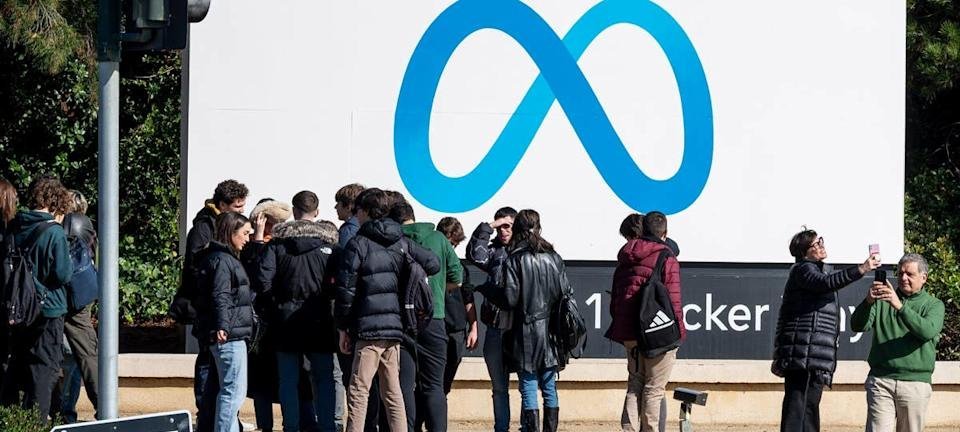
Imagem: Internet
Investor perspective
From the market’s viewpoint, the restructuring is intended to sharpen Meta’s focus on high-growth AI products while trimming overhead. The company’s share price fell 8.55 percent on 30 April, reflecting both expanded capital-spending guidance and a quarterly earnings miss. However, analysts point to the projected multibillion-dollar savings and the pivot toward advanced computing as potential long-term positives.
The United States Department of Labor, which oversees compliance with the WARN Act that requires advance notice for sizable layoffs, provides guidelines that illustrate how companies must notify affected workers and local authorities before large reductions take effect. Meta’s recent filings align with these federal requirements as well as California’s more specific state rules.
What comes next
Meta intends to begin issuing formal separation notices to the approximately 8,000 targeted employees in the week leading up to 20 May. Severance terms have not been disclosed publicly, but previous rounds included payouts, continued health benefits and career transition services. The elimination of 6,000 unfilled roles will be implemented by adjusting departmental hiring plans rather than rescinding individual offers.
The company is simultaneously accelerating deployment of new computing clusters and large-language models that underpin emerging AI-driven features across Facebook, Instagram, WhatsApp and Quest devices. Leaders maintain that additional capital will be allocated as needed to keep pace with industry advancements, suggesting workforce levels could continue to fluctuate in step with evolving technology demands.
For now, employees face at least two certainties: layoffs will start within weeks, and management has not ruled out more cuts beyond 2026. Investors, meanwhile, will watch whether Meta’s substantial AI gamble delivers the efficiencies and product differentiation that could justify both the spending surge and the human cost of trimming nearly a quarter of the workforce in four years.