
The 127-year-old supermarket chain Morrisons has announced plans to remove roughly 200 positions from its Bradford headquarters, intensifying a cost-reduction program that began last year. The latest measure, confirmed on April 16 2026, will affect about 8 percent of the retailer’s central workforce and will touch several core departments, including marketing, commercial operations and technical services.
Management told employees that surging insurance premiums, persistent cost-of-living pressures on consumers and higher fuel prices—linked to geopolitical tensions in the Middle East—have increased operating expenses. These external factors, the company said, are accelerating an internal transformation strategy launched in 2025 that places heavier emphasis on artificial intelligence and automation. The reorganization seeks to streamline head-office functions so they can respond more quickly to market shifts and support the chain’s nearly 500 stores across the United Kingdom.
Multi-Year Restructuring Effort
Morrisons has been restructuring several business segments for more than a year. In March 2025 the grocer detailed a series of closures that included 52 in-store cafés, 18 market kitchens, 17 convenience outlets, 13 florist sections, 35 meat counters, 35 fish counters and four pharmacies. Although many team members were offered redeployment to other parts of the company, approximately 365 jobs remained at risk at that time. Those changes targeted lower-margin areas and released capital for digital initiatives considered critical to long-term competitiveness.
The retailer’s leadership maintains that automating repetitive tasks and expanding data-driven decision-making will improve productivity, reduce overhead and free staff to concentrate on customer-facing activities. According to internal briefings shared with staff, technologies introduced since early 2025 include automated ordering platforms, AI-supported pricing tools and robotics trials within distribution centers. Additional investments in machine-learning applications are slated for 2026 and 2027 as part of the same roadmap.
Industry-Wide Shift Toward Automation
Morrisons’ announcement arrives amid a broader wave of workforce reductions across global retail. Thousands of brick-and-mortar locations have closed over the past two years, and companies of all sizes are adopting advanced technology to offset rising costs. The International Labour Organization has noted that automation is reshaping employment patterns in retail and other service industries (ILO research). Many retailers now view technology investments not merely as enhancements but as fundamental components of survival strategies in highly competitive markets.
For consumers, the transition often appears in the form of self-checkout lanes, cashier-less convenience formats and app-based ordering. Behind the scenes, data analytics platforms forecast demand, optimize supply chains and allocate inventory with minimal human intervention. While these tools can shorten lead times and reduce waste, they also displace tasks once performed by administrative and store-level staff.
Financial Performance Remains Resilient
Despite the ongoing cuts, Morrisons reported stable revenue and improved operating margins in its most recent earnings release. Management credited tighter expense controls, streamlined product assortments and increased private-label sales for the stronger performance. The company said it intends to reinvest portions of those gains into further technological upgrades, additional store refurbishments and enhanced loyalty programs.
Analysts tracking the grocery sector have pointed to Morrisons’ private-equity ownership as another driver behind the aggressive cost agenda. The retailer was acquired in 2021, and the new owners set profitability targets that rely heavily on operational efficiencies. Although no new store closures were announced alongside the April job cuts, executives indicated that underperforming counters and concession areas will continue to be evaluated on a case-by-case basis.
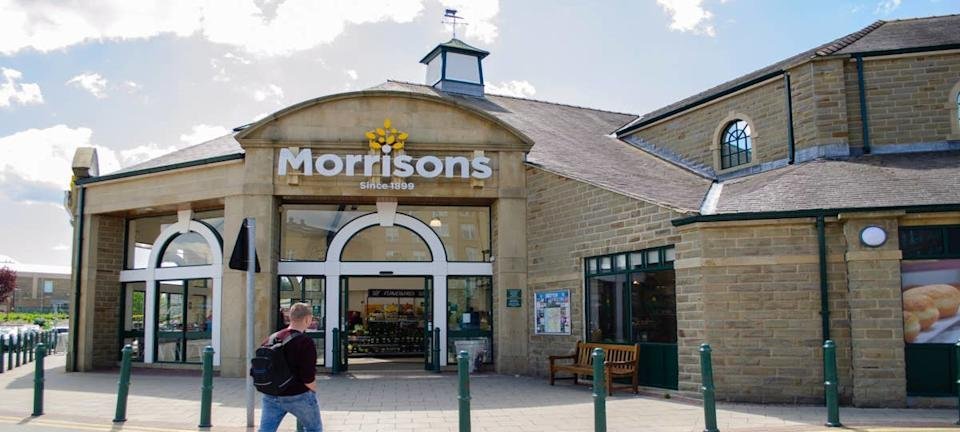
Imagem: Internet
Impact on Employees and Next Steps
The 200 employees affected by the latest decision have entered a formal consultation period. During this phase, the company will explore redeployment possibilities and voluntary severance packages, in line with U.K. labor regulations. Union representatives have requested detailed information on the selection criteria for redundancy and on support programs for staff whose roles cannot be absorbed elsewhere within the organization.
Morrisons stated that changes at headquarters are designed to minimize disruption to store operations and to maintain customer service levels. However, some team members have expressed concern that leaner central departments could slow response times for merchandising queries, marketing campaigns and technical troubleshooting. The company countered that upgraded digital tools will compensate for reduced headcount by automating routine approvals and enabling real-time collaboration between stores and headquarters.
Broader Economic Context
The U.K. retail sector continues to grapple with inflation, volatile commodity prices and shifts in consumer spending habits. Food retailers have faced particular pressure to absorb rising input costs while limiting price increases on essential goods. Higher fuel costs have simultaneously inflated logistics expenses, and insurance premiums have climbed in response to severe weather events and geopolitical uncertainties. In this environment, many chains see AI and automation as the most viable path to preserving margins without imposing steep price hikes on shoppers.
Morrisons has not ruled out additional head-office reductions in future if economic conditions worsen or if automation delivers efficiency gains beyond current projections. For now, the retailer plans to focus on completing the present consultation process, finalizing the redeployment of impacted staff and rolling out the next phase of its technology investment program through the remainder of 2026.
As the company moves forward, market observers will watch whether the balance between cost savings and service quality can be maintained. The outcome may offer further insight into how traditional grocers can navigate the dual challenges of economic headwinds and technological disruption without eroding their core value proposition to shoppers.