While Ukraine publishes defensive tallies of Russian activity, it rarely discloses the number of drones or missiles it fires into Russia. Moscow, conversely, releases only its drone shoot-down statistics and offers limited information on damage inside Russia. Independent verification of either side’s numbers remains difficult, and analysts caution that both governments may overstate their defensive success or the scale of attacks endured.
Strategic context
Long-range strikes have expanded sharply over the past year as both militaries seek to erode the other’s industrial capacity, energy infrastructure and morale. Ukrainian officials emphasize the importance of developing low-cost, domestically produced drones capable of reaching targets deep inside Russian territory. President Volodymyr Zelenskyy has projected that national production of drones and missiles could reach a value of $35 billion in 2026, a figure aimed at underscoring Ukraine’s growing self-reliance.
Kyiv’s publicly confirmed targets in December included oil refineries, tankers, offshore rigs and pipeline facilities. Russian authorities usually attribute reports of fire or damage to falling debris from intercepted drones, but open-source imagery and social-media video suggest that some Ukrainian systems have penetrated Russian defenses. According to the International Institute for Strategic Studies, Ukraine has increasingly concentrated on disrupting Russia’s energy sector to complicate wartime logistics and reduce revenue.
Comparative firepower
Even with December’s spike, the number of Ukrainian drones reportedly downed remains below the munitions Russia is firing into Ukraine each month. However, the gap narrowed in December. Kyiv’s data show 5,131 Russian drones launched versus Moscow’s claim of 4,379 Ukrainian drones downed, suggesting a smaller disparity than in earlier periods.
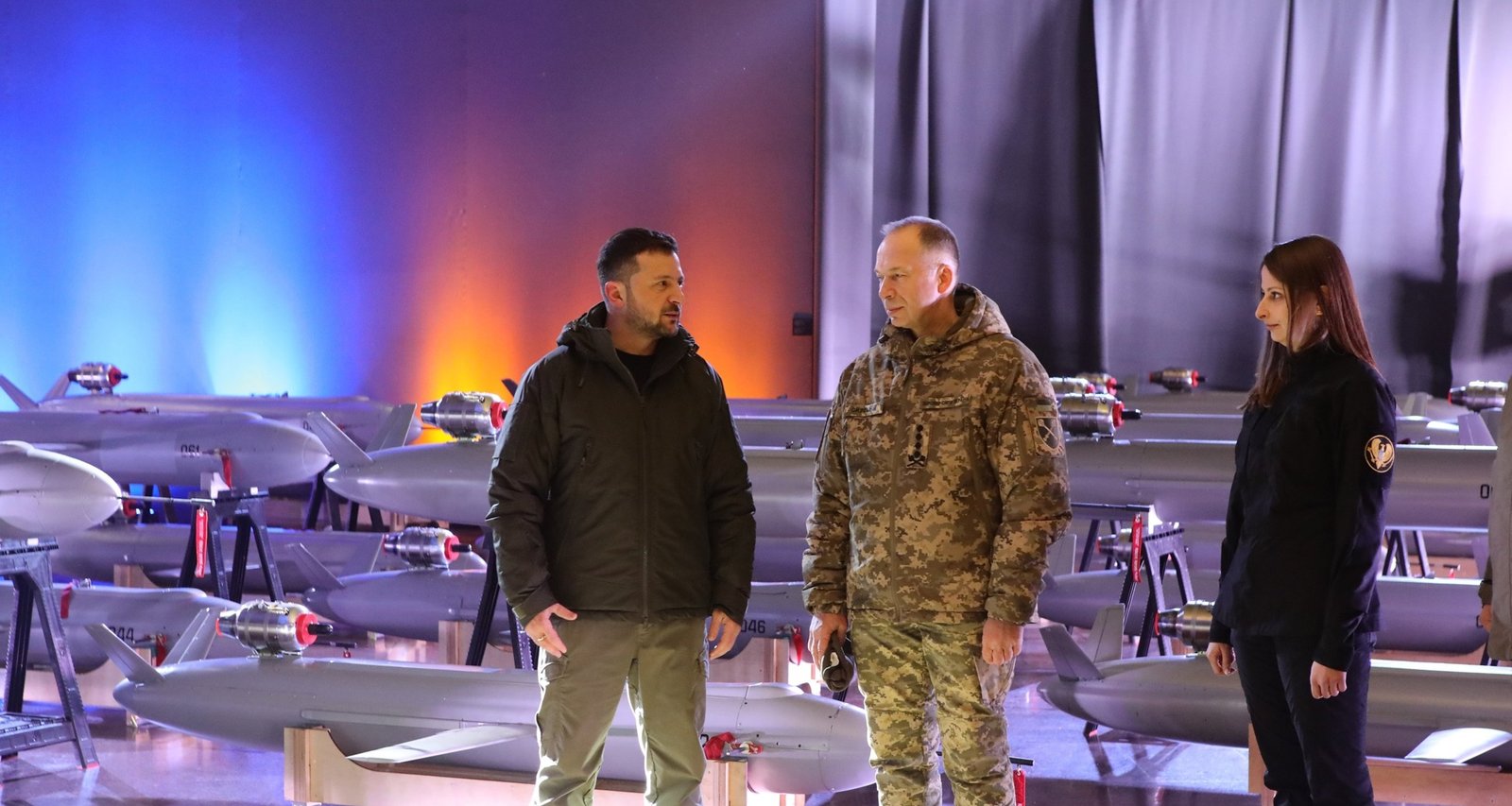
Imagem: Internet
Russia’s reported interceptions also point to a diversification of Ukrainian drone usage. Cheap, small craft have been employed for attacks on oil depots near the border, while larger, long-range variants have reached cities such as Moscow and Saint Petersburg. On 18 December, fires broke out at industrial sites in the Rostov region following what Russian officials described as overnight drone raids, highlighting the growing reach of Ukrainian systems.
Information gaps
Neither military provides a full picture of its own offensive operations. Moscow’s daily communiqués list only the number of Ukrainian drones it claims to intercept. Kyiv publishes counts of Russian sorties but keeps quiet on the volume of drones and missiles it launches. Analysts therefore rely on partial data, satellite imagery and verified social-media posts to map trends.
Both capitals accuse the other of deliberately targeting civilians, a charge each side denies. Each asserts that its strikes focus on military, industrial or energy objectives. While official casualty numbers linked to December’s drone and missile activity remain sparse, damage assessments continue to emerge in local media and on regional government channels.
Outlook
December’s record Russian interception figures, paired with Ukraine’s steady claims of thwarting the majority of Russian barrages, underscore how critical long-range weapons have become. As production ramps up on both sides, the frequency and geographic scope of drone and missile engagements are likely to expand further, prolonging a duel that now stretches hundreds of kilometers beyond the front lines.
Crédito da imagem: NurPhoto via Getty Images


