Regulatory and Market Hurdles
Tesla has not obtained permits to test or operate autonomous vehicles without a human driver in California, home to some of its largest customer bases. In late 2023, state regulators determined that the company had misled consumers with marketing statements about the capabilities of its driver-assistance features. Safety concerns also persist among potential riders: surveys conducted by the Electric Vehicle Intelligence Report indicate widespread U.S. skepticism toward driverless taxis, with respondents citing worries about crash prevention and software reliability.
The company faces a crowded competitive landscape. Alphabet-backed Waymo closed last year operating in five U.S. metropolitan areas and added Miami service this week. In China, Baidu’s ApolloGo continues to scale, while Amazon-owned Zoox joined the sector during 2025. Each organization is pursuing distinct technical strategies but shares the goal of removing human drivers from ride-hailing fleets.
History of Shifting Deadlines
Musk’s latest schedule follows several earlier forecasts. In 2019, he told investors he was “very confident” Tesla would launch a broad autonomous network by 2020. Subsequent milestones were pushed forward, often citing software complexity and regulatory uncertainty. The new commitment aligns with Musk’s broader assertions about the pace of artificial-intelligence progress. During the Davos session, he said computer intelligence could surpass human intelligence as early as this year, or by next year at the latest.
Beyond robotaxis, Musk indicated that Tesla’s bipedal “Optimus” robots could become commercially available to the public by the end of 2027, underscoring the company’s ambition to diversify its product portfolio beyond passenger vehicles and stationary energy storage.
Industry Context and Technical Approach
Tesla’s autonomous strategy centers on computer vision powered by neural networks and cameras, eschewing lidar sensors favored by competitors such as Waymo and Zoox. Musk maintains that vision-only systems will ultimately deliver safer and more cost-effective performance. The approach has allowed Tesla to collect extensive real-world driving data from its customer fleet, which the company feeds into its artificial-intelligence training pipeline.
Nonetheless, the absence of redundant sensor modalities has drawn scrutiny from safety advocates. Federal regulators continue to examine several crashes in which Tesla vehicles operating under driver-assistance features were involved. While those investigations focus on the “Autopilot” and “Full Self-Driving” beta software used by private owners, the findings could influence future rules governing commercial robotaxi operations.
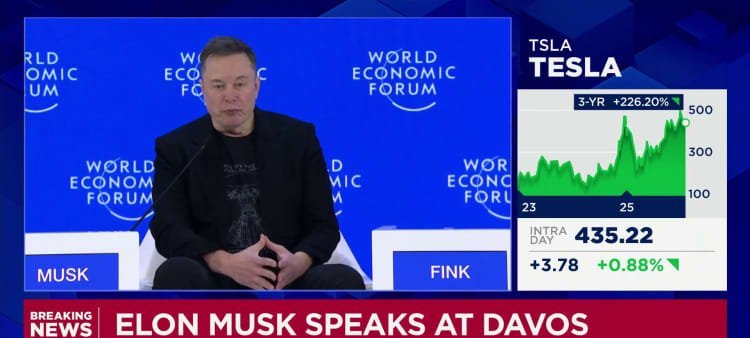
Imagem: Internet
Operational Plans and Unanswered Questions
Musk did not specify how many cities the unsupervised robotaxi service will cover by year-end, nor did he outline the criteria Tesla will use to expand from pilot programs to full commercial availability. The company also declined to comment on whether it plans to apply for additional state-level permits in jurisdictions beyond Texas. In California, where driverless testing rules require separate approvals for development and deployment, Tesla has yet to submit the necessary applications.
Even with the latest timeline, analysts note that Tesla will need to navigate a patchwork of local regulations, insurance requirements, and public-relations challenges before achieving nationwide scale. Waymo, for example, began fully driverless operations in the Phoenix area in 2020 and has spent years negotiating city-by-city permissions.
Stakeholder Reception
Investors and automotive observers will monitor Tesla’s progress closely, particularly because the company’s valuation has long reflected expectations of future software-based revenue streams. At Davos, Musk framed the robotaxi initiative as part of a broader societal shift toward humanoid robotics and advanced AI. BlackRock CEO Larry Fink, who interviewed Musk on stage, did not comment on Tesla’s specific targets but highlighted the importance of capital allocation in accelerating technological change.
Reaction from public officials at the forum was muted, with no immediate statements from U.S. transportation regulators. Industry groups representing traditional automakers declined to address Tesla’s projection directly, but reiterated calls for uniform federal standards governing autonomous vehicles.
As the year progresses, Tesla’s ability to deliver a reliable, unsupervised service across multiple regions will serve as a benchmark for its technology and operational discipline. Should the company meet Musk’s stated objectives, it would join or potentially surpass industry frontrunners already offering commercial driverless rides.
Crédito da imagem: CNBC


