California will retain a standby element of 100 volunteers who will remain on state orders and could be re-federalized if future federal court rulings permit. Texas will keep 200 volunteers on similar status. Maintaining a voluntary pool allows both states to respond quickly should the federal government receive judicial approval to move forward with the original deployment plan.
The drawdown affects only two of the four states whose Guard units were activated last month. The 200 Illinois National Guard soldiers who were also federalized for potential duty in Chicago will stay on active federal status, although they too have not carried out any missions. In addition, the 200 Oregon National Guard members activated for potential operations in Portland will be reduced to a force of 100. Those remaining troops will continue to operate under federal command but, like their counterparts in Illinois, will remain in a standby posture.
Legal hurdles have shaped the mission since its inception. Federal district courts in Illinois and Oregon, followed by a divided appeals court, issued injunctions prohibiting the use of National Guard troops in law-enforcement roles absent clear evidence of an ongoing rebellion or inability of local authorities to maintain order. The rulings cited the Posse Comitatus Act and other statutes limiting federal military involvement in domestic policing. The Department of Justice has appealed the decisions, and the administration has twice requested that the Supreme Court authorize the deployments, but the high court has not taken action.
Because the troops never left staging areas, their presence in both cities remained largely invisible. In Portland, the California Guard contingent was housed at Camp Withycombe, an Oregon Army National Guard installation in the suburb of Happy Valley. The Texas soldiers assigned to Chicago were billeted at federal facilities near an Immigration and Customs Enforcement complex in Broadview, west of downtown. Logistical costs, including lodging, meals, and transportation, have been managed through federal funding channels for contingency operations.
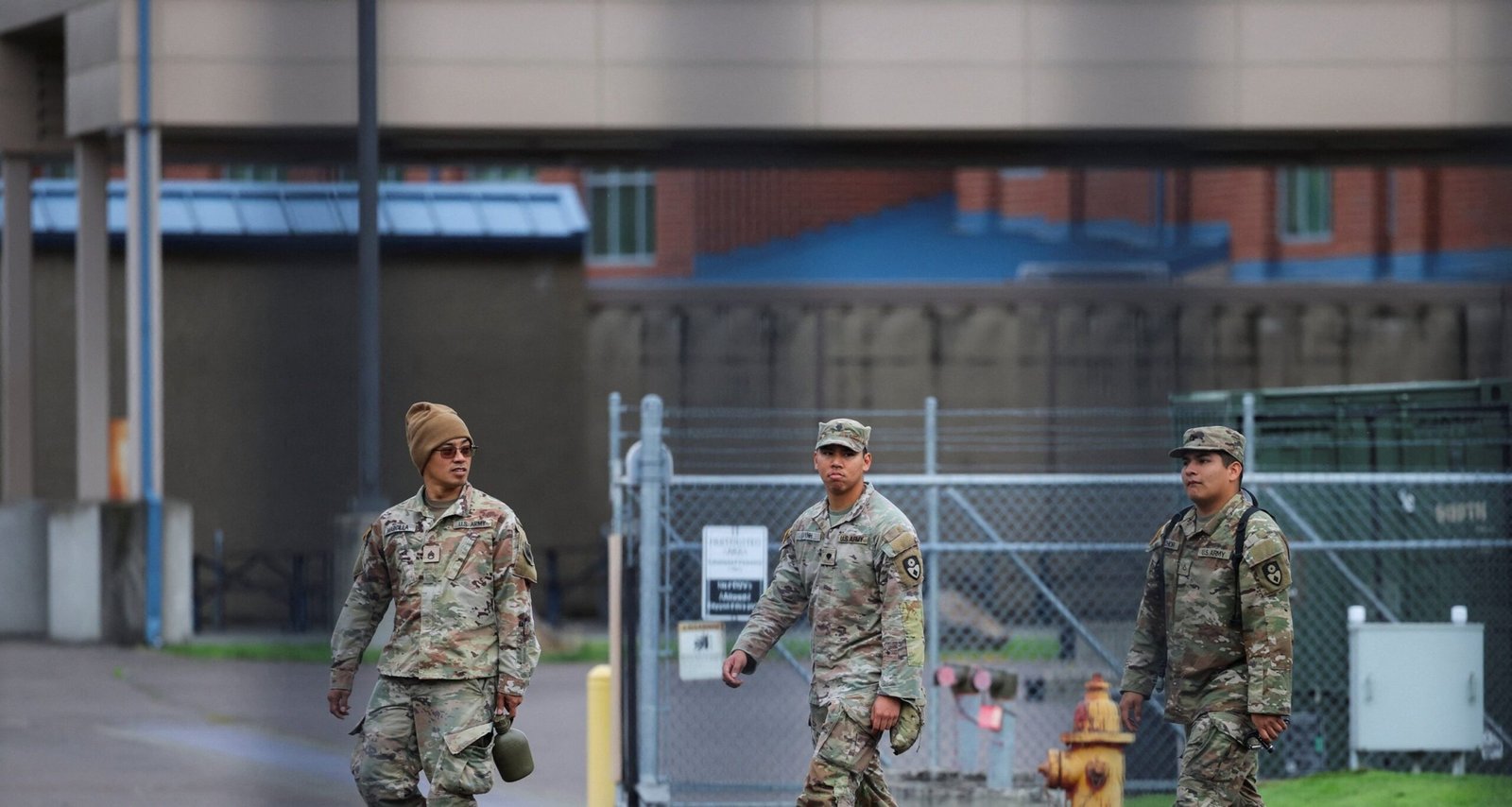
Imagem: Internet
National Guard forces fall under state control during most domestic missions, operating on State Active Duty or Title 32 status. When placed on Title 10 orders, they operate as part of the active-duty military under federal command. Additional background on the legal distinctions is available through the Congressional Research Service (crsreports.congress.gov).
Officials have not provided a timeline for the returning soldiers to arrive back in California and Texas. Standard redeployment procedures include equipment inspection, administrative processing, and medical evaluations before release from active duty. Once back under state control, they will resume traditional part-time National Guard status unless reactivated for state emergencies or federal missions.
The Department of Defense has not indicated whether the reduced contingents in Oregon and Illinois will remain in place indefinitely or if further adjustments are likely. For now, commanders say the smaller footprint preserves an immediate federal option while aligning force size with current legal constraints.
Crédito da imagem: Reuters


