Gierka, who holds a doctorate in adult education focusing on the human-animal bond and bereavement, previously served nearly two years as an on-call chaplain at a large veterinary teaching hospital. He has also facilitated a Society for the Prevention of Cruelty to Animals (SPCA) pet loss support group since 2006. Duke, an experienced researcher and storyteller, collaborated with him to create the first online course in veterinary chaplaincy, offered from 2018 to 2022. Their combined 30 years of study and practice inform the arguments laid out in the yet-to-be completed four-volume series.
Questioning Cultural Assumptions
Just an Animal opens by documenting the phenomenon of disenfranchised grief—sorrow that society fails to recognize or validate—after the death of a pet. According to the authors, individuals who openly grieve a dog, cat, or other companion often encounter indifference or subtle criticism, a reaction they attribute to entrenched cultural hierarchies that rank species by perceived worth. The text also introduces the term “religious disenfranchisement,” describing the reluctance many bereaved pet owners feel about seeking comfort from faith leaders who may regard animals as spiritually insignificant.
Beyond the realm of personal loss, Gierka and Duke connect speciesist attitudes to broader patterns of oppression. They argue that thinking of animals as objects or automatons shapes policies on agriculture, research, and urban development, influencing how societies allocate resources and moral concern. By tracing these ideas back to classical philosophy, certain religious doctrines, and early scientific theories, the authors provide readers with a timeline illustrating how modern views evolved.
Shift in Public Perception
The book notes a widening cultural shift driven by three factors: rapid growth in pet ownership, expanding scientific evidence of animal cognition and emotion, and evolving theological perspectives that emphasize stewardship rather than dominion. The American Veterinary Medical Association, for instance, reports that roughly 38 percent of U.S. households now include a dog and 25 percent include a cat, figures that highlight the scale of human-animal relationships across the country (American Veterinary Medical Association). As more individuals share daily life with animals, the authors suggest, they become less likely to accept narratives that portray pets merely as property.
On the scientific front, studies in fields such as cognitive ethology and comparative psychology increasingly document problem-solving abilities, emotional expression, and social complexity in species previously regarded as simple or instinct-driven. Gierka and Duke reference this growing body of work to counter the claim that animals lack the depth necessary for meaningful relationships with humans.
Within religious communities, the authors observe a gradual reevaluation of doctrines that once positioned humans at the apex of creation. They highlight emerging faith-based initiatives that advocate for responsible stewardship and expanded moral consideration for all living beings, developments they believe could reshape how congregations support members mourning pet loss.
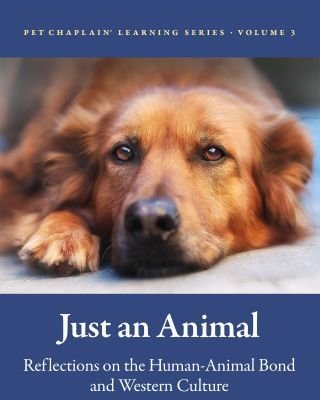
Imagem: Internet
Practical Implications for Caregivers
Although much literature on pet loss focuses on individual psychological processes, Just an Animal emphasizes the importance of a supportive social environment. The authors encourage mental-health professionals, clergy, and veterinary staff to recognize that grief over an animal can be as intense as grief over a human loved one. They outline strategies for creating inclusive rituals—memorial services, online tribute spaces, and community support groups—that validate bereaved individuals and foster healthy mourning.
The text also explores how positive human-animal relationships can serve as “change agents.” Gierka and Duke argue that firsthand experiences of reciprocity, nonjudgmental affection, and shared daily routines with pets often prompt people to question utilitarian views of animals. Such experiences, they maintain, may accelerate broader cultural change toward greater respect and protection for all species.
A Resource for Diverse Audiences
The authors target a range of readers. Book clubs and discussion groups will find reflective questions at the end of each chapter designed to stimulate conversation about personal beliefs, societal norms, and ethical considerations. Veterinary professionals and animal rescue workers are offered insights into why clients and adopters may exhibit widely varying attitudes toward animal welfare. Clergy, chaplains, and therapists receive contextual background to better support parishioners and clients grappling with pet loss.
While the narrative centers on Western culture, Gierka and Duke acknowledge that similar dynamics unfold in other regions, suggesting opportunities for comparative research. They express optimism that rising public awareness, combined with increased access to information about animal sentience, will motivate communities to adopt policies and practices that honor the intrinsic value of nonhuman life.
Looking Ahead
The Pet Chaplain Learning Series will conclude with a fourth volume, currently in development, that is expected to expand on practical applications of chaplaincy in veterinary and community settings. In the meantime, Just an Animal provides a comprehensive overview of the historical, social, and theological factors shaping modern perceptions of animals and offers a framework for addressing the gaps that leave many pet owners unsupported in times of loss.
By challenging the phrase “just an animal,” the authors hope to inspire readers to reassess long-held assumptions, recognize the legitimacy of grief following the death of a pet, and cultivate relationships with animals based on respect, empathy, and mutual benefit.


