Nvidia’s momentum contrasts sharply with Apple’s steadier pace. Analysts forecast Nvidia’s fiscal-year 2026 revenue to climb 66% to approximately $213 billion. Apple’s revenue for fiscal 2025, which closed last September, advanced 6.4%. Larger die sizes and greater process complexity make Nvidia’s graphics processing units considerably more expensive per unit than Apple’s iPhone and Mac system-on-chips, magnifying Nvidia’s impact on TSMC’s top line.
Strategic Importance of Leading-Edge Capacity
TSMC commands about 70% of the worldwide pure-play foundry market, according to TrendForce. Its leadership in cutting-edge nodes has drawn virtually every major processor vendor, including Advanced Micro Devices, Intel, Qualcomm and Broadcom. The foundry’s ability to scale advanced manufacturing capacity has become a pivotal factor in the rollout of AI infrastructure, with cloud providers lobbying directly for expanded wafer supply.
In an earnings call earlier this month, TSMC Chief Executive C.C. Wei said AI-related demand should fuel a “mid-to-high-fifties” compound annual growth rate through 2029. To meet that outlook, the company plans to allocate between $52 billion and $56 billion to capital expenditures in 2025, a record range that will fund additional fabs slated to come online in 2028.
Nvidia’s Close Engagement with TSMC
Nvidia Chief Executive Jensen Huang underscored the relationship by visiting Taiwan five times last year. In November, he appeared at TSMC’s annual sports day wearing the company’s red team shirt and toured a facility producing 3-nanometer chips, the process node that will manufacture Nvidia’s forthcoming Rubin family of accelerators. Rubin is in full production and is scheduled to ship later this year.
Huang recently stated on a technology podcast that Nvidia has already become TSMC’s largest customer, fulfilling a prediction he made decades earlier to TSMC founder Morris Chang. Neither Nvidia nor TSMC has formally confirmed the ranking, and both companies declined to comment on the projections.
Implications for Apple and the Industry
Apple’s long-standing partnership with TSMC enabled consistent access to the most advanced process technologies, enhancing battery life and performance for iPhones and Mac computers. While Apple will remain a significant customer, analysts say the new hierarchy highlights the expanding capital requirements for each successive manufacturing node. The guaranteed volume from Nvidia—and to a lesser extent AMD—helps TSMC justify multibillion-dollar investments in new capacity.
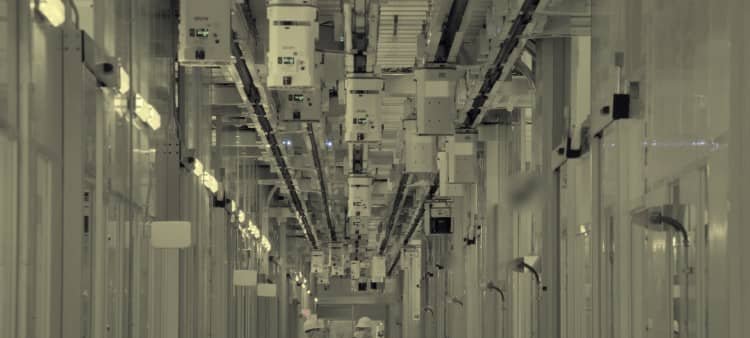
Imagem: Internet
Apple Chief Executive Tim Cook has also championed domestic chip production. The company plans to source certain A-series and M-series processors from TSMC’s fab under construction in Phoenix, Arizona. Nonetheless, those chips have smaller die areas and lower per-unit prices than Nvidia’s AI accelerators, limiting Apple’s share of TSMC revenue relative to its AI-focused peers.
Competitive Landscape Among Foundries
Rival Intel aims to attract external customers to its emerging foundry services and produce advanced chips in the United States. However, Intel has yet to announce a marquee client, and its shares fell 13% after issuing cautious first-quarter guidance that raised concerns about production timelines.
The absence of a confirmed anchor client underscores the difficulty competitors face in matching the scale and technological lead TSMC has amassed. As AI workloads proliferate, foundries capable of high-volume, leading-edge production stand to capture the bulk of industry growth.
Financial Outlook Supports Expanded Investment
For the December quarter, TSMC reported net revenue of $33.73 billion, an annual increase of 21%. Management forecast roughly 30% revenue growth for 2025, citing robust AI demand as the primary driver. The company remains cautious about projecting several years ahead, noting the risk of overbuilding should demand soften.
“Our customers’ customers, mainly cloud service providers, are reaching out directly to request capacity,” Wei said on the call. He added that the principal bottleneck for AI hardware continues to be wafer supply rather than end-market demand.
Market observers interpret the prospective customer reshuffle as evidence of a broader transition. For more than a decade, smartphone processors dictated leading-edge investment strategies. The surge in AI computing has now repositioned data-center accelerators at the forefront, altering strategic priorities for both chipmakers and their manufacturing partners.
Crédito da imagem: Ann Wang | Reuters