However, people familiar with the matter told the newspaper that Chief Executive Jensen Huang later referred to the figure as a preliminary ceiling rather than a contractual commitment. In private conversations late last year, Huang reportedly raised concerns about OpenAI’s business discipline and the competitive threat posed by Alphabet’s Google and AI startup Anthropic.
Weekend statements from Nvidia’s CEO
Responding to the article, Huang said over the weekend that suggestions he was dissatisfied with OpenAI were “nonsense.” Speaking to reporters, he reiterated Nvidia’s intention to deploy substantial capital but emphasized that the eventual outlay would not exceed $100 billion. “We are going to make a huge investment in OpenAI,” Huang said in remarks first published by Bloomberg. He added that OpenAI chief executive Sam Altman is finalizing the fundraising round and that Nvidia “will absolutely be involved.”
Huang also described OpenAI as “one of the most consequential companies of our time” and characterized the prospective funding as likely to be Nvidia’s largest single investment to date. No specific timetable was offered, and the company declined to comment further on when—or if—definitive terms might be signed.
Investor concerns about clarity and size
The absence of a firm figure has unsettled some market participants. Sarah Kunst, managing director at venture firm Cleo Capital, told CNBC’s “Worldwide Exchange” on Monday that investors are struggling to gauge the scope of Nvidia’s financial exposure. “There wasn’t a strong ‘It will be $100 billion,’” Kunst said, noting that the public back-and-forth between the prospective investor and the startup is unusual at this scale.
Analysts suggested the ambiguity could be weighing on the share price, even if the 1.1% dip represents only a modest pullback for a stock that has rallied sharply amid surging demand for high-performance AI chips.
Context of ‘circular financing’ in AI
Wedbush Securities analyst Dan Ives said in a research note that Huang’s latest remarks aim partly to address concerns over so-called “circular financing,” a practice in which major AI companies invest in one another, potentially blurring visibility into each firm’s true profitability. “This is part negotiation and part Nvidia making sure that other competitors are not fueled by Nvidia’s investments into OpenAI,” Ives wrote.
Ives added that he still expects Nvidia’s eventual contribution to land “near the $100 billion zip code,” arguing that the deal should prove mutually beneficial for both companies. He also suggested the final structure could alleviate investor unease about OpenAI becoming “too big to fail.”
Strategic stakes for Nvidia
Nvidia dominates the market for graphics processing units (GPUs) used in large-scale AI training and inference workloads. Partnering closely with OpenAI, whose models underpin products such as ChatGPT, could secure a long-term demand pipeline for Nvidia’s most advanced hardware. At the same time, the chipmaker faces growing competitive pressure as rivals, including custom silicon efforts at companies such as Google, seek to lessen dependence on Nvidia’s technology.
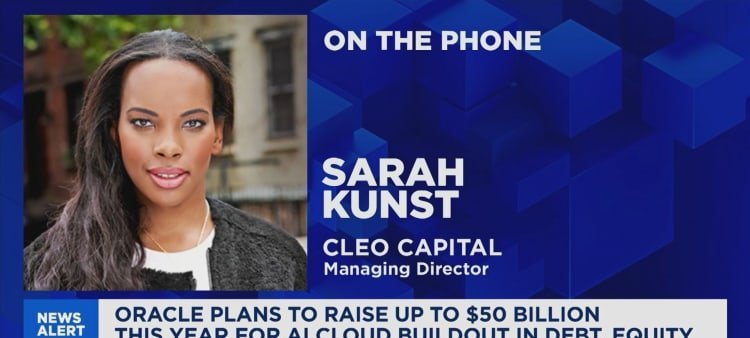
Imagem: Internet
The contemplated 10 gigawatts of computing capacity—roughly equivalent to the total power output of several large, conventional power plants—would require tens of thousands of high-end GPUs and specialized networking gear. Industry estimates place the cost of equipping and operating such data-center infrastructure well into the tens of billions of dollars over multiple years.
Non-binding nature of the pledge
Corporate filings indicate that Nvidia has not yet recorded any binding obligation related to the OpenAI arrangement. According to the company’s most recent 10-K filed with the U.S. Securities and Exchange Commission, the firm had $23 billion in cash and cash equivalents as of its latest fiscal year-end and generated $26.97 billion in free cash flow during the period.
Analysts note that financing any investment approaching the upper end of the proposed range could involve a mix of cash, future retained earnings and, potentially, equity or debt issuance. Nvidia has not detailed how it would structure the funding or whether it would seek outside partners for the data-center build-out.
Implications for OpenAI
For OpenAI, concluding a multi-billion-dollar round led by Nvidia would solidify its position among the best-funded entities in the artificial-intelligence sector. The Microsoft-backed research lab has signaled that it needs extensive capital to train ever-larger generative models and to run inference workloads at scale. Access to dedicated, state-of-the-art infrastructure could help the organization shorten development cycles and expand commercial offerings.
Yet the size of the proposed investment has prompted questions about governance, potential dilution of existing stakeholders and the sustainability of escalating capital requirements. OpenAI declined to comment on the status of the fundraising round.
Broader market landscape
Monday’s share-price movement fits within a broader pattern of volatility for AI-linked equities. While Nvidia’s market capitalization has soared in tandem with demand for AI hardware, several software-focused AI startups have yet to demonstrate substantial, recurring revenue streams. The discrepancy has led some investors to scrutinize lofty valuations and to seek clearer evidence of near-term profitability.
Despite the day’s decline, Nvidia remains one of the best-performing large-cap stocks of the past two years, buoyed by widespread adoption of its H100 and A100 data-center GPUs. Market researchers estimate that the company commands more than 80% of the high-end AI chip segment, although new entrants—including chips based on open instruction sets such as RISC-V—are beginning to attract interest.
Next steps
Nvidia has not scheduled an update on the OpenAI investment ahead of its next earnings report. Investors will be watching for any formal agreement, revised terms, or alternative partnerships that could alter Nvidia’s capital-allocation plans. For now, the market appears to be balancing the prospect of an unprecedented deployment of funds against the strategic advantages of deepening ties with one of the leading developers of generative AI technology.
Crédito da imagem: Anna Moneymaker | Getty Images