Hours after the president’s remarks, the U.S. Treasury Department announced new sanctions on several senior Iranian officials, including Ali Larijani, secretary of the Supreme Council for National Security. The punitive measures were imposed under existing authorities aimed at holding Iranian leadership accountable for human-rights violations. Rights groups have reported that hundreds of people were killed when security forces moved to suppress protests that began last month.
Oil markets had been on edge since Tuesday, when prices jumped after Trump canceled scheduled talks with Iranian representatives and told demonstrators that “help is on its way.” Worries intensified on Wednesday as reports emerged that some personnel were being instructed to leave the U.S. military’s Al Udeid Air Base in Qatar. The BBC also noted that a limited number of British staff had been relocated. Although neither government confirmed the scale of any withdrawal, the story fueled speculation that a military response could follow within days.
Adding to the unease, the U.S. Virtual Embassy in Iran on Tuesday urged American citizens to exit the country “now,” advising travel by land to Armenia or Turkey. The advisory warned travelers not to rely on U.S. government assistance, urging them to stockpile food, water, medicines and other essentials if departure proved impossible.
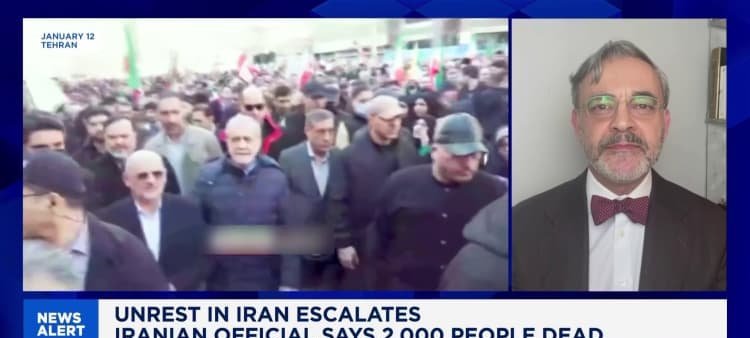
Imagem: Internet
Thursday’s pullback came as financial analysts reassessed the likelihood of immediate hostilities. In a research note, Deutsche Bank strategist Jim Reid wrote that Trump’s statement about a halt to executions “was taken by markets as a signal that the U.S. might hold off on a potential military response.” Reid cautioned, however, that investors remained wary, citing the unexpected timing of U.S. strikes on Iran in June 2025. He added that Brent futures, despite the day’s drop, continued to trade above last week’s lows below $60 a barrel.
Market participants also kept a close eye on fundamental supply considerations. Iran accounted for roughly 4% of global oil production in 2023, a larger share than Venezuela, underscoring the risk that any disruption in Iranian output could reverberate across the energy sector. While the country’s exports have been constrained by international sanctions, even incremental reductions in shipments can rattle prices in a market that has recently tightened due to OPEC+ supply curbs and recovering demand.
Energy traders will focus next on weekly U.S. inventory data and updates from the Organization of the Petroleum Exporting Countries to gauge whether the latest geopolitical shift might alter production strategies. For now, the abrupt change in tone from the White House has provided temporary relief to crude prices, though analysts note that the situation remains fluid and could shift quickly if violence in Iran resumes or if new provocations emerge.
Crédito da imagem: [nome da fonte original]


