In a separate transaction last October, OpenAI executed a $6.6 billion share sale. That secondary deal pushed its valuation to about $500 billion, placing the San Francisco-based developer among the most highly valued private companies worldwide. By comparison, International Monetary Fund data shows that figure eclipses the gross domestic product of several mid-sized national economies, illustrating the scale at which artificial-intelligence firms now operate.
The ongoing funding initiative aims to secure long-term support from state-controlled pools of capital in the Gulf region, which have sought to diversify beyond oil-related revenue by channeling money into high-growth technology sectors. Investment vehicles in Abu Dhabi, Riyadh and Doha have collectively deployed tens of billions of dollars into global tech ventures over the past decade, making them influential actors in late-stage finance.
For OpenAI, access to capital on that scale is intended to sustain the heavy computing requirements needed to train and run increasingly complex AI models. The company’s products, including the GPT-4 language model, rely on large clusters of advanced semiconductors and specialized data-center infrastructure. Costs associated with those resources rise sharply as model parameters expand and as usage of consumer and enterprise applications grows.
Alongside capital for research, the prospective funds could also help OpenAI accelerate commercial rollouts. The firm has been introducing new subscription tiers for ChatGPT, integrating its models into Microsoft’s software portfolio and exploring partnerships in education, healthcare and financial services. Securing strategic investors in the Middle East may assist with market access in those regions and create additional demand for AI-driven solutions.
The quest for fresh financing comes amid wider industry competition. Major cloud providers and well-funded startups are racing to improve model accuracy, reduce hallucinations and cut operating costs. Alphabet’s Google DeepMind, Anthropic, Meta Platforms and others are investing heavily in rival systems, prompting concerns that the capital requirements for leadership in generative AI will continue to escalate.
Altman has publicly stated that OpenAI’s long-term objective is to build artificial general intelligence—systems that can perform intellectual tasks that match or surpass human capability. Achieving that goal, he has argued, will require not only advances in algorithm design but also vast amounts of computing power and data. The fund-raising push in the Gulf therefore aligns with an overarching strategy to secure multi-year funding commitments rather than rely on sequential smaller rounds.
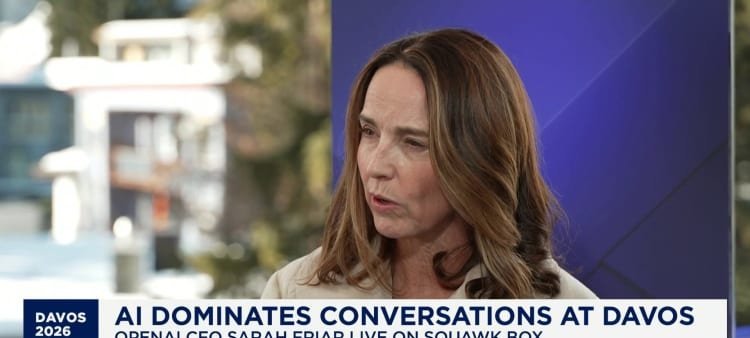
Imagem: Internet
While discussions remain confidential, the person familiar with the matter indicated that OpenAI expects interest from multiple sovereign funds, potentially structuring the deal as a consortium investment. The final valuation, ownership stakes and governance conditions have yet to be determined and could shift as negotiations progress.
Industry analysts view the talks as a sign that sovereign wealth funds are willing to commit unprecedented sums to artificial intelligence. The trend mirrors earlier waves of technology investment in ride-hailing, e-commerce and semiconductor fabrication, but the dollar amounts now contemplated are significantly larger. Analysts add that direct exposure to AI developers offers states in the Gulf a pathway to participate in the anticipated productivity gains AI may generate across global industries.
Regulatory considerations could influence the eventual structure of the round. Cross-border investments in critical technology are subject to scrutiny in several jurisdictions, including the United States. OpenAI, which operates under a capped-profit model with a nonprofit parent overseeing mission alignment, may need to balance investor returns with governance frameworks designed to ensure safe and responsible AI development.
Barring unexpected delays, OpenAI wants to finalize agreements before the end of March 2025 so that new funds can be deployed into training runs scheduled for later in the year. The timing also positions the company to showcase its financial strength ahead of any potential public-market debut, though OpenAI has not announced immediate plans for an initial public offering.
The prospective $50 billion injection would add to an already historic surge of private capital flowing into AI startups. Market-intelligence firms estimate that AI companies attracted more than $100 billion in disclosed venture and growth funding during 2024 alone, dwarfing totals recorded in prior years. With leading players now seeking single rounds worth tens of billions, capital formation in the sector appears to be entering a new phase defined by fewer deals of far greater magnitude.
Whether OpenAI secures the full amount or settles on a smaller figure, the outcome of the negotiations is expected to influence funding expectations for the broader AI ecosystem. Competitors and suppliers alike are watching the talks closely, viewing them as a barometer of investor confidence in generative AI’s commercial potential and in OpenAI’s position at the forefront of the field.
Crédito da imagem: Reuters


