Shift in board composition
The resignations narrow the board’s composition at a moment when Oracle is adjusting leadership and pursuing expansive capital projects. Larry Ellison, 81, remains executive chairman and chief technology officer and continues to hold a seat on the board he co-founded in 1977. Other members include recent appointees Clay Magouyrk and Mike Sicilia, who in September were named to share chief executive duties, replacing long-time CEO Safra Catz.
The governance structure now reflects a mix of legacy leadership and executives directly involved in Oracle’s current strategic focus: offering cloud services tailored to generative AI. Conrades and Seligman were among the oldest directors of any American technology company of comparable size, and their exit lowers the average age of Oracle’s board.
Management realignment
Oracle’s management update in September introduced a dual-CEO model. Magouyrk leads Oracle Cloud Infrastructure, and Sicilia oversees Oracle’s software applications portfolio. Their immediate priority has been to expand the company’s global network of data centers and equip them with large clusters of Nvidia graphics processing units (GPUs) capable of training and running generative AI models.
The initiative targets demand from clients such as OpenAI and xAI, two high-profile developers of large language models. Oracle has promoted its ability to provide isolated “superclusters” to customers that require dedicated GPU capacity. Executives have repeatedly said these projects should deliver consistent cloud revenue growth once new facilities are fully operational.
Market reaction and financial pressure
Investors initially welcomed Oracle’s AI strategy. In mid-September the company reported that remaining performance obligation—an indicator of future contracted revenue—had risen 359% year over year. The announcement contributed to a brief rally in Oracle shares, which reached an all-time closing high later that month.
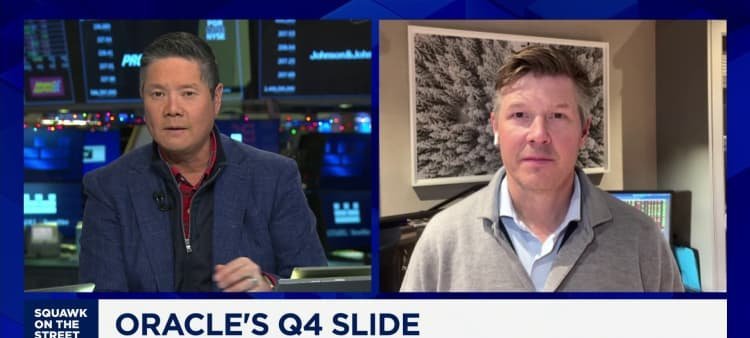
Imagem: Internet
However, sentiment shifted during the fourth quarter. The stock gave up earlier gains as analysts questioned whether Oracle could simultaneously fund data-center expansion, service its debt portfolio and maintain profit margins. At the close of its 2023 fiscal year, Oracle reported long-term debt of more than $75 billion, much of it accumulated through the 2021 acquisition of Cerner.
Industry observers also noted that Oracle’s AI revenue is closely tied to the financial performance of its largest AI customers. If spending by firms such as OpenAI moderates, Oracle could face slower growth in cloud bookings while still carrying sizable capital expenditures for GPU clusters.
Continuity amid change
Despite market volatility and governance adjustments, Oracle has emphasized continuity at the top. Ellison remains heavily involved in technology strategy and product direction, and Catz, 64, retained a board seat after relinquishing the sole CEO title. Company statements portray recent changes as part of a broader succession plan rather than a reaction to any specific operational setback.
For the moment, Oracle does not plan to fill the vacancies created by Conrades and Seligman. A 12-member board falls within the range permitted by the company’s bylaws, and the smaller group could streamline decision-making as Oracle pursues large-scale cloud contracts and evaluates potential acquisitions. The firm did not announce committee reassignments associated with the departures.
Oracle’s next scheduled financial update is its third-quarter earnings report, expected in March. That release will provide the first detailed view of the company’s performance under the revised leadership structure and with a reduced board. Investors will focus on bookings for AI-related cloud services and progress in lowering the overall debt load.
Crédito da imagem: Jay Mallin | Bloomberg | Getty Images


