Orbán, regarded as the Kremlin’s closest partner inside the bloc, has consistently opposed the scheme. On Thursday he reiterated that position and rejected suggestions that his stance favors Moscow over the EU. “I am working for peace,” he told journalists, adding that Europe should focus on steps that bring the conflict closer to a negotiated settlement rather than measures he believes would escalate tensions.
Multiple Capitals Voice Doubts
Although Budapest is the most outspoken critic, other governments have signaled misgivings. Belgium, home to the Brussels-based clearing house Euroclear—where a large portion of the frozen assets are held—has warned of potential legal and financial liabilities. Italy and Bulgaria have sided with Brussels in pressing for further clarification before any decision is taken.
Euroclear’s central role has also drawn direct retaliation from Moscow. Last week the Bank of Russia filed a lawsuit in a Moscow court seeking compensation for “losses” allegedly caused by the asset freeze, according to a statement released by the bank. The Kremlin, for its part, has said that permanent seizure of Russian property would amount to justification for war.
EU treaties require unanimity for decisions involving the bloc’s own budget. Orbán previously blocked an alternative proposal that would have used remaining headroom in the EU’s multi-year financial framework to extend assistance to Ukraine. Without breakthrough on either front, diplomats say member states could pursue a so-called “coalition of the willing,” in which a smaller group advances funds outside the common budget structure.
Financial Clock Ticking for Kyiv
A briefing by the European Parliament published Wednesday warned that Ukraine’s government could exhaust its resources in the first quarter of 2026 if new EU and international aid does not materialize. The subject sits high on the agenda of the two-day leaders’ meeting set to conclude Friday.
Estonian Prime Minister Kaja Kallas, speaking in her capacity as the EU’s high representative for foreign affairs and security policy, defended the asset plan. She told reporters that concerns raised by Belgium “have been addressed,” expressing confidence that an agreement remains within reach. Kallas argued that maintaining pressure on Moscow is essential because “we have not seen willingness from the Russian side to move or seriously discuss peace.”
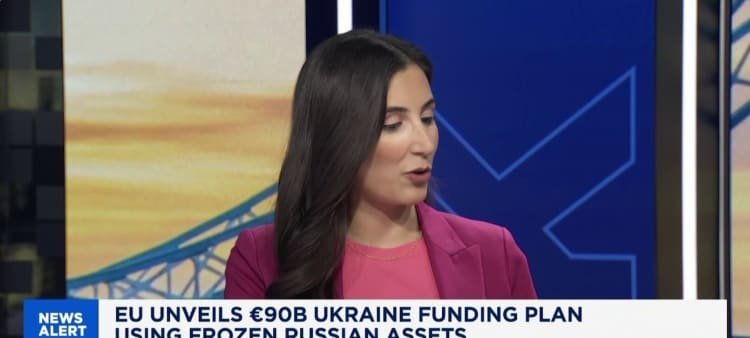
Imagem: Internet
For now, negotiations continue on parallel tracks. Diplomatic sources said representatives of the United States, Russia, Ukraine and European nations are expected to resume informal talks this weekend, possibly in Miami, aiming to explore conditions for a broader settlement. The war’s fourth winter has begun without a formal cease-fire.
Legal and Political Hurdles
Experts note that converting frozen assets into budgetary support presents complex challenges. The EU must ensure compliance with both international law and its own legal order while protecting the single market from unintended financial shocks. Belgium’s caution reflects fears that a precedent for asset confiscation could undermine investor confidence in European clearing systems.
Meanwhile, Orbán’s government continues to align with Russia on several issues, including opposition to certain energy sanctions. Nevertheless, Hungary is not alone in questioning the wisdom of using frozen funds for reconstruction. Some economists warn that Kyiv might ultimately be saddled with new debt obligations if legal challenges delay disbursement of confiscated Russian money.
An official agenda published by the European Council lists Ukraine, Middle East developments and the bloc’s 2024-2027 budget revision among the principal topics for debate. Leaders are also expected to revisit long-term enlargement strategy and economic competitiveness.
The summit’s outcome will determine whether the EU presses ahead with the frozen-assets mechanism, falls back on its existing budget reserves or leaves it to ad-hoc coalitions to finance Ukraine. Any path that relies on collective EU resources requires Orbán’s consent, and on Thursday he gave no indication he is prepared to reverse course.
Crédito da imagem: Alexander Nemenov via Reuters


